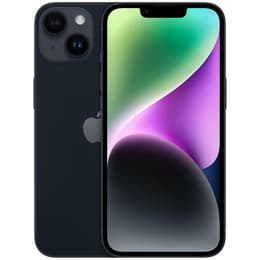
Galaxy S24 • Locked T-Mobile vs iPhone 14 • Locked T-Mobile

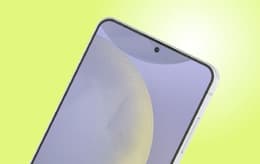
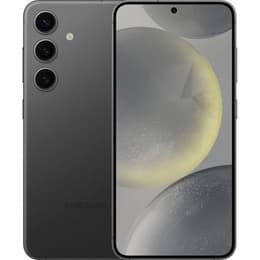
Galaxy S24 • Locked T-Mobile
Starting at

Refurbished price:$277.00

Versus $799.99 new

See options
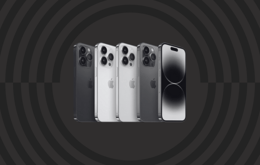
iPhone 14 • Locked T-Mobile
Starting at

Refurbished price:$239.00

Versus $599.00 new

See options

Ratings

The Samsung Galaxy S24, released in January 2024, and the Apple iPhone 14, launched in September 2022, represent distinct approaches to the modern smartphone experience. While both devices offer robust performance and advanced camera systems, they differ significantly in their operating systems, display technologies, and overall feature sets. The Galaxy S24 runs on Android 14 with Samsung's One UI, offering extensive customization and AI-powered functionalities, whereas the iPhone 14 operates on Apple's iOS, known for its intuitive interface and strong ecosystem integration.

Scores

Durability

When considering the long-term usability of a smartphone, factors like software support and repairability are key. The Galaxy S24 and iPhone 14 offer different propositions in these areas.

  • Software Longevity: The Samsung Galaxy S24 is notable for its commitment to extended software support, promising seven years of operating system and security updates from its release. This means users can expect the device to receive the latest Android features and security patches for a considerable period. In contrast, the iPhone 14, while known for receiving consistent iOS updates, typically receives major OS support for about five to six years from its launch.
  • Repairability: The Samsung Galaxy S24 has received a high repairability score, with assessments noting its design allows for relatively easy battery removal thanks to pull tabs and less reliance on strong adhesives. This design choice can simplify common repairs. The iPhone 14 initially received a favorable repairability assessment due to its more accessible internal hardware, including an easier-to-remove back panel. However, its score was later adjusted downwards due to software restrictions that complicate repairs using non-authorized parts, requiring a 'software handshake' with Apple's servers.
  • Practical Lifespan: Both devices are built with durable materials and carry an IP68 rating for dust and water resistance, suggesting they are designed to withstand daily use. The Galaxy S24 features an Armor Aluminum frame and Gorilla Glass Victus 2, while the iPhone 14 uses a Ceramic Shield front cover and an aluminum frame. The longer software support for the S24 could translate to a longer practical lifespan for users who prioritize having the latest software features and security.

Release Year

2024

2022

Last OS Compatibility

Yes

Yes

OS

Android

iOS

Foldable

No

No

Performance

The performance of a smartphone is crucial for handling daily tasks, from casual browsing to demanding applications and gaming. Both the Galaxy S24 and iPhone 14 deliver capable performance, though with different underlying architectures.

  • Processing Power: The Samsung Galaxy S24 is equipped with a current-generation octa-core processor, which allows it to handle demanding applications and multitasking smoothly. Users report that it offers excellent performance for gaming and productivity tasks, with efficient thermal management. The iPhone 14 features a hexa-core processor, which provides a responsive and fluid user experience across iOS applications and games.
  • Multitasking and Responsiveness: With 8GB of RAM, the Galaxy S24 is well-suited for extensive multitasking, allowing users to switch between numerous applications without significant slowdowns. The iPhone 14 comes with 6GB of RAM, which, combined with iOS's efficient memory management, ensures smooth app transitions and overall system responsiveness for most users.
  • Storage Options: Both devices offer a range of internal storage configurations, typically including 128GB, 256GB, and 512GB, providing ample space for apps, photos, and videos.
  • Battery Behavior: The Galaxy S24 houses a 4000mAh battery, and users generally report that it can comfortably last through a full day of heavy use. The iPhone 14, with its 3279mAh battery, also aims for all-day battery life under typical usage, though some heavy users might find themselves needing to recharge more frequently.

Memory (GB)

8 GB

6 GB

Screen quality

The display is a primary interface for any smartphone, and both the Galaxy S24 and iPhone 14 offer high-quality viewing experiences with distinct characteristics.

  • Display Technology and Clarity: The Samsung Galaxy S24 features a 6.2-inch Dynamic AMOLED 2X display, providing vibrant colors, deep blacks, and excellent contrast. Its FHD+ resolution (1080 x 2340 pixels) ensures sharp images and text. The iPhone 14 comes with a 6.1-inch Super Retina XDR OLED display, also known for its rich colors and true blacks, with a resolution of 1170 x 2532 pixels.
  • Brightness and Refresh Rate: The Galaxy S24 boasts a high peak brightness of 2600 nits, making it highly visible even in bright outdoor conditions. It also features an adaptive refresh rate that can go from 1Hz to 120Hz, contributing to smoother scrolling and more fluid animations. The iPhone 14 offers a peak brightness of 1200 nits and a standard 60Hz refresh rate. While its display is bright enough for most situations, the lower refresh rate means animations and scrolling may appear less fluid compared to the S24.
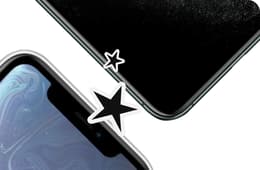
  • Screen Design: The Galaxy S24 utilizes a punch-hole design for its front camera, allowing for slimmer bezels and a more expansive screen-to-body ratio. The iPhone 14 retains the traditional notch design at the top of its display.

Resolution

1080 x 2340

1170 x 2532

Screen type

Dynamic LTPO AMOLED 2X

Super Retina XDR OLED

Audiovisual

Both the Samsung Galaxy S24 and iPhone 14 offer advanced camera systems designed to capture high-quality photos and videos, though they approach imaging with different hardware and software philosophies.

  • Rear Camera Systems: The Galaxy S24 features a versatile triple-camera setup on the rear, including a 50-megapixel main sensor, a 12-megapixel ultrawide lens, and a 10-megapixel telephoto lens with 3x optical zoom. This configuration provides flexibility for various shooting scenarios, including detailed close-ups and distant subjects. The iPhone 14 is equipped with a dual-camera system, comprising a 12-megapixel main camera and a 12-megapixel ultrawide camera. It lacks a dedicated telephoto lens, relying on digital zoom for magnification.
  • Photography Performance: The Galaxy S24 is often praised for its detailed images, strong dynamic range, and advanced AI processing, which can enhance photos. Its low-light performance is generally good, though some users note it can fall behind top-tier competitors in very challenging conditions. The iPhone 14 delivers natural colors and consistent image quality, with its Photonic Engine improving low-light performance. Users often appreciate the iPhone's color accuracy and reliable results for everyday photography.
  • Video Capabilities: The Galaxy S24 supports video recording up to 8K resolution at 30 frames per second, offering high detail for videographers. The iPhone 14 records video up to 4K resolution at 60 frames per second and includes features like Cinematic Mode for depth-of-field effects and Action Mode for enhanced video stabilization.
  • Front Camera: Both devices feature a 12-megapixel front-facing camera, capable of capturing detailed selfies and supporting high-quality video calls. The iPhone 14's front camera includes autofocus, which can be beneficial for sharper self-portraits.

Main camera

50 megapixels

12 megapixels

Front camera

12 megapixels

12 megapixels

Miscellaneous

Beyond core performance and camera capabilities, several practical elements contribute to the overall user experience of the Galaxy S24 and iPhone 14.

  • Connectivity: Both smartphones support 5G connectivity for fast mobile data speeds and modern Wi-Fi standards (Wi-Fi 6e for S24, Wi-Fi 6 for iPhone 14) for robust wireless internet. They also include Bluetooth 5.3 for connecting to accessories.
  • Ports and Biometrics: The Samsung Galaxy S24 features a USB-C port for charging and data transfer, which is a widely adopted standard. It incorporates an ultrasonic in-display fingerprint sensor for secure unlocking. The iPhone 14 uses Apple's proprietary Lightning port and relies on Face ID for biometric authentication.
  • Design and Handling: The Galaxy S24 has dimensions of 147.00 x 70.60 x 7.60mm and weighs 168 grams, offering a compact and comfortable feel in hand. The iPhone 14 measures 146.70 x 71.50 x 7.80mm and weighs 172 grams, providing a similar compact form factor. Both devices feature premium glass and metal constructions, with the S24 offering a matte finish and the iPhone 14 often having a glossy back.
  • Unique Features: The Galaxy S24 introduces a suite of AI-powered features, including Live Translate for real-time communication, Circle to Search for quick information retrieval, and advanced photo editing capabilities. The iPhone 14 includes safety features like Emergency SOS via Satellite and Crash Detection.

Weight

6 oz

6 oz

Screen size (inches)

6.2

6.1

Network

5G

5G

SIM card

Physical SIM + eSIM

eSIM

Carrier compatibility

T-Mobile

T-Mobile

Connector

USB-C

Lightning

The Samsung Galaxy S24 and iPhone 14 cater to different user preferences, each excelling in specific areas. Users frequently praise the Galaxy S24 for its vibrant 120Hz display, versatile triple-camera system with optical zoom, and the inclusion of advanced AI features that enhance productivity and creativity. Its extended software support commitment is also a significant advantage for those seeking long-term device relevance. Some users, however, note that while its camera is versatile, it might not always outperform top-tier competitors in all scenarios, and Samsung's software can feel complex to some.

The iPhone 14 is often lauded for its consistent camera performance, natural color reproduction, and the smooth, integrated experience of the iOS ecosystem. Its robust build quality and reliable performance are also frequently highlighted. Criticisms sometimes point to its 60Hz display, which can feel less fluid compared to higher refresh rate screens, and the absence of a dedicated telephoto lens. The repairability of the iPhone 14, despite hardware improvements, is complicated by software restrictions on part authentication.

Users prioritizing a highly customizable Android experience with cutting-edge AI features, a high refresh rate display, and a versatile camera system with optical zoom may find the Samsung Galaxy S24 well-suited to their needs. Its longer software support also makes it an appealing choice for those planning to keep their device for many years. Conversely, users who value the simplicity and strong ecosystem of iOS, consistent camera performance with natural colors, and robust safety features may lean towards the iPhone 14. Both devices offer a quality-assured refurbished option, providing an eco-friendly alternative for consumers.


See all articles

Our recent comparisons