iPhone 12 mini • Unlocked vs iPhone 14 • Locked T-Mobile

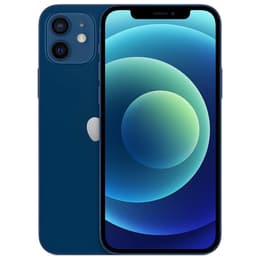
iPhone 12 mini • Unlocked
Starting at

Refurbished price:$149.00

Versus $459.00 new

See options
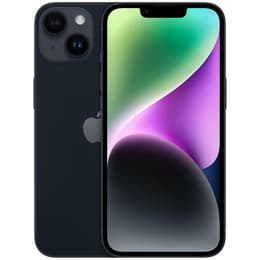
iPhone 14 • Locked T-Mobile
Starting at

Refurbished price:$269.00

Versus $599.00 new

See options

Ratings

The iPhone 12 Mini, released in November 2020, and the iPhone 14, launched in September 2022, represent different approaches within Apple's smartphone lineup. While both devices operate on the iOS ecosystem, they cater to distinct user preferences primarily through their size, internal components, and camera capabilities. The iPhone 14 offers a larger display and enhanced features, whereas the iPhone 12 Mini focuses on a compact form factor.

Scores

Durability

The longevity of a smartphone is influenced by its release timeline, software support, and physical resilience. These two models, separated by two years, offer differing practical lifespans and repair considerations.

  • Release Timeline: The iPhone 12 Mini was released in November 2020, while the iPhone 14 followed in September 2022. This two-year difference means the iPhone 14 will likely receive software updates and security patches for a longer period, extending its functional lifespan by approximately two years compared to the 12 Mini.
  • Physical Durability: Both devices feature Apple's Ceramic Shield front cover, designed to offer enhanced drop performance. They also share an IP68 rating for water and dust resistance, indicating protection against submersion in water up to 6 meters for 30 minutes.
  • Repairability: The iPhone 12 Mini initially received a repairability score of 6 out of 10 from iFixit, noting its modular design for common repairs like battery and display replacement. The iPhone 14 initially received a higher score of 7 out of 10 due to an internal redesign making the back glass more accessible. However, this score was later downgraded to 4 out of 10 due to software limitations and parts pairing requirements that complicate unauthorized repairs.

Release Year

2020

2022

Last OS Compatibility

Yes

Yes

OS

iOS

iOS

Foldable

No

No

Performance

Performance in a smartphone is determined by its processing power, memory, and how efficiently it manages tasks and power consumption. These aspects directly impact daily responsiveness and battery endurance.

  • Processing Power: The iPhone 12 Mini is equipped with a capable processor that handles everyday applications and multitasking smoothly, allowing for responsive navigation and gaming. The iPhone 14 features a newer generation processor, providing a noticeable improvement in speed and efficiency, particularly for demanding applications, advanced camera features, and graphically intensive games.
  • Memory and Storage: The iPhone 12 Mini typically comes with 4GB of RAM and storage options up to 256GB. The iPhone 14 includes 6GB of RAM, which contributes to smoother multitasking and app handling, alongside storage options extending up to 512GB.
  • Battery Behavior: The iPhone 12 Mini, due to its compact size, houses a smaller battery (2227 mAh) which generally provides up to 15 hours of video playback. Users often report that heavy usage may require more frequent charging. The iPhone 14, with its larger physical size, incorporates a significantly larger battery (3279 mAh), offering up to 20 hours of video playback and generally better all-day endurance for most users.

Memory (GB)

4 GB

6 GB

Screen quality

The visual experience on a smartphone is largely defined by its display technology, size, and clarity. Both devices offer high-quality screens but differ in their dimensions and brightness capabilities.

  • Display Technology and Clarity: Both the iPhone 12 Mini and iPhone 14 feature Super Retina XDR OLED displays, known for deep blacks, vibrant colors, and excellent contrast ratios. The pixel density is high on both, ensuring sharp text and detailed images. The iPhone 12 Mini has a resolution of 2340x1080 pixels at 476 ppi, while the iPhone 14 offers 2532x1170 pixels at 460 ppi.
  • Screen Size and Brightness: The iPhone 12 Mini features a compact 5.4-inch display, making it suitable for one-handed use. It offers a typical maximum brightness of 625 nits, with a peak HDR brightness of 1200 nits. The iPhone 14 provides a larger 6.1-inch display, offering more screen real estate for media consumption and productivity. Its typical maximum brightness is 800 nits, also reaching 1200 nits for peak HDR content, which can improve visibility in bright outdoor conditions.
  • Refresh Rate: Both models feature a standard 60Hz refresh rate, which provides a smooth visual experience for most daily tasks.

Resolution

1080 x 2340

1170 x 2532

Screen type

Super Retina XDR OLED

Super Retina XDR OLED

Audiovisual

The camera systems on both devices are designed to capture high-quality photos and videos, though the newer model introduces advancements in computational photography.

  • Camera System Capabilities: Both the iPhone 12 Mini and iPhone 14 are equipped with a dual 12MP camera system, featuring a wide and an ultra-wide lens. The iPhone 14 introduces a larger main camera sensor and the Photonic Engine, which significantly enhances image quality, particularly in mid to low-light conditions.
  • Photography Performance: The iPhone 12 Mini delivers strong performance in good lighting, with accurate colors and detail. Its Night mode is effective for low-light scenarios. The iPhone 14 builds on this with improved low-light capture across all cameras due to the Photonic Engine, resulting in better detail and richer colors in challenging lighting.
  • Video Recording Quality: Both devices support 4K video recording at up to 60 frames per second and offer Dolby Vision HDR video capture. The iPhone 14 further includes Cinematic mode, which adds a shallow depth of field effect to videos, and Action mode for smoother handheld footage.

Main camera

12 megapixels

12 megapixels

Front camera

12 megapixels

12 megapixels

Miscellaneous

Beyond core features, practical elements like connectivity, physical design, and additional sensors contribute to the overall user experience.

  • Connectivity and Ports: Both the iPhone 12 Mini and iPhone 14 support 5G cellular connectivity, Wi-Fi 6, and Bluetooth. The iPhone 14 features a newer Bluetooth 5.3 standard compared to the 12 Mini's Bluetooth 5.0. Both devices utilize the Lightning port for charging and data transfer.
  • Sensors and Security: Both phones incorporate Face ID for secure authentication. The iPhone 14 introduces additional safety features such as Crash Detection and Emergency SOS via Satellite (available in select regions), which can automatically alert emergency services in critical situations.
  • Physical Characteristics: The iPhone 12 Mini is notably compact and lightweight, measuring 131.5 x 64.2 x 7.4 mm and weighing 135 grams, making it ideal for users who prefer a smaller device for one-handed use. The iPhone 14 is larger and heavier, with dimensions of 146.7 x 71.5 x 7.8 mm and a weight of 172 grams, offering a more expansive viewing experience.

Weight

7 oz

6 oz

Screen size (inches)

5.4

6.1

Network

5G

5G

SIM card

Physical SIM + eSIM

eSIM

Carrier compatibility

Unlocked

T-Mobile

Connector

Lightning

Lightning

The choice between the iPhone 12 Mini and the iPhone 14 depends heavily on individual priorities, particularly regarding device size, battery life, and access to the latest features. The iPhone 12 Mini is frequently praised by users for its exceptionally compact form factor, making it comfortable for one-handed operation and easy pocketability. However, a common criticism is its shorter battery life, which may require heavy users to charge more frequently throughout the day.

Conversely, the iPhone 14 is often lauded for its significantly improved battery life, larger display, and enhanced camera capabilities, including features like the Photonic Engine and Cinematic mode. Its newer safety features, such as Crash Detection and Emergency SOS via Satellite, also offer added peace of mind. A point of concern for some users, however, has been the complexities introduced in its repairability due to parts pairing requirements.

Users prioritizing a highly portable device that fits comfortably in a small hand or pocket may find the iPhone 12 Mini well-suited to their needs. Those who value a larger screen for media consumption, longer battery endurance, and access to more advanced camera and safety features will likely lean towards the iPhone 14. Both models offer a reliable iOS experience, and opting for a quality-assured refurbished option can be an eco-friendly alternative for either device.
See all articles

Our recent comparisons