
Galaxy S9 • Unlocked vs iPhone 12 • Unlocked

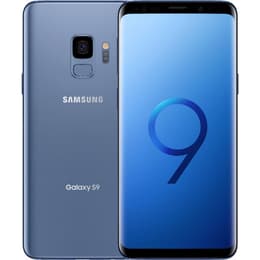
Galaxy S9 • Unlocked
Starting at

Refurbished price:$106.00

Versus $399.00 new

See options
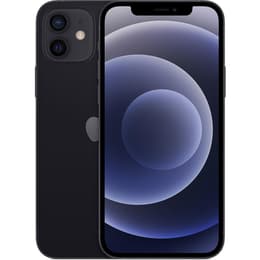
iPhone 12 • Unlocked
Starting at

Refurbished price:$172.96

Versus $629.00 new

See options

Ratings

The Samsung Galaxy S9 (2018) and the iPhone 12 (2020) represent different eras and operating systems within the smartphone landscape. While the Galaxy S9 runs on the Android platform, offering a customizable experience, the iPhone 12 operates on Apple's iOS, known for its integrated ecosystem. These devices showcase distinct approaches to design, performance, and camera technology, reflecting the advancements made in mobile technology over a couple of years.

Scores

Durability

When considering the longevity of these devices, several factors come into play, including their release timelines, software support, and repairability.

  • Release Timeline: The Samsung Galaxy S9 was released in March 2018, making it an older device compared to the iPhone 12, which launched in October 2020. This difference in release date directly impacts their remaining software support and expected practical lifespan.
  • Software Longevity: The iPhone 12, being a newer device, benefits from a longer period of iOS updates, typically receiving major software support for approximately 5-6 years from its release. The Galaxy S9, running Android, generally received 3-4 major OS updates, meaning its official software support has likely concluded.
  • Repairability: The Galaxy S9 received a repairability score of 4 out of 10 from iFixit, indicating that repairs can be challenging due to its glass construction and strong adhesives. The iPhone 12 scored 6 out of 10, suggesting a more modular design, though certain repairs, like camera and screen replacements, may require proprietary software from the manufacturer.

Release Year

2018

2020

Last OS Compatibility

No

Yes

OS

Android

iOS

Foldable

No

No

Performance

The performance of a smartphone is crucial for daily tasks, app usage, and overall responsiveness. Both devices offer capable performance for their respective generations, but the newer iPhone 12 benefits from more recent advancements.

  • Storage Options: The Galaxy S9 was available with 64GB, 128GB, or 256GB of internal storage and uniquely offered expandable storage via a microSD card up to 400GB. The iPhone 12 comes in 64GB, 128GB, and 256GB configurations, without expandable storage.
  • Battery Behavior: The Galaxy S9 features a 3000 mAh battery, which users often found sufficient for a full day of moderate use, though heavy usage might necessitate an afternoon charge. The iPhone 12 has a 2815 mAh battery, and its real-world battery life typically provides around 8-10 hours of mixed usage, with 5G connectivity potentially reducing this duration.
  • System Responsiveness: The iPhone 12, equipped with a more advanced processor, handles demanding applications and multitasking with greater fluidity and speed compared to the Galaxy S9. This results in faster app loading times and a smoother overall user experience, especially with newer software and graphically intensive tasks.

Memory (GB)

4 GB

4 GB

Screen quality

The visual experience is a key differentiator, with both devices offering vibrant displays, though with different technologies and characteristics.

  • Display Technology: The Galaxy S9 features a 5.8-inch Super AMOLED display, known for its deep blacks and vibrant colors. The iPhone 12 steps up with a 6.1-inch Super Retina XDR OLED display, which also delivers excellent contrast and color accuracy.
  • Resolution and Clarity: The Galaxy S9 offers a WQHD+ resolution of 2960x1440 pixels, resulting in a high pixel density. The iPhone 12 has a resolution of 2532x1170 pixels, providing sharp and clear visuals at 460 pixels per inch.
  • Brightness and Viewing Experience: The Galaxy S9 can reach a peak brightness of 864 nits, offering good visibility outdoors. The iPhone 12 provides a typical maximum brightness of 625 nits, with a peak of 1200 nits for HDR content, enhancing viewing in various lighting conditions. The iPhone 12 also features a Ceramic Shield front cover for enhanced durability.

Resolution

1440 x 2960

1170 x 2532

Screen type

Super AMOLED

Super Retina XDR OLED

Audiovisual

Both smartphones offer capable camera systems for capturing photos and videos, with the iPhone 12 introducing more advanced computational photography features.

  • Camera System Capabilities: The Galaxy S9 features a single 12MP main camera with a variable aperture (f/1.5-2.4) and optical image stabilization, alongside an 8MP front camera. The iPhone 12 sports a dual 12MP camera system, including a wide (f/1.6, OIS) and an ultra-wide (f/2.4, 120° field of view) lens, plus a 12MP TrueDepth front camera.
  • Photography Performance: The Galaxy S9 was praised for its low-light performance at the time of its release due to its variable aperture. The iPhone 12 benefits from Night mode, Deep Fusion, and Smart HDR 3, which significantly enhance image quality in challenging lighting and improve detail across various scenes.
  • Video Recording Quality: The Galaxy S9 supports 4K video recording at up to 60 frames per second. The iPhone 12 offers 4K video recording at up to 60 frames per second and introduces HDR video recording with Dolby Vision at up to 30 frames per second, providing a wider dynamic range and more vibrant colors in video content.

Main camera

12 megapixels

12 megapixels

Front camera

8 megapixels

12 megapixels

Miscellaneous

Beyond core features, several practical elements contribute to the overall user experience and device utility.

  • Connectivity Options: The Galaxy S9 supports 4G LTE connectivity. The iPhone 12 introduced 5G connectivity, offering potentially faster download and upload speeds in supported areas, along with Wi-Fi 6 and Bluetooth 5.0.
  • Port Types and Sensors: The Galaxy S9 includes a USB-C port for charging and data transfer, and notably retains a 3.5mm headphone jack. It features an iris scanner and a rear-mounted fingerprint sensor for biometric authentication. The iPhone 12 uses a Lightning port and relies on Face ID for secure authentication. It also introduced MagSafe, a magnetic system for attaching accessories and wireless charging.
  • Build Materials and Handling: The Galaxy S9 features a glass front and back with an aluminum frame, offering an elegant design. The iPhone 12 also uses an aluminum frame with a glass back and features a Ceramic Shield front cover, designed for increased drop performance. The iPhone 12 measures 146.7 x 71.5 x 7.4 mm and weighs 164 grams, providing a comfortable in-hand feel.

Weight

6 oz

7 oz

Screen size (inches)

5.8

6.1

Network

LTE

5G

SIM card

Physical SIM

Physical SIM + eSIM

Carrier compatibility

Unlocked

Unlocked

Connector

USB-C + Jack 3.5mm

Lightning

User sentiment for the Samsung Galaxy S9 often highlighted its impressive Super AMOLED display, capable camera, and the convenience of the headphone jack and expandable storage. Criticisms frequently pointed to its battery life, which some users found to be merely adequate for a full day, and its lower repairability score. The iPhone 12, on the other hand, received praise for its significant performance upgrade, the introduction of 5G, its improved OLED display, and enhanced camera capabilities, particularly in low light. Some users noted that its battery life, while improved over previous models, could be impacted by 5G usage. The shift to a flat-edged design was also a notable change for many users.

Users prioritizing a highly customizable Android experience, expandable storage, and the presence of a traditional headphone jack may find the Galaxy S9 aligns better with their needs. Conversely, users who value a longer software support window, a more powerful processor for demanding tasks, advanced computational photography, and the integrated iOS ecosystem will likely lean towards the iPhone 12. Both devices offer distinct advantages, catering to different user preferences. For those seeking a more sustainable choice, considering a quality-assured refurbished option for either model can provide an eco-friendly alternative.

See all articles

Our recent comparisons