
Galaxy S9 • Unlocked vs iPhone XR • Unlocked

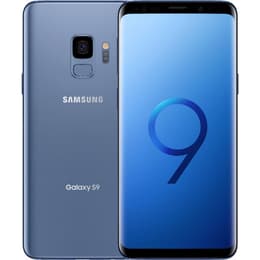
Galaxy S9 • Unlocked
Starting at

Refurbished price:$106.00

Versus $399.00 new

See options
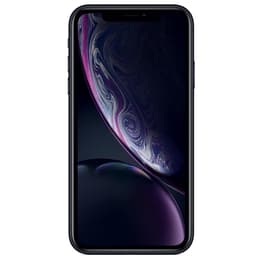
iPhone XR • Unlocked
Starting at

Refurbished price:$122.99

Versus $299.00 new

See options

Ratings

The Samsung Galaxy S9, released in March 2018, and the Apple iPhone XR, launched in October 2018, represent two distinct approaches to smartphone design and functionality from their respective manufacturers. While both devices were flagship offerings in their time, they differ significantly in their operating systems, display technologies, and biometric security methods. This comparison aims to highlight these practical differences to assist users in making an informed decision.

Scores

Durability

When considering the long-term usability of these devices, their release timelines and subsequent software support are key factors.

  • Release Timeline and Age: The Galaxy S9 was introduced in March 2018, making it an older device compared to the iPhone XR, which followed in October 2018. Both are several years old by 2026.
  • OS Support and Longevity: The Galaxy S9 officially concluded its Android operating system updates with Android 10 and received its last security patch in April 2022, meaning it no longer receives official software enhancements or security updates from Samsung. In contrast, the iPhone XR, initially launched with iOS 12, continues to receive official iOS updates, currently supporting iOS 17 and likely to receive iOS 18, offering a significantly longer period of official software support.
  • Physical Durability: The Galaxy S9 features an IP68 rating, indicating robust dust and water resistance, allowing for immersion in deeper water than the iPhone XR's IP67 rating. The iPhone XR is rated IP67, meaning it is dust-tight and can withstand temporary immersion in up to one meter of water for 30 minutes. Both devices utilize glass on their front and back, with the Galaxy S9 featuring Gorilla Glass 5 for added protection.

Release Year

2018

2018

Last OS Compatibility

No

Yes

OS

Android

iOS

Foldable

No

No

Performance

The performance of these devices, particularly in 2026, is largely influenced by their internal components and how they handle modern applications.

  • Processor Capabilities: The iPhone XR is equipped with a powerful processor that, at its release, was noted for its speed and efficiency, handling demanding applications and multitasking smoothly. The Galaxy S9 features a capable processor for its generation, providing solid performance for everyday tasks, though some regional variants showed differences in real-world performance.
  • Multitasking and Responsiveness: The Galaxy S9 typically comes with 4GB of RAM, which supports a reasonable number of applications running simultaneously. The iPhone XR, with 3GB of RAM, is optimized by its operating system to manage applications efficiently, providing a fluid user experience even with less physical RAM.
  • Storage and Expandability: Both devices were available with internal storage options up to 256GB. The Galaxy S9 offers the flexibility of expandable storage via a microSD card, allowing users to increase their storage capacity beyond the internal options. The iPhone XR does not support expandable storage.
  • Battery Behavior: The Galaxy S9 has a 3000 mAh battery, with tests indicating approximately 7 hours and 44 minutes of intensive browsing or 10 hours and 31 minutes of video playback. The iPhone XR, with a 2942 mAh battery, was designed to offer extended battery life compared to its predecessors, with users often reporting it lasting through a full day of moderate use.

Memory (GB)

4 GB

3 GB

Screen quality

The visual experience on these smartphones is shaped by their display technology, resolution, and overall brightness.

  • Display Technology and Clarity: The Galaxy S9 features a 5.8-inch Super AMOLED display, known for its deep blacks and vibrant colors, offering a high resolution of 2960 x 1440 pixels, resulting in a sharp 570 pixels per inch (ppi). The iPhone XR utilizes a 6.1-inch Liquid Retina IPS LCD, which provides accurate color reproduction and wide viewing angles, with a resolution of 1792 x 828 pixels and a pixel density of 326 ppi.
  • Brightness and Outdoor Visibility: The Galaxy S9 can achieve a peak brightness of 864 nits, which contributes to good visibility in bright outdoor conditions. The iPhone XR offers a typical maximum brightness of 625 nits, providing adequate visibility in most outdoor scenarios.
  • Screen Size and Aspect Ratio: The Galaxy S9 has a slightly smaller 5.8-inch display with an 18.5:9 aspect ratio and curved edges. The iPhone XR features a larger 6.1-inch display with a 19.5:9 aspect ratio, offering a more expansive viewing area. Both displays operate at a standard 60Hz refresh rate.

Resolution

1440 x 2960

828 x 1792

Screen type

Super AMOLED

Liquid Retina IPS LCD

Audiovisual

Both devices offer capable camera systems, each with distinct features and strengths for capturing photos and videos.

  • Rear Camera System: The Galaxy S9 is equipped with a 12-megapixel main camera featuring a variable aperture (f/1.5 and f/2.4), which allows it to adapt to different lighting conditions, excelling in low-light photography. It also includes optical image stabilization (OIS). The iPhone XR features a single 12-megapixel wide camera with an f/1.8 aperture and optical image stabilization, which was highly rated for a single-lens phone.
  • Photography Features: The Galaxy S9 offers features like super slow-motion video recording and AR Emoji. The iPhone XR provides Portrait mode with advanced bokeh and Depth Control, as well as Portrait Lighting effects, despite having a single rear camera.
  • Front Camera: The Galaxy S9 has an 8-megapixel front camera. The iPhone XR features a 7-megapixel TrueDepth front camera that supports Portrait mode and Face ID.
  • Video Recording: Both phones are capable of recording 4K video at various frame rates. The Galaxy S9 can record super slow-motion video, while the iPhone XR offers cinematic video stabilization.
  • Audio Experience: The Galaxy S9 includes stereo speakers tuned by AKG and a 3.5mm headphone jack. The iPhone XR also features stereo speakers but omits the traditional headphone jack.

Main camera

12 megapixels

12 megapixels

Front camera

8 megapixels

7 megapixels

Miscellaneous

Beyond core features, several practical elements differentiate the user experience between these two smartphones.

  • Connectivity and Ports: Both devices support 4G LTE, Wi-Fi, and Bluetooth. The Galaxy S9 includes a USB-C port for charging and data transfer, along with a 3.5mm headphone jack. The iPhone XR uses Apple's proprietary Lightning port and does not have a headphone jack.
  • Biometric Security: The Galaxy S9 offers multiple biometric options, including a rear-mounted fingerprint sensor and an iris scanner. The iPhone XR relies solely on Face ID for secure authentication, utilizing its TrueDepth camera system.
  • Physical Design and Handling: The Galaxy S9 has dimensions of 147.7 x 68.7 x 8.5 mm and weighs 163 grams. The iPhone XR is slightly larger and heavier, measuring 150.9 x 75.7 x 8.3 mm and weighing 194 grams. The Galaxy S9 features curved display edges, while the iPhone XR has a flat display.
  • Additional Features: The Galaxy S9 includes a heart rate sensor and supports expandable storage via microSD. The iPhone XR offers Haptic Touch for contextual actions.

Weight

6 oz

7 oz

Screen size (inches)

5.8

6.1

Network

LTE

LTE

SIM card

Physical SIM

Physical SIM + eSIM

Carrier compatibility

Unlocked

Unlocked

Connector

USB-C + Jack 3.5mm

Lightning

The Samsung Galaxy S9 and iPhone XR, while both older smartphones by 2026, cater to different user preferences based on their original design philosophies and current capabilities. Users often praise the Galaxy S9 for its vibrant AMOLED display, expandable storage, and the inclusion of a headphone jack, which remains a valued feature for many. Its variable aperture camera was also a significant highlight, offering versatility in various lighting conditions. However, a common criticism, especially in the current landscape, is its limited official software support, which can impact security and compatibility with newer applications.

The iPhone XR is frequently lauded for its consistent and long-term software updates, ensuring continued access to the latest iOS features and security patches. Its processor, even years after release, still provides a smooth and responsive user experience for most daily tasks. Users also appreciate its reliable camera performance and robust Face ID system. Some criticisms have historically focused on its LCD display, which, while high-quality, doesn't offer the same deep blacks and contrast as OLED panels.

Users prioritizing a high-resolution, vibrant display, expandable storage, and the convenience of a headphone jack may find the Galaxy S9 better suited to their needs. Conversely, those who value extended software longevity, a consistently fluid operating system, and Face ID for security will likely lean towards the iPhone XR. Both devices, available as quality-assured refurbished options, offer an eco-friendly alternative for consumers seeking reliable technology.
See all articles

Our recent comparisons