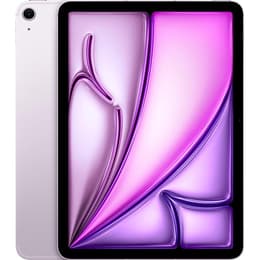
Galaxy Tab S8 (11.0", 2022) vs iPad Air 7 (2025, M3 series)

Galaxy Tab S8 (11.0", 2022)
Starting at

Refurbished price:$309.00

Versus $655.00 new

See options
iPad Air 7 (2025, M3 series)
Starting at

Refurbished price:$419.95

Versus $849.00 new

See options

Ratings

The Samsung Galaxy Tab S8, released in early 2022, and the Apple iPad Air (M3 Series), launched in March 2025, represent distinct approaches to the tablet experience. While both devices offer premium features and robust performance, they cater to different user ecosystems and priorities. The Galaxy Tab S8 operates on Android, providing a versatile and open platform, whereas the iPad Air runs on iPadOS, known for its optimized applications and seamless integration within the Apple ecosystem. Key differentiators between these two tablets include their core processing power, display technology, and stylus integration.

Scores

Durability

When considering the long-term usability of a tablet, software support and physical durability are important factors.

  • Software Longevity: The Galaxy Tab S8, launched with Android 12, is expected to receive up to four major Android OS updates, extending its software support until approximately 2026, with security patches continuing until 2027. The iPad Air (M3 Series), running on iPadOS, typically benefits from a longer software support window, historically receiving five to seven years of major operating system updates, suggesting support well into the late 2020s.
  • Physical Durability: Both tablets feature a robust aluminum construction, contributing to their overall resilience. The Galaxy Tab S8 utilizes a glass front with an aluminum back and frame, while the iPad Air (M3 Series) is constructed from 100% recycled aluminum. Both designs offer a solid feel and are built to withstand daily use.
  • Repairability: While specific repairability scores can vary, both devices are generally not designed for easy user repair, requiring specialized tools and expertise for internal component access.

Release Year

2022

2025

Last OS Compatibility

Yes

Yes

OS

Android

iPadOS

Performance

Performance is a critical aspect for tablets, influencing everything from app responsiveness to demanding creative tasks.

  • Processing Capabilities: The Galaxy Tab S8 is powered by a high-end processor from its release year, enabling it to handle demanding applications, multitasking, and graphic-intensive games smoothly. Users can expect fluid navigation and efficient operation for most daily tasks. The iPad Air (M3 Series) features a more recent, desktop-class processor, which provides a significant performance advantage, particularly for intensive workflows such as video editing, 3D rendering, and advanced gaming.
  • Multitasking and Responsiveness: Both tablets offer ample RAM for effective multitasking. The Galaxy Tab S8 comes with 8GB or 12GB of RAM, allowing users to run multiple applications simultaneously without significant slowdowns. The iPad Air (M3 Series) is equipped with 8GB of RAM, which, combined with its efficient operating system, ensures a highly responsive user experience even with numerous apps open.
  • Battery Behavior: The Galaxy Tab S8 is equipped with an 8000 mAh battery, providing excellent endurance, with users reporting around 12 hours and 52-53 minutes of continuous web surfing on a single charge. The iPad Air (M3 Series) is rated for up to 10 hours of battery life for web browsing or video playback. Some users of previous iPad Air models have noted varying battery performance, but the M3 chip's efficiency may contribute to consistent daily usage.

Memory (GB)

8 GB

8 GB

Screen quality

The display is a primary interface for tablets, and both devices offer high-quality visual experiences with distinct characteristics.

  • Display Technology and Clarity: The Galaxy Tab S8 features an 11-inch TFT LCD panel with a resolution of 2560 x 1600 pixels, delivering clear and vibrant visuals. The iPad Air (M3 Series) comes with an 11-inch Liquid Retina IPS LCD display, offering a resolution of 2360 x 1640 pixels, known for its color accuracy and sharp image reproduction.
  • Refresh Rate and Smoothness: A notable difference is the refresh rate. The Galaxy Tab S8 boasts a 120Hz adaptive refresh rate, which provides exceptionally smooth scrolling and a more fluid visual experience, particularly noticeable in fast-paced content and navigation. The iPad Air (M3 Series) typically features a standard 60Hz refresh rate, which still offers a smooth experience for most users, though it may not match the fluidity of a 120Hz display.
  • Brightness and Viewing Experience: Both displays offer sufficient brightness for indoor use, and the iPad Air's display includes an anti-reflective coating for improved readability in brighter environments. The aspect ratio also influences the viewing experience; the Galaxy Tab S8's 16:10 aspect ratio is often preferred for media consumption, while the iPad Air's 4:3 aspect ratio is well-suited for productivity tasks like document viewing and note-taking.

Resolution

1600 x 2560

2360 x 1640

Screen type

TFT LCD

Liquid Retina display

Pixel density

280ppp

264ppp

Audiovisual

While tablets are not typically primary photography devices, their camera systems are important for video calls, document scanning, and casual captures.

  • Rear Camera System: The Galaxy Tab S8 is equipped with a dual-camera setup on the rear, featuring a 13MP wide-angle lens and a 6MP ultrawide lens. This configuration allows for more versatile photography options. The iPad Air (M3 Series) includes a single 12MP wide-angle camera on its rear, capable of capturing detailed photos and 4K video.
  • Front Camera and Video Conferencing: Both tablets excel in front-facing camera capabilities, crucial for video calls. The Galaxy Tab S8 features a 12MP ultrawide front camera with an auto-framing feature that keeps the subject centered during calls. The iPad Air (M3 Series) also has a 12MP ultrawide front camera, strategically placed on the landscape edge for a more natural viewing angle during video conferences, and includes Apple's Center Stage feature for dynamic framing.
  • Video Recording and Audio: Both devices support high-quality video recording, with the iPad Air (M3 Series) capable of 4K video capture. For audio, both tablets provide clear microphone quality for calls and offer capable speaker outputs for media consumption, though the specific audio tuning and speaker configurations may differ.

Miscellaneous

Beyond core specifications, several practical features contribute to the overall user experience and versatility of these tablets.

  • Connectivity Options: Both the Galaxy Tab S8 and the iPad Air (M3 Series) support modern wireless standards, including Wi-Fi 6E for fast internet speeds and Bluetooth 5.2 (Tab S8) or 5.3 (iPad Air) for accessory connections. Cellular models of both devices offer sub-6GHz 5G connectivity.
  • Port Types and Accessories: The Galaxy Tab S8 features a USB-C 3.2 port and includes the S Pen stylus in the box, offering a complete creative and productivity tool from the start. It also supports expandable storage via a microSD card. The iPad Air (M3 Series) utilizes a USB-C port, likely with Thunderbolt/USB 4 capabilities for high-speed data transfer and external display support. The Apple Pencil (Pro or USB-C) is supported but sold separately.
  • Biometric Security and Ergonomics: The Galaxy Tab S8 typically uses a fingerprint sensor for secure unlocking. The iPad Air (M3 Series) also incorporates Touch ID (fingerprint sensor) integrated into the power button. In terms of handling, the Galaxy Tab S8 weighs 503 grams (1.11 lbs) and measures 9.99 x 6.51 x 0.25 inches, while the 11-inch iPad Air (M3 Series) weighs 461 grams (1.02 lbs) and measures 9.74 x 7.02 x 0.24 inches, making the iPad Air slightly lighter and marginally thinner.

Weight

18 oz

1 oz

Screen size (inches)

11.0

11

Network

Wi-Fi

Wi-Fi + 5G

Carrier compatibility

Without SIM Port

Unlocked

The choice between the Samsung Galaxy Tab S8 (2022) and the Apple iPad Air (M3 Series, 2025) largely depends on individual user needs and ecosystem preferences. Users often praise the Galaxy Tab S8 for its included S Pen, vibrant 120Hz LCD display, and the versatility offered by the Android operating system and Samsung's DeX mode, which provides a desktop-like experience. Some common criticisms for Android tablets, generally, include app optimization compared to iPadOS. Conversely, the iPad Air (M3 Series) is frequently lauded for its powerful performance, longer software support, and the highly optimized app ecosystem of iPadOS. A frequent point of consideration for potential iPad users is the separate purchase required for the Apple Pencil.

Users prioritizing an open ecosystem, an included stylus for creative work, and a high refresh rate display for media consumption may find the Galaxy Tab S8 well-suited to their needs. Those who value raw processing power for demanding applications, a longer software update cycle, and the extensive range of optimized applications within the Apple ecosystem will likely lean towards the iPad Air (M3 Series). Both devices offer a premium tablet experience, and for those seeking a more sustainable choice, quality-assured refurbished options are available for both models, providing an eco-friendly alternative to purchasing new.

See all articles

Our recent comparisons