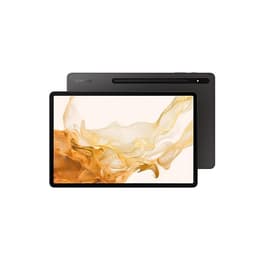

Galaxy Tab S8+ (12.4", 2022) vs Galaxy Tab S9 FE (10.9", 2023)

Galaxy Tab S8+ (12.4", 2022)
Starting at

Refurbished price:$321.99

Versus $999.99 new

See options
Galaxy Tab S9 FE (10.9", 2023)
Starting at

Refurbished price:$245.28

Versus $549.00 new

See options

Ratings

The Samsung Galaxy Tab S8 Plus, released in 2022, and the Samsung Galaxy Tab S9 FE, launched in 2023, are Android tablets designed for different user needs. While both offer a versatile tablet experience with S Pen support, the Tab S8 Plus is positioned as a more premium device with a larger, higher-quality display and more powerful internal components. The Tab S9 FE, a more recent Fan Edition model, provides a balanced experience with a focus on accessibility and slightly longer software support due to its newer release.

Scores

Durability

When considering the longevity of these tablets, several factors come into play, including their release timelines, software support, and physical durability.

  • Release Timeline: The Galaxy Tab S8 Plus was released in February 2022, making it an older model compared to the Galaxy Tab S9 FE, which launched in October 2023. This difference in release date directly impacts their expected software support lifespans.
  • OS Support Duration: The Galaxy Tab S8 Plus is expected to receive major Android OS updates until 2026 and security patches until 2027. The newer Galaxy Tab S9 FE, being part of the S9 series, is anticipated to receive four years of Android updates and five years of security patches, potentially extending its software longevity beyond the S8 Plus.
  • Physical Durability: Both tablets feature an aluminum frame, contributing to a solid build. The Galaxy Tab S9 FE also boasts an IP68 rating for dust and water resistance, a feature not present in the Tab S8 Plus, offering enhanced protection against environmental elements.

Release Year

2022

2023

Compatible with latest Update

Yes

Yes

OS

Android

Android

Performance

The performance capabilities of these two tablets differ, primarily due to their internal processing components and available memory configurations.

  • Processing Power: The Galaxy Tab S8 Plus is equipped with a more powerful processor, allowing it to handle demanding applications, intensive multitasking, and graphic-heavy games with greater fluidity. Users will experience quicker app loading times and smoother transitions. The Galaxy Tab S9 FE, while capable for everyday tasks, web browsing, and media consumption, may show limitations when running very resource-intensive applications or engaging in high-end gaming.
  • Multitasking and Storage: The Tab S8 Plus typically offers higher RAM configurations (8GB or 12GB) compared to the Tab S9 FE (6GB or 8GB), which can lead to a more seamless multitasking experience on the S8 Plus, allowing more applications to run simultaneously in the background without slowdowns. Both tablets offer 128GB or 256GB storage options, expandable via microSD card, providing ample space for files and applications.
  • Battery Behavior: The Galaxy Tab S8 Plus features a larger 10,090 mAh battery, while the Galaxy Tab S9 FE has an 8,000 mAh battery. Despite the S8 Plus's larger and higher-resolution display, its battery capacity is designed to support extended usage, with users often reporting it can last through a full day of heavy use. The S9 FE's battery, combined with its less power-intensive display, also aims for all-day usage for typical activities.

Memory (GB)

8 GB

6 GB

Processor

Qualcomm SM8450 Snapdragon 8 Gen 1

Exynos 1380

Screen quality

The visual experience is a significant differentiator between these two tablets, primarily due to their display technologies and specifications.

  • Display Technology and Clarity: The Galaxy Tab S8 Plus features a 12.4-inch Super AMOLED display, known for its deep blacks, high contrast, and vibrant color reproduction. This results in a rich and immersive viewing experience, particularly for movies and detailed graphics. The Galaxy Tab S9 FE comes with a 10.9-inch LCD display, which offers good clarity and color accuracy, but does not achieve the same level of contrast or black levels as an AMOLED panel.
  • Resolution and Refresh Rate: The Tab S8 Plus boasts a higher resolution of 2800 x 1752 pixels and a 120Hz refresh rate, providing exceptionally sharp images and very smooth scrolling and animations. The Tab S9 FE has a resolution of 2304 x 1440 pixels and a 90Hz refresh rate, which still offers a smooth experience for most users but is not as fluid as the 120Hz panel.
  • Brightness and Viewing Experience: Both tablets offer sufficient brightness for indoor use. The Super AMOLED panel on the S8 Plus generally provides better outdoor visibility due to its inherent brightness capabilities and contrast. The S9 FE includes a Vision Booster feature that automatically adjusts screen brightness based on ambient light, aiming to improve outdoor viewing.

Resolution

1752 x 2800

1440 x 2304

Screen type

Super AMOLED

IPS LCD

Pixel density

270ppp

250ppp

Audiovisual

The camera systems on these tablets are designed for different levels of versatility, with both offering capable options for common tablet photography and video conferencing.

  • Rear Camera System: The Galaxy Tab S8 Plus features a dual-camera setup on the rear, including a 13MP main lens and a 6MP ultrawide lens, allowing for more versatile photography, including wider landscape shots. It supports 4K video recording at 30/60fps. The Galaxy Tab S9 FE has a single 8MP wide-angle rear camera, suitable for document scanning and casual photography.
  • Front Camera Quality: Both tablets are equipped with a 12MP ultrawide front-facing camera, which is well-suited for video calls and selfies, capable of capturing a wider field of view to include multiple people or more of the background. This makes both devices strong contenders for virtual meetings and online learning.
  • Audio Experience: Both tablets feature quad speakers tuned by AKG with Dolby Atmos support, providing a rich and immersive audio experience for media consumption. This ensures clear sound for videos, music, and calls.

Miscellaneous

Beyond the core specifications, several practical elements contribute to the overall user experience and differentiate these two Samsung tablets.

  • Connectivity Options: The Galaxy Tab S8 Plus supports Wi-Fi 6E and Bluetooth 5.2, offering fast and stable wireless connections. The Galaxy Tab S9 FE supports Wi-Fi 6 and Bluetooth 5.3, providing similar modern connectivity standards, with Bluetooth 5.3 offering slight improvements in efficiency and range. Both models are available with optional 5G connectivity.
  • Port Types and Sensors: Both tablets utilize a USB Type-C port for charging and data transfer. They also include useful sensors such as an ambient light sensor, gyroscope, and accelerometer. The Tab S8 Plus features an in-screen fingerprint sensor, while the Tab S9 FE has a side-mounted fingerprint sensor. Both devices come with an S Pen included, enhancing productivity for note-taking and drawing.
  • Physical Characteristics: The Galaxy Tab S8 Plus is a larger device, measuring 285 x 185 x 5.7 mm and weighing around 567g (Wi-Fi model). The Galaxy Tab S9 FE is more compact at 254.3 x 165.8 x 6.5 mm and weighs approximately 523g (Wi-Fi model). The S8 Plus is notably thinner despite its larger screen, while the S9 FE is slightly thicker but lighter overall.

Weight

1 oz

15 oz

Screen size (inches)

12.4

10.9

Network

Wi-Fi + 5G

Wi-Fi

Carrier compatibility

Unlocked

Without SIM Port

Connector

USB Type-C

USB Type-C

User sentiment often highlights the Galaxy Tab S8 Plus for its premium display and robust performance. Many users praise its vibrant Super AMOLED screen and the smooth experience it offers for demanding applications and media consumption. Common criticisms, though less frequent, sometimes point to its older release date impacting future software updates compared to newer models.

The Galaxy Tab S9 FE is frequently lauded for its balanced performance for everyday use, its inclusion of the S Pen, and its extended software support timeline. Users appreciate its suitability for tasks like reading, note-taking, and video watching. Some feedback suggests that its processor might feel less responsive for heavy multitasking or high-end gaming compared to more powerful tablets.

Users prioritizing a larger, more vibrant display and top-tier performance for creative work, intensive gaming, or extensive multitasking may find the Galaxy Tab S8 Plus better suited to their needs. Conversely, users who value a more compact form factor, longer software update longevity, and sufficient performance for general productivity, media consumption, and note-taking will likely find the Galaxy Tab S9 FE to be a practical choice. Both tablets offer a quality-assured refurbished option, providing an eco-friendly alternative for those seeking reliable devices.
See all articles

Our recent comparisons