
Galaxy Tab S8+ (12.4", 2022) vs iPad 10 (2022, A14 series)

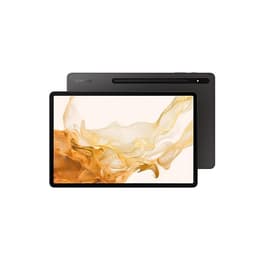
Galaxy Tab S8+ (12.4", 2022)
Starting at

Refurbished price:$321.99

Versus $999.99 new

See options
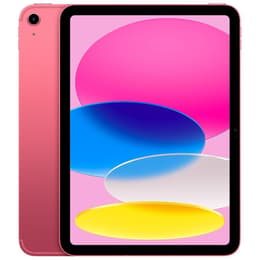
iPad 10 (2022, A14 series)
Starting at

Refurbished price:$275.00

Versus $349.00 new

See options

Ratings

The Samsung Galaxy Tab S8+ (2022) and the Apple iPad (10th generation, 2022) are two prominent tablets released in the same year, offering distinct experiences rooted in their respective operating systems. The Galaxy Tab S8+ operates on Android, featuring a larger display and a focus on productivity with its included stylus, while the iPad runs on iPadOS, known for its intuitive interface and robust app ecosystem. These devices cater to different user preferences, particularly concerning software environment, screen characteristics, and accessory integration.

Scores

Durability

When evaluating the long-term usability of a tablet, both software support and physical resilience are important considerations for users.

  • Release Timeline: The Samsung Galaxy Tab S8+ was introduced in February 2022, while the Apple iPad (10th generation) followed later in October 2022. This later release date for the iPad provides a slight advantage in terms of its lifecycle.
  • Software Longevity: Samsung has committed to providing approximately four major Android OS upgrades and five years of security updates for the Galaxy Tab S8+ series from its release. Apple typically offers 5-6 years of iPadOS updates for its devices, suggesting the iPad (10th generation) can expect a similar, or potentially slightly longer, period of major OS support due to its newer launch.
  • Practical Lifespan: Both tablets are constructed with durable materials, featuring glass fronts and aluminum backs and frames. The practical lifespan for either device will largely depend on individual usage patterns and care, with consistent software updates playing a significant role in maintaining their relevance and security over time. The iPad (10th generation) has been noted as challenging to repair, particularly concerning battery replacement and the USB-C port.

Release Year

2022

2022

Last OS Compatibility

Yes

Yes

OS

Android

iPadOS

Performance

The performance capabilities of these tablets influence their ability to handle various tasks, from everyday browsing to more demanding applications and multitasking scenarios.

  • Processing Power: The Galaxy Tab S8+ is equipped with a powerful current-generation octa-core processor, enabling it to manage demanding applications and multitasking smoothly. The iPad (10th generation) features a capable chip with a 6-core CPU and 4-core graphics, providing responsive performance for a wide range of tasks. Users engaging in intensive creative work or heavy gaming might notice differences in sustained performance.
  • Storage and Memory: The Galaxy Tab S8+ offers configurations with 8GB or 12GB of RAM and 128GB or 256GB of internal storage, which is expandable via a microSD card. The iPad (10th generation) comes with 4GB of RAM and storage options of 64GB or 256GB, without expandable storage. For users who require significant storage for media or large files, the Tab S8+ offers more flexibility.
  • Battery Behavior: The Galaxy Tab S8+ houses a 10,090mAh battery, with users reporting it can last through a full day of mixed use, including streaming and productivity, often reaching 9-12 hours. The iPad (10th generation) has a 7,606mAh battery, with Apple claiming up to 10 hours of web surfing or video playback over Wi-Fi. Real-world usage reports for the iPad vary, with some users experiencing around 10 hours, while others note inconsistencies depending on usage intensity.

Memory (GB)

8 GB

4 GB

Screen quality

The display is a primary interface for tablets, significantly influencing media consumption, productivity, and overall user experience.

  • Display Technology and Size: The Samsung Galaxy Tab S8+ features a larger 12.4-inch Super AMOLED display, known for its deep blacks, high contrast, and vibrant colors. In contrast, the iPad (10th generation) features a 10.9-inch Liquid Retina IPS LCD display, which offers accurate color reproduction and wide viewing angles. The larger size of the Tab S8+ provides more screen real estate for multitasking or immersive viewing.
  • Resolution and Clarity: The Galaxy Tab S8+ provides a resolution of 2800 x 1752 pixels, resulting in a pixel density of 266 ppi. The iPad (10th generation) has a resolution of 2360 x 1640 pixels, with a pixel density of 264 ppi. Both offer clear and sharp visuals for text and images.
  • Refresh Rate and Brightness: A notable difference is the refresh rate; the Galaxy Tab S8+ offers a 120Hz refresh rate, providing smoother scrolling and more fluid animations. The iPad (10th generation) has a standard 60Hz refresh rate. The iPad's display offers up to 500 nits of brightness, suitable for various lighting conditions. The Super AMOLED display of the Tab S8+ also offers good brightness and excellent outdoor visibility.

Resolution

1752 x 2800

2360 x 1640

Screen type

Super AMOLED

Liquid Retina display

Pixel density

270ppp

264ppp

Audiovisual

Both tablets include camera systems capable of capturing photos and videos, as well as facilitating video calls, though with varying specifications and user experiences.

  • Rear Camera Capabilities: The Samsung Galaxy Tab S8+ is equipped with a dual-camera setup on the rear, featuring a 13-megapixel primary sensor and a 6-megapixel ultrawide sensor, along with a flash. It supports 4K video recording at 30 frames per second. The iPad (10th generation) has a single 12-megapixel wide rear camera with an f/1.8 aperture, capable of recording 4K video at up to 60 frames per second.
  • Front Camera for Communication: For video calls and selfies, both tablets feature a 12-megapixel ultrawide front-facing camera. The iPad's front camera is positioned on the long edge, which is beneficial for landscape video calls, and includes Apple's Center Stage feature, which automatically keeps subjects in frame. The Tab S8+ also features an intelligent auto-framing software similar to Center Stage.
  • Audio and Media Consumption: The Galaxy Tab S8+ features quad stereo speakers tuned by AKG with Dolby Atmos support, providing a rich audio experience for media consumption. The iPad (10th generation) also offers stereo speakers, delivering clear audio for videos and music.

Miscellaneous

Beyond core specifications, several practical elements contribute to the overall user experience and device utility.

  • Connectivity Options: Both tablets support Wi-Fi 6 (802.11ax) and Bluetooth 5.2. Both also offer optional 5G connectivity for cellular models, providing fast mobile data speeds where available. The Tab S8+ also supports Wi-Fi 6E for enhanced wireless performance.
  • Port Types and Biometrics: Both devices utilize a USB-C port for charging and data transfer. The Galaxy Tab S8+ features a USB Type-C 3.2 port, offering faster data transfer speeds. The iPad (10th generation)'s USB-C port operates at USB 2.0 speeds. For security, the Galaxy Tab S8+ includes an in-display fingerprint sensor. The iPad (10th generation) integrates Touch ID into its power button.
  • Design and Accessories: The Galaxy Tab S8+ has a slim profile (5.7mm thick) and weighs around 567-572 grams (Wi-Fi/5G models). It comes with the S Pen included, which attaches magnetically for charging and storage. The iPad (10th generation) is slightly thicker (7mm) and lighter (477-481 grams for Wi-Fi/cellular models). It supports the first-generation Apple Pencil (requiring a USB-C to Lightning adapter for pairing and charging) and the Apple Pencil (USB-C).

Weight

1 oz

16 oz

Screen size (inches)

12.4

10.9

Network

Wi-Fi + 5G

Wi-Fi

Carrier compatibility

Unlocked

Without SIM Port

Users often praise the Samsung Galaxy Tab S8+ for its expansive and vibrant Super AMOLED display, which provides deep blacks and smooth visuals thanks to its 120Hz refresh rate. The inclusion of the S Pen in the box and the DeX desktop-like experience are frequently highlighted as strong points for productivity and creative tasks. Some users, however, note that Android's tablet app ecosystem, while improving, may not always offer the same level of optimization as iPadOS for certain applications.

The Apple iPad (10th generation) is generally well-regarded for its reliable performance, the seamless integration within the Apple ecosystem, and the quality of its cameras, particularly the landscape-oriented front camera with Center Stage. Common feedback points include the base model's 64GB storage, which can be limiting for some users, and the 60Hz refresh rate of its display, which offers a less fluid scrolling experience compared to higher refresh rate screens. The accessory situation for the Apple Pencil (1st generation) also receives mixed feedback due to the adapter requirement.

Users prioritizing a large, high-refresh-rate display for media consumption and a versatile stylus for note-taking or drawing, coupled with expandable storage, may find the Samsung Galaxy Tab S8+ well-suited to their needs. Those who value a streamlined operating system, a robust app ecosystem, and consistent performance for everyday tasks and light creative work might lean towards the Apple iPad (10th generation). Both devices offer a quality-assured refurbished option, providing an eco-friendly alternative for consumers.

See all articles

Our recent comparisons