Compare models
Galaxy Z Flip5 • Unlocked vs iPhone 14 Plus • Locked T-Mobile
- 1-year warranty
- Free standard shipping
- Free 30-day returns
Differences at a glance
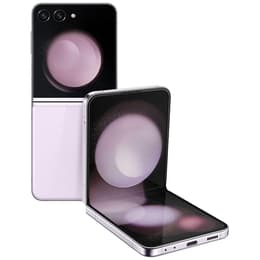
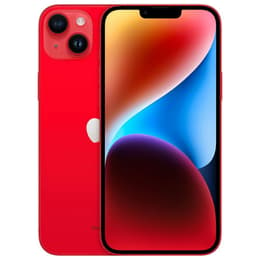
The Samsung Galaxy Z Flip5, released in August 2023, and the iPhone 14 Plus, launched in October 2022, represent distinct approaches to modern smartphone design. The Galaxy Z Flip5 offers a unique clamshell foldable form factor running on Android, while the iPhone 14 Plus provides a traditional slab design within the iOS ecosystem. Key differentiators between these two devices include their physical design, operating systems, and display technologies, catering to different user preferences and usage patterns.
Available Models
Color
Storage (GB)
Scores
Durability
When considering the long-term usability of these devices, their release timelines and software support policies are important factors.
- Release Timeline: The Galaxy Z Flip5 was released in August 2023, making it nearly a year newer than the iPhone 14 Plus, which launched in October 2022. This difference in release date can influence the duration of future software support.
- Software Longevity: Samsung has committed to four generations of Android OS upgrades and five years of security updates for the Galaxy Z Flip5, meaning it is expected to receive updates up to Android 17. Apple typically provides iOS updates for its devices for five to six years from their release. Both devices offer robust software support, but the newer release of the Flip5 may provide a slightly longer window of active updates from its launch date.
- Physical Durability: The Galaxy Z Flip5 features an Armor Aluminum frame and Gorilla Glass Victus 2 on its cover screen and back panel, along with an IPX8 rating for water resistance. Its redesigned hinge allows it to close completely flat. The iPhone 14 Plus is built with a Ceramic Shield front cover and an aluminum design, offering IP68 water and dust resistance. The foldable nature of the Flip5 introduces a mechanical hinge, which is a unique point of consideration compared to the rigid structure of the iPhone 14 Plus.
Release Year
2023
2022
Last OS Compatibility
Yes
Yes
OS
Android
iOS
Foldable
Yes
No
Performance
Both the Galaxy Z Flip5 and the iPhone 14 Plus deliver capable performance for daily tasks, though they achieve this with different underlying hardware architectures.
- Processing Power: The Galaxy Z Flip5 is equipped with a current-generation processor designed for demanding applications and smooth multitasking. Users can expect responsive performance across various apps and mobile games. The iPhone 14 Plus utilizes a powerful chip that provides consistent and efficient performance for everyday use, gaming, and handling multiple applications simultaneously.
- Multitasking and Responsiveness: With 8GB of RAM, the Galaxy Z Flip5 is well-suited for managing numerous open applications and switching between them fluidly. The iPhone 14 Plus comes with 6GB of RAM, which, combined with its optimized operating system, ensures a smooth and responsive user experience even with several apps running in the background.
- Storage Options: Both devices offer a range of internal storage capacities to suit different user needs. The Galaxy Z Flip5 is available with 256GB or 512GB of storage. The iPhone 14 Plus provides options for 128GB, 256GB, or 512GB of storage.
Screen quality
The display experience on these two smartphones differs significantly due to their distinct form factors and display technologies.
- Main Display Technology: The Galaxy Z Flip5 features a 6.7-inch foldable Dynamic AMOLED 2X main display, offering vibrant colors and deep blacks. The iPhone 14 Plus sports a 6.7-inch Super Retina XDR OLED display, known for its high contrast and color accuracy.
- Refresh Rate and Smoothness: The Galaxy Z Flip5's main display boasts an adaptive refresh rate that can go up to 120Hz, contributing to smoother scrolling and more fluid animations. In contrast, the iPhone 14 Plus has a standard 60Hz refresh rate, which provides a consistent viewing experience but does not offer the same level of visual fluidity as higher refresh rate displays.
- Brightness and Clarity: Both devices offer excellent brightness levels for visibility in various lighting conditions. The Galaxy Z Flip5's main screen can reach a peak brightness of 1750 nits, while its cover screen can reach 1600 nits. The iPhone 14 Plus achieves 800 nits of typical brightness and up to 1200 nits for HDR content, ensuring clear viewing even outdoors. The Galaxy Z Flip5 also includes a 3.4-inch Super AMOLED cover screen with a resolution of 720x748 pixels, allowing for quick interactions without unfolding the device.
Resolution
1080 x 2640
1284 x 2778
Screen type
Foldable Dynamic AMOLED 2X
Super Retina XDR OLED
Audiovisual
Both smartphones offer capable camera systems designed to capture high-quality photos and videos, each with its own set of features and advantages.
- Rear Camera Systems: The Galaxy Z Flip5 is equipped with a dual-camera setup on the rear, featuring a 12MP wide-angle lens and a 12MP ultra-wide-angle lens. The iPhone 14 Plus also has a dual-camera system, consisting of a 12MP main camera with sensor-shift optical image stabilization and a 12MP ultra-wide camera.
- Photography Features: The Galaxy Z Flip5 leverages its foldable design with 'Flex Mode,' allowing users to take hands-free photos and videos at various angles, and use the larger cover screen as a viewfinder for high-quality selfies with the main cameras. The iPhone 14 Plus introduces the Photonic Engine for improved low-light performance, capturing more detail and color, and features Cinematic Mode for video with shallow depth of field, and Action Mode for enhanced video stabilization.
- Front-Facing Cameras: For selfies and video calls, the Galaxy Z Flip5 has a 10MP front camera located on the main display. The iPhone 14 Plus features a 12MP TrueDepth front camera with autofocus and a wider aperture, designed for better low-light performance and enabling Face ID.
Main camera
12 megapixels
12 megapixels
Front camera
10 megapixels
12 megapixels
Miscellaneous
Beyond core performance and display, several practical elements contribute to the overall user experience of these devices.
- Connectivity and Ports: Both the Galaxy Z Flip5 and iPhone 14 Plus support 5G connectivity for fast mobile data. The Galaxy Z Flip5 uses a USB-C port for charging and data transfer, and supports Wi-Fi 6E and Bluetooth 5.3. The iPhone 14 Plus features a Lightning port, Wi-Fi 6, and Bluetooth 5.3.
- Biometric Security: The Galaxy Z Flip5 incorporates a side-mounted fingerprint sensor for secure unlocking and authentication. The iPhone 14 Plus relies on Face ID, Apple's facial recognition system, for biometric security.
- Physical Characteristics: The Galaxy Z Flip5, when folded, is designed to be compact and pocketable, weighing 187 grams. The iPhone 14 Plus, with its traditional form factor, weighs 203 grams and offers a larger, uninterrupted screen experience. Both devices are constructed with durable materials, including aluminum frames.
Weight
7 oz
7 oz
Screen size (inches)
6.7
6.7
Network
5G
5G
SIM card
Physical SIM + eSIM
eSIM
Carrier compatibility
Unlocked
T-Mobile
Connector
USB-C
Lightning
What the community thinks
User sentiment gathered from various online discussions highlights distinct strengths and considerations for both the Galaxy Z Flip5 and the iPhone 14 Plus. The Galaxy Z Flip5 is often praised for its unique, compact foldable design and the versatility offered by its larger cover screen, which allows for quick interactions and creative photography angles. Some users have noted its battery life as a point of consideration, and the visibility of the display crease is occasionally mentioned.
The iPhone 14 Plus receives commendation for its extended battery life, consistent performance, and reliable camera system, particularly its improvements in low-light photography and video stabilization. Common discussions sometimes point to its 60Hz display refresh rate as a potential area for enhancement compared to some competitors, and the continued use of the Lightning port is occasionally discussed.
Users prioritizing a compact, innovative form factor with the flexibility of a foldable display and the Android ecosystem may find the Galaxy Z Flip5 well-suited to their needs. Its large cover screen and unique camera capabilities cater to those who enjoy hands-free usage and a distinct aesthetic. Conversely, users who value a large, traditional display, robust battery performance, and the integrated experience of the iOS ecosystem will likely lean towards the iPhone 14 Plus. It offers a straightforward, powerful smartphone experience with a strong emphasis on camera quality and overall reliability.
For those considering either device, exploring quality-assured refurbished options can provide an eco-friendly alternative to new purchases, allowing access to these technologies in a more sustainable way.