
Galaxy Z Flip5 • Unlocked vs iPhone 16 Pro Max • Unlocked

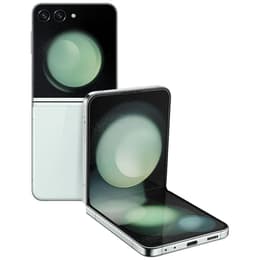
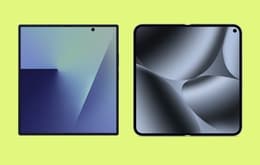
Galaxy Z Flip5 • Unlocked
Starting at

Refurbished price:$234.99

Versus $1,147.99 new

See options
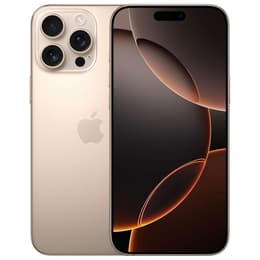
iPhone 16 Pro Max • Unlocked
Starting at

Refurbished price:$759.00

Versus $1,199.00 new

See options

Ratings

The Samsung Galaxy Z Flip5, released in August 2023, and the Apple iPhone 16 Pro Max, launched in September 2024, represent distinct approaches to modern smartphone design and functionality. The Z Flip5 offers a unique foldable clamshell form factor running on Android, emphasizing portability and a compact experience. In contrast, the iPhone 16 Pro Max is a traditional slate smartphone operating on iOS, prioritizing a large, expansive display and advanced computational capabilities. These devices cater to different user preferences, from those seeking a pocketable design to those desiring a powerful, uncompromised flagship experience.

Scores

Durability

The longevity of a smartphone is influenced by its physical resilience and ongoing software support. These two devices offer different profiles in terms of expected lifespan and durability.

  • Software Support: The Galaxy Z Flip5, an Android device, is committed to four generations of OS upgrades (up to Android 17) and five years of security updates, extending its support through 2028. The iPhone 16 Pro Max, running iOS, typically receives software updates for a longer period, often five to seven years from its release, providing an extended window for the latest features and security patches.
  • Physical Durability: The Galaxy Z Flip5 features a foldable design with a hinge mechanism designed for a flat fold. While the inner screen is protected when the device is closed, some users have reported issues with the plastic near the folds and chipping along the edges over time. It carries an IPX8 water resistance rating. The iPhone 16 Pro Max incorporates a second-generation Ceramic Shield on its front glass and a titanium frame, enhancing its resistance to drops and scratches. It is rated IP68 for dust and water resistance, allowing submersion up to 6 meters for 30 minutes. Despite these advancements, the glass construction of the iPhone 16 Pro Max remains vulnerable to shattering upon impact with hard surfaces.
  • Practical Lifespan: Users of the Z Flip5 often praise its compact form factor but sometimes express concerns about the long-term durability of the foldable screen and battery degradation. The iPhone 16 Pro Max, with its robust build and extended software support, is designed for a longer practical lifespan, appealing to users who prefer to keep their devices for many years.

Release Year

2023

2024

Last OS Compatibility

Yes

Yes

Foldable

Yes

No

Performance

Performance is a key differentiator, with both devices offering powerful internals tailored to their respective operating systems and user experiences.

  • Processing Power: The Galaxy Z Flip5 is equipped with the Qualcomm Snapdragon 8 Gen 2 for Galaxy, a 4nm octa-core processor. This chipset handles demanding applications and multitasking smoothly, though intensive tasks like prolonged Wi-Fi hotspot use or wireless charging can cause the device to warm up. The iPhone 16 Pro Max is powered by Apple's A18 Pro SoC, a 3nm chip featuring a new 6-core CPU, 6-core GPU, and a 16-core Neural Engine. This hardware delivers blazing-fast performance, supporting intense gaming and video editing without noticeable lag.
  • Memory and Storage: The Z Flip5 comes with 8GB of RAM and offers internal storage options of 256GB or 512GB, without expandable storage. The iPhone 16 Pro Max also features 8GB of RAM and provides a wider range of storage configurations, including 128GB, 256GB, 512GB, and 1TB options.
  • Battery Behavior: The Galaxy Z Flip5 has a 3700 mAh battery, which typically provides just over a day of use (around 32 hours) with light to moderate activity. Heavy usage, such as video recording, can reduce this to about half a day. The iPhone 16 Pro Max features a larger 4676 mAh battery and has demonstrated significant improvements in battery life, with tests showing it can last over 18 hours of continuous web surfing. Both devices support fast charging, with the Z Flip5 offering up to 25W wired and 15W wireless charging, and the iPhone 16 Pro Max supporting 40W wired and 25W MagSafe wireless charging.

Memory (GB)

8 GB

8 GB

Screen quality

The display experience varies significantly between these two devices, primarily due to their distinct form factors and display technologies.

  • Display Technology and Size: The Galaxy Z Flip5 features a 6.7-inch foldable Dynamic AMOLED 2X main display with a 1080x2640 pixel resolution. When folded, it reveals a 3.4-inch Super AMOLED cover screen with a 720x748 pixel resolution. The iPhone 16 Pro Max boasts a larger 6.9-inch Super Retina XDR OLED display with a 2868x1320 pixel resolution at 460 ppi.
  • Brightness and Clarity: The Z Flip5's main display offers good color accuracy and appropriate brightness levels, particularly for HDR10 content, with a peak brightness of up to 1750 nits (internal claim). Its cover screen is also notably brighter and more practical than previous generations. The iPhone 16 Pro Max's display provides 1000 nits of typical brightness, 1600 nits for peak HDR content, and can reach up to 2000 nits for outdoor viewing. Both devices offer vibrant colors and sharp text, but the iPhone's larger, uninterrupted screen provides a more expansive viewing area.
  • Refresh Rate and Smoothness: The Z Flip5's main display features an adaptive refresh rate up to 120Hz, ensuring smooth scrolling and responsive interactions. Its cover screen operates at a 60Hz refresh rate. The iPhone 16 Pro Max incorporates ProMotion technology, offering an adaptive refresh rate up to 120Hz for fluid visuals and efficient power consumption.
  • Unique Characteristics: The Z Flip5's foldable nature means a visible crease on the main display, especially in certain lighting conditions. The iPhone 16 Pro Max features thinner bezels and the Dynamic Island, which integrates notifications and activities into a dynamic area at the top of the screen.

Resolution

1080 x 2640

1320 x 2868

Screen type

Foldable Dynamic AMOLED 2X

LTPO Super Retina XDR OLED

Audiovisual

Both smartphones offer advanced camera systems, but their configurations and performance characteristics cater to different photographic styles and user needs.

  • Rear Camera Systems: The Galaxy Z Flip5 features a dual-camera setup on the rear, consisting of a 12MP wide-angle lens with optical image stabilization (OIS) and Dual Pixel PDAF, and a 12MP ultrawide-angle lens with a 123-degree field of view. The iPhone 16 Pro Max boasts a more comprehensive Pro camera system, including a 48MP Fusion main camera with second-generation sensor-shift OIS, a 48MP Ultra Wide camera, and a 12MP 5x Telephoto lens with 3D sensor-shift OIS.
  • Photography Performance: In good lighting, the Z Flip5 produces images with bold colors and good detail, though some users note a tendency towards oversaturation. Its ultrawide camera also performs well, with consistent color matching between lenses. However, the Z Flip5 can exhibit noise in photos, particularly in low-light conditions and near the edges of images, and its lack of a dedicated telephoto lens means it relies on digital zoom, which can affect image quality. The iPhone 16 Pro Max offers improved low-light capture and a wider dynamic range across its lenses. Its 48MP Ultra Wide camera is a significant upgrade, designed to capture more light and detail.
  • Video Recording Capabilities: The Z Flip5 supports 4K video recording at 30 frames per second (fps) with its main camera, and offers good stabilization up to 4K 60fps, though the ultrawide lens is limited to 4K 30fps. The iPhone 16 Pro Max elevates video recording with capabilities such as 4K video at 120fps in Dolby Vision, providing high resolution and frame rates for professional-grade video capture.
  • Additional Features: The Z Flip5 includes a 10MP front-facing camera and allows for flexible shooting angles due to its foldable design. The iPhone 16 Pro Max introduces a new Camera Control button for quick photo and video capture, and features advanced computational photography enhancements.

Main camera

12 megapixels

48 megapixels

Front camera

10 megapixels

12 megapixels

Miscellaneous

Beyond core performance, several practical elements contribute to the overall user experience and differentiate these two devices.

  • Connectivity: The Galaxy Z Flip5 supports 5G connectivity and various Wi-Fi standards. The iPhone 16 Pro Max also offers 5G and includes support for the newer Wi-Fi 7 standard, providing potentially faster and more reliable wireless connections. Both devices feature Bluetooth for wireless accessory pairing.
  • Ports and Biometrics: The Z Flip5 utilizes a USB Type-C 2.0 port for charging and data transfer and features a side-mounted fingerprint scanner for secure authentication. The iPhone 16 Pro Max uses a USB-C port and relies on Face ID for biometric security.
  • Design and Handling: The Z Flip5's defining characteristic is its foldable clamshell design. When unfolded, it measures 165.1 x 71.9 x 6.9 mm and weighs 187g. When folded, it becomes significantly more compact at 85.1 x 71.9 x 15.1 mm, making it highly portable and easy to carry in smaller pockets. The iPhone 16 Pro Max is a larger, traditional slate phone, measuring 163.0 x 77.6 x 8.25 mm and weighing 227g. Its titanium frame contributes to a durable yet relatively lightweight feel.
  • Other Features: The iPhone 16 Pro Max includes an Action Button, which can be customized for various functions, and integrates Apple Intelligence features for enhanced user interaction. The Z Flip5's larger cover screen allows for more extensive widget and app usage without unfolding the device.

Weight

7 oz

7990 oz

Screen size (inches)

6.7

6.9

Network

5G

5G

SIM card

Physical SIM + eSIM

eSIM

Carrier compatibility

Unlocked

Unlocked

Connector

USB-C

USB-C (USB 3)

User sentiment for the Galaxy Z Flip5 often highlights its unique, compact form factor as a major advantage, making it highly portable and a conversation starter. Users appreciate the improved cover screen for quick interactions and the flexibility of its camera for creative angles. However, common criticisms revolve around its battery life, which some heavy users find insufficient for a full day, and concerns about the long-term durability of the foldable screen and hinge mechanism. The camera performance, while good in ideal conditions, is sometimes perceived as not matching the quality of traditional flagship smartphones.

For the iPhone 16 Pro Max, users consistently praise its powerful performance, extended battery life, and advanced camera capabilities, particularly for video recording and low-light photography. The large, vibrant display and robust software ecosystem are also frequently cited as strong points. While its durability has improved with Ceramic Shield and a titanium frame, some users note that the glass construction still makes it susceptible to damage from significant drops. Its larger size, while beneficial for media consumption, may be a consideration for users preferring a more compact device.

Users prioritizing a highly portable, distinctive design with a focus on quick, glanceable interactions and creative photography options may find the Galaxy Z Flip5 well-suited to their needs. Conversely, users who value a large, immersive display, industry-leading performance, extended battery life, and a comprehensive, high-quality camera system for both photos and videos will likely lean towards the iPhone 16 Pro Max. Both devices offer compelling experiences, and for those considering a more sustainable choice, quality-assured refurbished options are available for both models, providing an eco-friendly alternative.

See all articles

Our recent comparisons