iPhone 11 • Unlocked vs Motorola Moto G (2022) • Unlocked

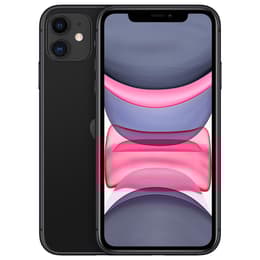
iPhone 11 • Unlocked
Starting at

Refurbished price:$152.00

Versus $499.00 new

See options
Motorola Moto G (2022) • Unlocked
See options

Ratings

The iPhone 11, released in September 2019, and the Motorola Moto G 2022, launched in April 2022, represent distinct approaches to smartphone design and functionality. Both devices operate on different ecosystems, with the iPhone 11 running Apple's iOS and the Moto G 2022 utilizing Google's Android platform. Key differentiators include their respective operating system philosophies, display technologies, and camera array configurations.

Scores

Durability

When considering the long-term usability of these devices, their release timelines and software support policies are important factors.

  • Release Timeline: The iPhone 11 was introduced in late 2019, making it an older device compared to the Moto G 2022, which arrived almost three years later. This difference in age directly impacts their remaining software support cycles.
  • Software Longevity: The iPhone 11 is expected to receive major iOS updates until the fall of 2026, with security patches continuing for an additional one to two years. In contrast, the Moto G 2022 typically receives one major Android OS update and approximately two years of security patches from its release date. This means the iPhone 11 generally offers a longer period of major software feature updates.
  • Physical Durability: The iPhone 11 features a glass front and back with an aluminum frame, offering IP68 water and dust resistance, allowing submersion up to 2 meters for 30 minutes. The Moto G 2022 includes a water-repellent coating, providing some protection against splashes but not full submersion.

Release Year

2019

2022

OS

iOS

Android

Foldable

No

No

Performance

The performance of a smartphone is crucial for daily tasks, from app usage to multitasking. Both devices offer capabilities suited for general use, though with different underlying hardware.

  • System Responsiveness: The iPhone 11 provides a consistently smooth and responsive user experience, handling most applications and multitasking without noticeable delays. Users generally report a fluid interaction with the operating system.
  • Application Handling: The Moto G 2022 is capable of managing everyday applications and light multitasking effectively. While generally smooth, some users have reported occasional app crashes, particularly with demanding applications or games.
  • Storage and Memory: The iPhone 11 is available with 64GB, 128GB, or 256GB of internal storage and 4GB of RAM. The Moto G 2022 offers 64GB or 256GB internal storage options, with either 4GB or 6GB of RAM, and includes expandable storage via a microSD card slot.

Memory (GB)

4 GB

4 GB

Screen quality

The display is a primary interface for smartphone interaction, and these two devices offer different visual experiences.

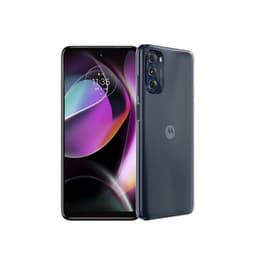
  • Display Technology: The iPhone 11 features a 6.1-inch Liquid Retina IPS LCD, known for its color accuracy and wide viewing angles. The Moto G 2022 comes with a larger 6.5-inch IPS LCD.
  • Resolution and Clarity: The iPhone 11 has a resolution of 1792 x 828 pixels, resulting in a pixel density of 326 PPI, which provides clear text and images in typical use. The Moto G 2022 offers an HD+ resolution of 1600 x 720 pixels, with a pixel density of 270 PPI, which is suitable for general viewing but may appear less sharp than higher-resolution displays.
  • Brightness and Smoothness: The iPhone 11 offers a typical maximum brightness of 625 nits, providing good visibility in various lighting conditions. The Moto G 2022 features a 90Hz refresh rate, which contributes to smoother scrolling and a more fluid visual experience compared to standard 60Hz displays.

Resolution

828 x 1792

720 x 1600

Audiovisual

Both smartphones are equipped with camera systems designed for capturing moments, though they approach photography with different hardware and software capabilities.

  • Rear Camera System: The iPhone 11 features a dual 12-megapixel camera system, including a wide and an ultrawide lens. It is known for its Night Mode, Deep Fusion for enhanced detail, and 4K video recording capabilities. The Moto G 2022 has a triple rear camera setup, consisting of a 50-megapixel main sensor, a 2-megapixel macro lens, and a 2-megapixel depth sensor.
  • Photography Performance: The iPhone 11 delivers consistent image quality in various conditions, with strong performance in everyday photography and effective low-light capabilities due to Night Mode. The Moto G 2022's main camera can capture detailed images in good lighting, but its low-light performance is less robust, and some users note a lack of an ultrawide lens.
  • Video and Front Camera: The iPhone 11 supports 4K video recording at up to 60 frames per second and features a 12-megapixel front camera capable of 4K video. The Moto G 2022 includes a 13-megapixel front camera and records video at lower resolutions compared to the iPhone 11.

Miscellaneous

Beyond core features, several practical elements contribute to the overall user experience of these devices.

  • Connectivity: The iPhone 11 supports 4G LTE, Wi-Fi 6, and Bluetooth 5.0. The Moto G 2022 offers 5G connectivity, along with Wi-Fi 802.11 a/b/g/n/ac and Bluetooth 5.1, providing access to newer, faster cellular networks.
  • Ports and Biometrics: The iPhone 11 uses Apple's proprietary Lightning port and relies on Face ID for secure authentication. The Moto G 2022 features a USB-C port for charging and data transfer, a 3.5mm headphone jack, and a side-mounted fingerprint sensor for unlocking.
  • Physical Characteristics: The iPhone 11 weighs 194 grams and measures 150.9 x 75.7 x 8.3 mm. The Moto G 2022 is slightly heavier at 204 grams and larger, with dimensions of 165.4 x 75.8 x 9.4 mm, which may impact one-handed use for some users.

Weight

7 oz

7 oz

Width

2,98 in

2.980 in

Height

5,94 in

6.510 in

Depth

0,32 in

0,370 in

Screen size (inches)

6.1

6.5

Network

LTE

5G

SIM card

Physical SIM + eSIM

Physical SIM

Carrier compatibility

Unlocked

Unlocked

Connector

Lightning

USB-C

User sentiment for the iPhone 11 often highlights its strong camera performance, reliable system speed, and impressive battery life, particularly its standby time. Face ID is frequently praised for its accuracy and speed. Common criticisms include its LCD display resolution, which some users find less sharp than competing OLED panels, and the presence of thicker bezels. The initial lack of a fast charger in the box was also a point of contention.

For the Motorola Moto G 2022, users consistently commend its exceptional battery life, with many reporting multi-day usage on a single charge. Its 5G connectivity and large display are also frequently cited as positive attributes. However, common concerns revolve around the display's lower resolution, the camera system's performance in challenging conditions (especially the absence of an ultrawide lens), and the relatively limited software update policy.

Users prioritizing a long software support lifespan, a highly refined operating system, and consistent camera performance in various scenarios may find the iPhone 11 well-suited to their needs. Conversely, individuals who value extended battery life, 5G connectivity, expandable storage, and a larger screen for media consumption, and are comfortable with a shorter software update cycle, might lean toward the Moto G 2022. Both devices offer distinct advantages, and considering a quality-assured refurbished option can be an eco-friendly alternative for either model.
See all articles

Our recent comparisons