
Compare models

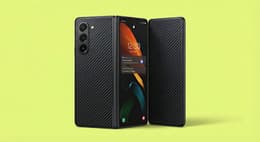
Galaxy Z Flip7 • Unlocked vs Google Pixel 8 • Unlocked

  • 1-year warranty
  • Free standard shipping
  • Free 30-day returns
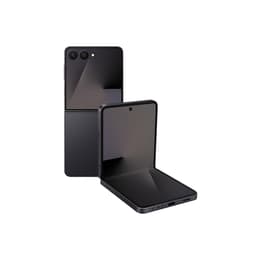
Galaxy Z Flip7 • Unlocked
Starting at

Refurbished price:$577.00

Versus $999.00 new

See options
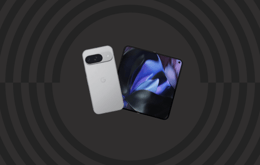
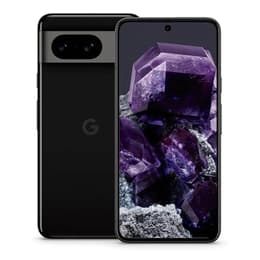
Google Pixel 8 • Unlocked
Starting at

Refurbished price:$270.00

Versus $899.99 new

See options

Differences at a glance

The Samsung Galaxy Z Flip7 (2025) and the Google Pixel 8 (2023) represent two distinct approaches to modern smartphone design, contrasting a foldable clamshell form factor with a traditional candy-bar layout. While both devices run on the Android operating system, they cater to very different physical preferences and user workflows.

Choosing between them involves weighing the compact portability of a folding display against the reliable ergonomics and extended software support of a classic flagship.

Available Models

Color

Storage (GB)

Scores

Durability

Both smartphones feature modern build qualities and long-term software support frameworks, though their physical designs introduce different considerations for daily wear and tear.

  • Release Timeline and Software Support: The Google Pixel 8 launched in late 2023 and benefits from an extended software update commitment spanning seven years. The Galaxy Z Flip7 debuted in mid-2025, offering a newer hardware baseline paired with multi-year operating system updates.
  • Physical Durability and Repairs: The Pixel 8 features a solid, rigid glass-and-metal slab construction with high-tier water resistance. The Galaxy Z Flip7 utilizes a folding inner display and a hinge mechanism, which requires careful handling over years of frequent opening and closing.
  • Expected Practical Lifespan: Users who prefer traditional rigid structures will find predictable longevity with the Pixel, whereas those who adopt foldable technology gain a modern hardware configuration designed to withstand regular daily folding cycles.

Release Year

2025

2023

Last OS Compatibility

Yes

Yes

OS

Android

Android

Foldable

Yes

No

Performance

Performance profiles differ significantly based on internal hardware allocations, multitasking capabilities, and battery management across daily routines.

  • Storage and Multitasking: The Galaxy Z Flip7 provides higher baseline memory configurations paired with 256GB or 512GB of storage, supporting heavy app switching. The Pixel 8 comes with 8GB of RAM and standard storage options starting at 128GB.
  • System Responsiveness: Both devices handle daily web browsing, messaging, and streaming smoothly, though the newer processor in the Flip7 offers additional headroom for demanding mobile games and intensive multitasking applications.
  • Battery Behavior: The Pixel 8's 4575mAh battery manages moderate daily workloads effectively, while the Flip7's 4300mAh cell powers both the outer cover screen and the larger folding main display, resulting in varied charging habits for heavy users.

Screen quality

The viewing experience is defined by contrasting display architectures, ranging from a flexible folding screen to a bright, fixed panel.

  • Display Technology: The Galaxy Z Flip7 features a large 6.9-inch folding inner dynamic screen alongside an expanded outer cover display for quick interactions. The Pixel 8 utilizes a rigid 6.2-inch OLED panel with deep contrast and vibrant colors.
  • Brightness and Outdoor Clarity: Both panels achieve high peak brightness levels, ensuring that text and media remain legible under direct sunlight or bright outdoor environments.
  • Refresh Rate and Smoothness: Both devices support a 120Hz refresh rate, delivering fluid scrolling through menus, web pages, and supported applications.

Resolution

1080 x 2520

1080 x 2400

Screen type

Foldable Dynamic LTPO AMOLED 2X

OLED

Audiovisual

Camera hardware and software processing provide distinct capabilities for everyday photography, video recording, and media consumption.

  • Camera Systems: The Pixel 8 relies on a dual rear camera setup backed by advanced computational image processing. The Galaxy Z Flip7 features a dual rear configuration alongside unique flexible angles that allow the phone to prop itself up for hands-free photos.
  • Low-Light and Video Performance: Both models capture sharp details in low-light conditions and record stable, high-resolution video suitable for everyday memories and social sharing.
  • Audio and Media: Stereo speakers on both devices deliver clear sound for hands-free calls, podcasts, and casual video viewing.

Miscellaneous

Practical everyday features, connectivity options, and physical dimensions shape how each device fits into travel and professional routines.

  • Connectivity and Ports: Both smartphones support modern 5G networks, fast Wi-Fi standards, and Bluetooth connectivity, relying on USB-C ports for charging and data transfer.
  • Biometrics and Sensors: The Pixel 8 includes an under-display fingerprint reader and face recognition, while the Flip7 integrates a side-mounted fingerprint sensor built into the power button alongside facial scanning.
  • Dimensions and Handling: The Pixel 8 provides a compact, lightweight traditional form factor weighing 187 grams. The Galaxy Z Flip7 weighs 188 grams and folds in half to take up significantly less pocket space during travel.

Weight

3 oz

7 oz

Screen size (inches)

6.9

6.1

Network

5G

5G

SIM card

Physical SIM + eSIM

Physical SIM + eSIM

Carrier compatibility

Unlocked

Unlocked

Connector

USB-C

USB-C

What the community thinks

User feedback highlights distinct preferences for each device across community discussions. Owners of the Google Pixel 8 frequently praise its comfortable one-handed ergonomics, reliable everyday camera output, and long-term software commitment. Conversely, users appreciate the Galaxy Z Flip7 for its innovative folding design, expanded cover screen utility, and compact pocket footprint. Some critics note that traditional slab phones avoid crease visibility concerns, while foldable devices require more attentive physical handling over time.

Users prioritizing a compact pocket footprint, creative hands-free camera angles, and an expansive folding main display may prefer the Galaxy Z Flip7. Meanwhile, users prioritizing a traditional rigid structure, extended software update longevity, and straightforward ergonomics will find the Google Pixel 8 well-suited to their needs. Choosing between them depends entirely on whether a folding form factor or a classic smartphone layout best fits your daily routine. Exploring a quality-assured refurbished option provides a sustainable choice for acquiring either model while reducing electronic waste.
Our recent comparisons