Galaxy Z Fold5 • Unlocked vs iPhone 16 • Unlocked

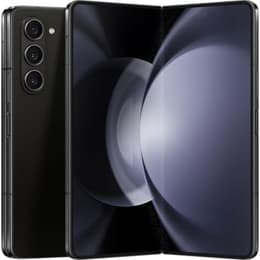
Galaxy Z Fold5 • Unlocked
Starting at

Refurbished price:$399.99

Versus $1,849.00 new

See options
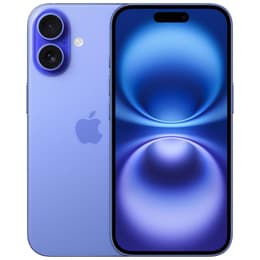
iPhone 16 • Unlocked
Starting at

Refurbished price:$516.00

Versus $729.00 new

See options

Ratings

The Samsung Galaxy Z Fold5, released in August 2023, and the Apple iPhone 16, launched in September 2024, represent distinct approaches to modern smartphone design. The Galaxy Z Fold5 offers a unique foldable form factor, transforming from a compact device into a larger tablet-like screen, while the iPhone 16 maintains a traditional slab design with refined features. Both devices run on their respective advanced operating systems, Android and iOS, and cater to different user preferences through their core functionalities and design philosophies.

Scores

Durability

When considering the long-term usability of these devices, their release timelines and software support policies are key factors.

  • Release Timeline and Software Support: The Galaxy Z Fold5, released in 2023, typically receives 4-5 years of major Android OS updates and 5 years of security updates from Samsung. It launched with Android 13 and has since received updates, including Android 16 with One UI 8. The iPhone 16, released in 2024, benefits from Apple's generally longer software support, often receiving 5-7 years of major iOS updates, having launched with iOS 18 and currently running iOS 26.4.
  • Physical Durability and Repairability: The Galaxy Z Fold5 features an IPX8 water resistance rating, Gorilla Glass Victus 2 on its cover screen and back, and an Armor Aluminum frame, with a hinge designed to fold flat. User experiences suggest improved durability over earlier foldable generations, though the internal screen protector may still show signs of wear over time. The iPhone 16 boasts a Ceramic Shield front cover and IP68 water and dust resistance. It received a repairability score of 7 out of 10 from iFixit, indicating a significant improvement in ease of repair, particularly for components like the battery.
  • Expected Practical Lifespan: Both devices are built to last, with their respective manufacturers providing robust software and security updates. The iPhone 16's longer typical software support period may offer an extended functional lifespan for users prioritizing the latest OS features. For the Galaxy Z Fold5, its unique folding mechanism and the evolving nature of foldable technology mean that while hardware is robust, the long-term integrity of the folding screen is a consideration for some users.

Release Year

2023

2024

Last OS Compatibility

Yes

Yes

Foldable

Yes

No

Performance

The performance of both the Galaxy Z Fold5 and the iPhone 16 is designed to handle demanding tasks and provide a responsive user experience, though they achieve this through different hardware architectures.

  • Processor Capabilities: The Galaxy Z Fold5 is equipped with a current-generation processor optimized for its Android ecosystem, enabling smooth multitasking and efficient handling of graphically intensive applications and games. The iPhone 16 features Apple's A18 chip, which provides swift performance across iOS applications, gaming, and supports advanced computational features, including those related to Apple Intelligence.
  • Multitasking and Storage: The Galaxy Z Fold5 typically comes with 12GB of RAM, facilitating extensive multitasking, especially when utilizing its large internal display for multiple applications simultaneously. Storage options range from 256GB to 1TB. The iPhone 16 includes 8GB of RAM, which, combined with iOS's memory management, ensures fluid app switching and responsiveness. It offers storage configurations of 128GB, 256GB, and 512GB.
  • Real-world Responsiveness: Users of the Galaxy Z Fold5 generally report excellent performance, with apps loading quickly and a seamless experience even with multiple demanding applications open. The iPhone 16 also delivers a consistently swift and fluid user experience, with applications launching rapidly and smooth navigation through the operating system. Both devices are well-suited for users who require high performance for daily tasks, creative work, and entertainment.

Memory (GB)

12 GB

8 GB

Screen quality

The display experience is a primary differentiator between these two devices, with the Galaxy Z Fold5 offering a unique foldable screen and the iPhone 16 providing a high-quality traditional display.

  • Display Technology and Size: The Galaxy Z Fold5 features a 7.6-inch foldable Dynamic AMOLED 2X main display with a resolution of 2176 x 1812 pixels, alongside a 6.2-inch Dynamic AMOLED 2X cover display with a 904 x 2316 resolution. Both screens offer vibrant colors and deep blacks. The iPhone 16 comes with a 6.1-inch Super Retina XDR OLED display, providing a resolution of 2556 x 1179 pixels. This display is known for its clarity and color accuracy.
  • Refresh Rate and Brightness: Both displays on the Galaxy Z Fold5 support an adaptive 120Hz refresh rate, contributing to smooth scrolling and responsive interactions. The main display is notably bright, allowing for good visibility even in outdoor conditions. The iPhone 16's display offers good brightness levels for outdoor use and clear visibility, though its refresh rate remains at 60Hz, which may present a less fluid scrolling experience compared to devices with higher refresh rates.
  • Viewing Experience: The Galaxy Z Fold5's large internal screen provides an immersive viewing experience for media consumption, productivity, and gaming, though the crease in the middle is noticeable upon close inspection or touch. The cover screen offers a more traditional smartphone experience. The iPhone 16's display delivers a consistently sharp and vibrant viewing experience, well-suited for everyday use, media, and photography, within a standard smartphone form factor.

Resolution

1812 x 2176

1179 x 2556

Screen type

Foldable Dynamic AMOLED 2X

Super Retina XDR OLED

Audiovisual

Both devices offer capable camera systems, designed to capture high-quality photos and videos, though their configurations and strengths cater to different photographic needs.

  • Rear Camera Systems: The Galaxy Z Fold5 features a triple-camera setup on the rear, including a 50MP main sensor with optical image stabilization, a 12MP ultrawide lens, and a 10MP telephoto lens with 3x optical zoom and optical image stabilization. The iPhone 16 is equipped with a dual-camera system, comprising a 48MP main camera and a 12MP ultrawide camera with autofocus.
  • Photography Performance: The Galaxy Z Fold5 generally performs well in good lighting conditions, producing detailed and vibrant images, though some users note a tendency towards oversaturation and less impressive low-light performance compared to some non-foldable flagship phones. The iPhone 16's main camera captures highly detailed and natural-looking photos across various lighting conditions, with its ultrawide lens also contributing to quality landscape shots. It includes a 'Photographic Styles' feature for greater control over image processing.
  • Video and Selfie Capabilities: The Galaxy Z Fold5 supports video recording up to 8K and includes a 10MP cover screen selfie camera and a 4MP under-display camera on the main screen, primarily for video calls. The iPhone 16 offers strong video recording capabilities and features a 12MP front camera for clear selfies and video calls. It also supports capturing spatial photos and videos.

Main camera

50 megapixels

48 megapixels

Front camera

4 megapixels

12 megapixels

Miscellaneous

Beyond their core functionalities, both the Galaxy Z Fold5 and the iPhone 16 incorporate various features and design elements that impact daily use and overall experience.

  • Connectivity and Ports: The Galaxy Z Fold5 supports 5G, Wi-Fi 6E, and Bluetooth 5.3, offering robust wireless connectivity. It features a USB-C port for charging and data transfer. The iPhone 16 also supports 5G and features Wi-Fi 7 and Bluetooth 5.3, providing advanced wireless capabilities. It has transitioned to a USB-C port.
  • Biometric Security and Interaction: The Galaxy Z Fold5 includes a side-mounted fingerprint sensor for secure unlocking. It also supports S Pen functionality on its main display, offering an additional input method for productivity and creativity. The iPhone 16 relies on Face ID for secure facial recognition. It introduces an Action Button, customizable for various functions, and a dedicated Camera Control button for enhanced photography interaction.
  • Physical Design and Handling: The Galaxy Z Fold5 weighs 253g and has dimensions of 154.9 x 67.1 x 13.4mm when folded, expanding to 154.9 x 130.1 x 6.1mm when unfolded. Its unique form factor allows for a large screen experience in a relatively compact package. The iPhone 16 is lighter at 170g and measures 147.6 x 71.6 x 7.8mm, offering a more traditional and pocketable smartphone design.

Weight

7 oz

6000 oz

Screen size (inches)

7.6

6.1

Network

5G

5G

SIM card

Physical SIM + eSIM

eSIM

Carrier compatibility

Unlocked

Unlocked

Connector

USB-C

USB-C (USB 2)

The Samsung Galaxy Z Fold5 and the iPhone 16 cater to distinct user needs, each excelling in different areas based on their fundamental design. Users frequently praise the Galaxy Z Fold5 for its innovative foldable display, which offers a versatile large screen experience for multitasking and media consumption. Its robust performance and improved hinge design are also commonly highlighted as strengths. Some criticisms include the noticeable crease on the main display and camera performance that, while good, may not always match the very best traditional slab phones in all conditions.

The iPhone 16 is often lauded for its consistent and swift performance, reliable camera system, and improved battery life. Its enhanced repairability and the introduction of new physical buttons like the Action Button are also well-received. Common feedback points include the continued use of a 60Hz display on the standard model and the absence of a telephoto lens, features often found in similarly positioned Android devices.

Users prioritizing a large, adaptable screen for productivity, immersive media, and a unique form factor may find the Galaxy Z Fold5 well-suited to their needs. Its ability to transform from a standard smartphone to a tablet-like device offers a distinct advantage for specific workflows. Conversely, users who value a streamlined, consistently high-performing device with a strong camera, long-term software support, and a more traditional, pocketable design will likely lean towards the iPhone 16. Both devices represent significant advancements in their respective categories, offering compelling options for different user profiles.

For those considering either of these advanced devices, exploring quality-assured refurbished options can be an eco-friendly alternative, providing access to these technologies while supporting sustainable consumption.


See all articles

Our recent comparisons