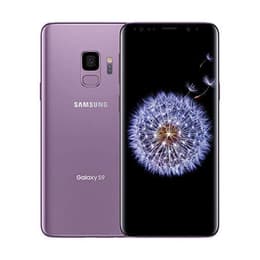

Galaxy S8 • Unlocked vs Galaxy S9 • Unlocked

Galaxy S8 • Unlocked
Starting at

Refurbished price:$104.00

Versus $499.00 new

See options
Galaxy S9 • Unlocked
Starting at

Refurbished price:$103.00

Versus $399.00 new

See options

Ratings

The Samsung Galaxy S8, released in April 2017, and the Samsung Galaxy S9, launched in March 2018, represent consecutive generations of Samsung's flagship smartphone line. While both devices share a similar design aesthetic and operate on the Android platform, the Galaxy S9 introduces notable enhancements in camera technology, processing power, and overall durability, building upon its predecessor's foundation.

Scores

Durability

When considering the long-term usability of these devices, their release timelines and software support cycles are key factors.

  • Release Timeline: The Galaxy S8 was released in April 2017, while the Galaxy S9 followed in March 2018, making the S9 a year newer. This difference in release date directly impacts their respective software longevity.
  • OS Support Duration: The Galaxy S8 launched with Android 7.0 Nougat and received its last major operating system update to Android 9.0 Pie. The Galaxy S9, starting with Android 8.0 Oreo, concluded its major OS updates with Android 10. Both devices typically received two major Android OS updates during their lifespan.
  • Security Updates: Samsung officially ended security support for the Galaxy S8 in April 2021, approximately four years after its release. The Galaxy S9's official security updates concluded in March 2022, also around four years from its launch.
  • Practical Lifespan: While official software support has ceased for both, their practical lifespan can extend beyond this, especially for users who prioritize basic smartphone functions. However, the Galaxy S9, being a year newer, may offer a slightly longer period of comfortable use before performance or app compatibility becomes a significant concern.

Release Year

2017

2018

Last OS Compatibility

No

No

OS

Android

Android

Foldable

No

No

Performance

The internal components of a smartphone dictate its speed and efficiency in handling various tasks.

  • Processor Capabilities: The Galaxy S8 is equipped with a processor that handles everyday applications and multitasking effectively. The Galaxy S9 features a newer generation processor, offering faster and more efficient processing power. This translates to smoother handling of demanding applications, improved gaming performance, and more responsive overall system operation.
  • RAM and Storage: Both the standard Galaxy S8 and Galaxy S9 models come with 4GB of RAM, which is sufficient for typical multitasking. Both devices also offer 64GB of internal storage in their base configurations, with expandable storage via a microSD card. The Galaxy S9 supports microSD cards up to 400GB, an increase from the Galaxy S8's 256GB limit.
  • Overall Responsiveness: Users will likely experience a noticeable difference in the snappiness and speed of app loading and transitions on the Galaxy S9 due to its more advanced processor. While the Galaxy S8 remains capable for many tasks, the S9 provides a more fluid user experience, particularly with newer or more resource-intensive applications.

Memory

4 GB

4 GB

Screen quality

Both the Galaxy S8 and S9 feature high-quality displays, a hallmark of Samsung's flagship devices.

  • Display Technology and Resolution: Both phones utilize a 5.8-inch Quad HD+ Super AMOLED display with a resolution of 1440 x 2960 pixels, resulting in a high pixel density of approximately 570 pixels per inch. This technology delivers deep blacks and vibrant colors, providing an immersive viewing experience.
  • Brightness and Color Accuracy: The Galaxy S9's display offers up to a 20% increase in peak brightness compared to the S8, which can improve visibility in bright outdoor conditions. The S9 also boasts improved color accuracy and supports HDR10+, enhancing the visual quality of compatible video content with better contrast and more vivid colors.
  • Design and Viewing Experience: Both devices feature Samsung's 'Infinity Display' with curved edges and minimal bezels, providing an expansive screen-to-body ratio. The Galaxy S9 has slightly thinner bezels, contributing to a marginally higher screen-to-body ratio.

Resolution

1440 x 2960

1440 x 2960

Screen type

Super AMOLED

Super AMOLED

Audiovisual

The camera system received significant attention in the transition from the Galaxy S8 to the Galaxy S9.

  • Rear Camera Capabilities: The Galaxy S8 features a 12-megapixel rear camera with an f/1.7 aperture and optical image stabilization. The Galaxy S9 retains a 12-megapixel sensor but introduces a variable aperture lens, allowing it to switch between f/1.5 and f/2.4. The wider f/1.5 aperture on the S9 is designed to capture more light in low-light conditions, resulting in clearer images with reduced noise.
  • Photography Performance: While the Galaxy S8's camera was well-regarded for its time, the S9 offers improved low-light performance and more accurate color reproduction. The S9's enhanced processing and Super Speed Dual Pixel sensor contribute to sharper and more vibrant photos, though the difference in daylight conditions might be subtle for casual users.
  • Video Recording and Audio: The Galaxy S8 supports 4K video recording. The Galaxy S9 enhances video capabilities with the addition of Super Slow-motion video at 960 frames per second (at 720p) and the ability to record 4K video at 60 frames per second. The S9 also features stereo speakers tuned by AKG with Dolby Atmos support, providing a more immersive audio experience compared to the S8's single down-firing speaker.

Main camera

12 megapixels

12 megapixels

Front camera

8 megapixels

8 megapixels

Miscellaneous

Beyond the core features, several practical elements differentiate these two smartphones.

  • Connectivity and Ports: Both devices support modern connectivity standards including 4G LTE, Wi-Fi 802.11 a/b/g/n/ac, and Bluetooth 5.0. They both feature a USB Type-C port for charging and data transfer, and notably, both retain the 3.5mm headphone jack.
  • Biometric Sensors: The Galaxy S8 includes a fingerprint sensor, iris scanner, and face recognition. A common criticism of the S8 was the placement of its fingerprint sensor, located next to the rear camera, which could lead to accidental smudging of the camera lens. The Galaxy S9 addresses this by repositioning the fingerprint sensor to a more ergonomic location directly below the camera module. The S9 also introduces 'Intelligent Scan,' combining iris scanning and face recognition for improved unlocking.
  • Build Materials and Durability: Both phones feature a metal frame with glass on the front and back, protected by Gorilla Glass 5. The Galaxy S9 incorporates a slightly thicker front glass and a stronger AL 7003 high-strength aluminum frame, offering improved durability and greater resistance to drops compared to the S8's AL 6013 aluminum. Both maintain an IP68 rating for dust and water resistance.
  • Physical Characteristics: The Galaxy S8 weighs 155g and measures 148.9 x 68.1 x 8.0 mm. The Galaxy S9 is slightly heavier at 163g and marginally thicker at 147.7 x 68.7 x 8.5 mm, partly due to its enhanced durability features and repositioned fingerprint sensor.

Weight

7 oz

6 oz

Screen size (inches)

5.8

5.8

Network

LTE

LTE

SIM card

Physical SIM

Physical SIM

Carrier compatibility

Unlocked

Unlocked

Connector

USB-C + Jack 3.5mm

USB-C + Jack 3.5mm

User sentiment for both the Galaxy S8 and S9 generally highlights their strong displays and capable cameras for their respective release eras. The Galaxy S8 was praised for its groundbreaking 'Infinity Display' design and overall premium feel. However, a frequent criticism was the awkward placement of the rear fingerprint sensor, often leading users to smudge the camera lens. Some users also noted average battery life and occasional software glitches.

The Galaxy S9 was largely seen as a refinement of the S8. Users appreciated the improved camera, particularly its variable aperture for better low-light photos and the addition of super slow-motion video. The repositioned fingerprint sensor was a welcome ergonomic improvement, and the inclusion of stereo speakers enhanced the media consumption experience. While many acknowledged the S9's enhancements, some felt it was an incremental upgrade rather than a revolutionary one, especially for those already owning an S8.

For users prioritizing an enhanced camera experience, particularly in varied lighting conditions, and improved audio for media, the Galaxy S9 presents a more suitable option. Its refined ergonomics, especially the fingerprint sensor placement, also contribute to a more user-friendly daily interaction. Users who primarily need a device for basic tasks, web browsing, and general communication, and are content with a slightly older camera and single speaker, may find the Galaxy S8 still meets their needs. Both devices, available as quality-assured refurbished options, offer an eco-friendly alternative for those seeking reliable smartphone technology.

See all articles

Our recent comparisons