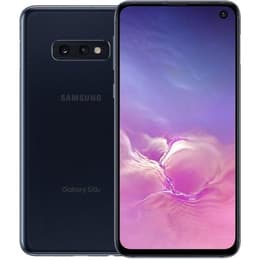
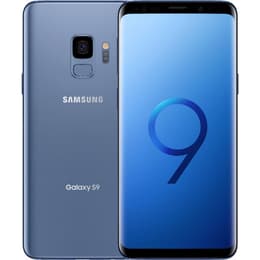

Galaxy S10E • Unlocked vs Galaxy S9 • Unlocked

Galaxy S10E • Unlocked
Starting at

Refurbished price:$136.92

Versus $459.00 new

See options
Galaxy S9 • Unlocked
Starting at

Refurbished price:$126.99

Versus $399.00 new

See options

Ratings

The Samsung Galaxy S10e, released in March 2019, and the Samsung Galaxy S9, launched in March 2018, are both Android smartphones from Samsung's flagship S series. While the Galaxy S9 introduced a refined design and an advanced camera for its time, the Galaxy S10e followed a year later with updated internal components and a slightly different approach to its display and camera system. Both devices run on the Android operating system, offering a familiar user experience with Samsung's custom One UI overlay.

Scores

Durability

The practical lifespan of a smartphone is influenced by its release timeline, software support, and physical resilience.

  • Release Timeline: The Galaxy S9 was released in March 2018, making it an older device compared to the Galaxy S10e, which launched in March 2019. This difference in release date impacts their respective software support cycles. [3, 5, 7, 11, 16, 17, 18, 31]
  • OS Support: The Galaxy S9 launched with Android 8.0 Oreo and received updates up to Android 10 with One UI 2.5. The Galaxy S10e, starting with Android 9.0 Pie, received updates up to Android 12. This means the S10e benefits from a longer period of official software support, offering more recent features and security patches. [3, 5, 7, 15, 16, 18, 30, 31, 38, 41]
  • Repairability: Both devices feature glass backs and strong adhesive, making repairs challenging. The Galaxy S9 received a repairability score of 4 out of 10 from iFixit. The Galaxy S10e scored slightly lower at 3 out of 10, partly due to a soldered charging port, indicating that both models are difficult to repair. [9, 13, 19, 21, 27, 39, 42, 43, 44]

Release Year

2019

2018

Last OS Compatibility

No

No

OS

Android

Android

Foldable

No

No

Performance

Performance in both devices is driven by their respective processors and RAM configurations, impacting how smoothly applications run and how effectively multitasking is handled.

  • Processing Power: The Galaxy S10e features a newer generation octa-core processor (Exynos 9820 or Snapdragon 855) compared to the Galaxy S9's octa-core processor (Exynos 9810 or Snapdragon 845). This generally translates to the S10e offering more responsive performance for demanding applications and a smoother overall user experience. [3, 7, 11, 17, 18, 29, 30, 31, 41]
  • Multitasking and Storage: The Galaxy S10e typically comes with 6GB or 8GB of RAM, while the Galaxy S9 has 4GB of RAM. The increased RAM in the S10e allows for more applications to run simultaneously without slowdowns. Both devices offer various internal storage options (e.g., 64GB, 128GB, 256GB) and support microSD cards for expandable storage, providing flexibility for user data. [5, 7, 11, 16, 18, 29, 31, 32, 38, 41]
  • Battery Behavior: The Galaxy S10e is equipped with a 3100 mAh battery, a slight increase over the Galaxy S9's 3000 mAh battery. While the S10e has a slightly larger capacity, some users have reported that its battery life may require more frequent charging for heavy usage. Both support fast wired and wireless charging. [3, 5, 7, 11, 17, 18, 30, 31, 32, 38]

Memory

6 GB

4 GB

Screen quality

The display is a primary interaction point, and both devices offer high-quality viewing experiences with some key distinctions.

  • Display Technology and Resolution: Both phones feature 5.8-inch AMOLED displays, known for deep blacks and vibrant colors. The Galaxy S9 utilizes a Super AMOLED panel with a Quad HD+ resolution (2960x1440 pixels), resulting in a higher pixel density of 570 ppi. The Galaxy S10e features a Dynamic AMOLED display with a Full HD+ resolution (2280x1080 pixels) and 438 ppi. While the S9 offers a sharper display, the S10e's screen still provides clear visuals. [1, 2, 5, 7, 10, 11, 16, 17, 18, 24, 26, 28, 29, 30, 32, 33, 34, 35, 38]
  • Design and Brightness: The Galaxy S9 features curved display edges, a hallmark of Samsung's flagship design at the time. The Galaxy S10e, in contrast, has a flat display with a 'hole-punch' cutout for the front camera, offering a more uninterrupted screen area. Both displays offer high brightness levels, with the S9 reaching up to 1130 nits peak brightness and the S10e reaching around 800 nits in auto mode, ensuring good outdoor visibility. [1, 2, 10, 16, 26, 28, 29, 30, 33, 35]
  • Refresh Rate: Both the Galaxy S9 and S10e feature a standard 60Hz refresh rate, providing a smooth visual experience for everyday tasks. [29, 32]

Resolution

1080 x 2280

1440 x 2960

Screen type

Dynamic AMOLED

Super AMOLED

Audiovisual

The camera systems on both the Galaxy S10e and Galaxy S9 are designed to capture quality images and videos, with the S10e introducing an additional lens.

  • Rear Camera System: The Galaxy S9 features a single 12MP rear camera with a variable aperture (f/1.5 and f/2.4) and optical image stabilization (OIS), which helps in low-light conditions. The Galaxy S10e upgrades to a dual-camera setup, including a 12MP wide-angle lens (with variable aperture and OIS) and a 16MP ultra-wide-angle lens (123-degree field of view). This ultra-wide lens on the S10e provides more versatility for capturing broader scenes. [1, 2, 4, 5, 6, 7, 8, 11, 12, 14, 18, 20, 22, 23, 24, 30, 31, 38]
  • Photography Performance: Both phones deliver good image quality in well-lit environments. The S9's variable aperture is effective for low-light photography. The S10e's main camera offers a slight improvement over the S9, and its ultra-wide lens is a notable addition for different photographic perspectives. However, some users note that the S10e's low-light performance can be muddy, and selfies might appear soft. [1, 4, 6, 12, 20, 23]
  • Video Capabilities: Both devices are capable of recording 4K video at 60 frames per second. The Galaxy S9 introduced Super Slow-motion video at 720p (960fps). The S10e also includes a Super Steady mode for smoother video capture, though it operates at 1080p. The S10e also supports HDR10+ video recording. [4, 8, 16, 22, 23, 28, 31]

Main camera

12 megapixels

12 megapixels

Front camera

10 megapixels

8 megapixels

Miscellaneous

Beyond core features, several practical elements differentiate these two Galaxy models, influencing daily usability.

  • Connectivity and Ports: Both devices include a 3.5mm headphone jack and a USB-C port for charging and data transfer. They support Wi-Fi and Bluetooth 5.0. The Galaxy S10e offers support for the newer Wi-Fi 6 (802.11ax) standard, providing potentially faster and more stable wireless connections compared to the S9's Wi-Fi 5 (802.11ac). [5, 7, 18, 25, 29, 30, 31, 32, 38, 41]
  • Biometrics and Sensors: The Galaxy S9 features a rear-mounted fingerprint sensor located below the camera, along with an iris scanner for secure unlocking. The Galaxy S10e moves the fingerprint sensor to the side, integrated into the power button, and relies on 2D face recognition. Both offer IP68 water and dust resistance. [3, 5, 7, 16, 18, 25, 27, 30, 32, 37]
  • Design and Handling: The Galaxy S10e is slightly more compact and lighter, measuring 142.2 x 69.9 x 7.9 mm and weighing 150g. The Galaxy S9 measures 147.7 x 68.7 x 8.5 mm and weighs 163g. The S10e's smaller size and flat screen contribute to easier one-handed use for some users. Both phones feature glass front and back panels with an aluminum frame. [3, 5, 7, 16, 17, 18, 25, 29, 30, 32, 36, 37, 38, 41]

Weight

5 oz

6 oz

Screen size (inches)

5.8

5.8

Network

LTE

LTE

SIM card

Physical SIM

Physical SIM

Carrier compatibility

Unlocked

Unlocked

The Samsung Galaxy S10e and Galaxy S9, while from consecutive generations, offer distinct experiences for users. The Galaxy S9 was praised for its refined design and its innovative variable aperture camera, which significantly improved low-light photography for its time. Users appreciated its vibrant Quad HD+ display and the inclusion of an iris scanner. However, some criticisms included its battery life and the placement of the fingerprint sensor on earlier models. [5, 6, 10, 12, 14, 16, 26, 31, 34, 35]

The Galaxy S10e, released a year later, was often lauded for its compact form factor and the addition of an ultra-wide camera lens, providing more photographic flexibility. Its updated processor offered a performance boost, and the flat display was a preference for some users over curved screens. Common concerns for the S10e included its battery life for heavy users and the perceived softness of some selfies. [1, 2, 4, 11, 17, 20, 23, 28, 30, 33]

Users prioritizing a sharper display and an iris scanner may find the Galaxy S9 well-suited to their needs. Those who value a more compact design, an ultra-wide camera lens, and a longer period of software updates may lean toward the Galaxy S10e. Both devices represent solid choices within their respective generations, and considering a quality-assured refurbished option for either model can be an eco-friendly alternative for consumers.


See all articles

Our recent comparisons