Galaxy S9 • Unlocked vs iPhone SE (2020) • Unlocked

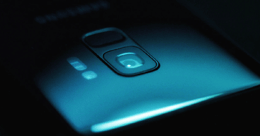
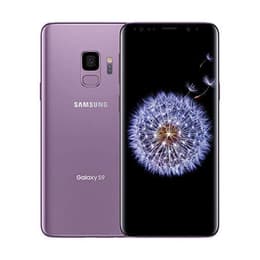
Galaxy S9 • Unlocked
Starting at

Refurbished price:$106.00

Versus $399.00 new

See options
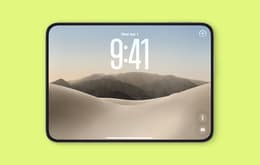
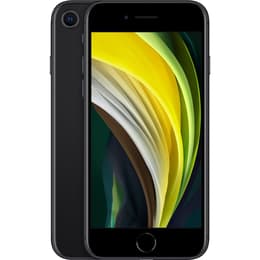
iPhone SE (2020) • Unlocked
Starting at

Refurbished price:$107.00

Versus $399.00 new

See options

Ratings

The Samsung Galaxy S9, released in March 2018, and the iPhone SE 2020, launched in April 2020, represent distinct approaches to smartphone design and functionality from their respective manufacturers. While the Galaxy S9 offered a premium Android experience with a focus on display technology and multimedia, the iPhone SE 2020 brought powerful internal components within a classic Apple design. These devices cater to different user preferences, primarily differing in their operating systems, design philosophies, and long-term software support.

Scores

Durability

The practical lifespan of a smartphone is significantly influenced by its release timeline and the duration of software support it receives.

  • Release Timeline: The Samsung Galaxy S9 was released in March 2018, making it two years older than the iPhone SE 2020, which launched in April 2020. This age difference directly impacts their remaining support cycles.
  • Software Longevity: The Galaxy S9 officially concluded its major Android updates with Android 10, and its security updates ended in April 2022, meaning it no longer receives official software enhancements or security patches. In contrast, the iPhone SE 2020, which launched with iOS 13.4, has continued to receive updates, including iOS 17, and is expected to support future iOS versions for several more years, offering a longer period of official software and security support.
  • Durability Features: Both devices feature glass front and back panels with aluminum frames. The Galaxy S9 has an IP68 rating for dust and water resistance, allowing submersion up to 1.5 meters for 30 minutes. The iPhone SE 2020 has an IP67 rating, protecting against submersion up to 1 meter for 30 minutes. While both offer good protection against everyday spills, the Galaxy S9 has a slightly higher water resistance rating.

Release Year

2018

2020

Last OS Compatibility

No

Yes

OS

Android

iOS

Foldable

No

No

Performance

Evaluating the performance of these devices involves looking at their processing capabilities, memory, and how they manage power for daily use.

  • Processing Power: The iPhone SE 2020 is equipped with a more recent-generation processor, which allows it to handle demanding applications, complex games, and intensive multitasking with greater fluidity and responsiveness. The Galaxy S9, while capable for general use, features an older processor that may exhibit slower performance with newer, more resource-intensive applications.
  • Multitasking and Storage: The Galaxy S9 typically comes with 4GB of RAM, while the iPhone SE 2020 has 3GB of RAM. Despite the difference in raw RAM numbers, the iPhone's optimized operating system often allows it to manage applications efficiently. Both devices offer similar internal storage options, ranging from 64GB to 256GB. The Galaxy S9 also includes a microSD card slot for expandable storage, a feature not present on the iPhone SE 2020.
  • Battery Behavior: The Galaxy S9 houses a 3000 mAh battery, while the iPhone SE 2020 has a smaller 1821 mAh battery. Despite the larger capacity in the S9, real-world battery life can vary based on display technology, software optimization, and usage patterns. Users of the iPhone SE 2020 generally report adequate battery life for moderate daily use, benefiting from the efficiency of its processor and operating system.

Memory (GB)

4 GB

3 GB

Screen quality

The visual experience on these two smartphones differs significantly due to their display technologies and design philosophies.

  • Display Technology and Resolution: The Samsung Galaxy S9 features a 5.8-inch Super AMOLED display with a high resolution of 2960 x 1440 pixels, resulting in deep blacks, vibrant colors, and excellent contrast. The iPhone SE 2020 utilizes a 4.7-inch Retina IPS LCD with a resolution of 1334 x 750 pixels. While the LCD offers good color accuracy, it does not achieve the same level of contrast or black depth as an AMOLED panel.
  • Screen Size and Design: The Galaxy S9's larger, curved display with minimal bezels provides a more immersive viewing experience, especially for media consumption. The iPhone SE 2020 retains a more traditional design with thicker bezels and a physical home button, resulting in a smaller screen-to-body ratio.
  • Brightness and Refresh Rate: Both devices offer sufficient brightness for indoor use. The Galaxy S9's AMOLED panel generally performs well in direct sunlight. Both phones feature a standard 60Hz refresh rate, providing a smooth but not exceptionally fluid scrolling experience compared to devices with higher refresh rates.

Resolution

1440 x 2960

750 x 1334

Screen type

Super AMOLED

Retina IPS LCD

Audiovisual

Both devices offer capable camera systems for everyday photography, though with different strengths and features.

  • Rear Camera Capabilities: The Samsung Galaxy S9 features a 12-megapixel rear camera with a unique variable aperture (f/1.5-f/2.4) that adjusts to lighting conditions, allowing for strong low-light performance. It also includes optical image stabilization (OIS). The iPhone SE 2020 also has a 12-megapixel rear camera with a fixed f/1.8 aperture and OIS. The iPhone benefits from more advanced computational photography, which can enhance image quality, particularly in areas like Portrait mode for people.
  • Front Camera and Video: The Galaxy S9 has an 8-megapixel front camera, while the iPhone SE 2020 features a 7-megapixel front camera. Both devices are capable of recording 4K video with their main rear cameras.
  • Audio Experience: The Galaxy S9 includes stereo speakers tuned by AKG and retains a 3.5mm headphone jack, offering versatile audio connectivity. The iPhone SE 2020 also has stereo speakers but omits the traditional headphone jack, relying on its Lightning port or wireless audio solutions.

Main camera

12 megapixels

12 megapixels

Front camera

8 megapixels

7 megapixels

Miscellaneous

Beyond core features, several practical elements contribute to the overall user experience and differentiate these two models.

  • Connectivity and Ports: Both smartphones support 4G LTE connectivity and Bluetooth 5.0. The iPhone SE 2020 offers a newer Wi-Fi 6 standard, potentially providing faster and more stable wireless connections where supported, compared to the Galaxy S9's Wi-Fi 5 (802.11ac). The Galaxy S9 uses a USB-C port for charging and data transfer, while the iPhone SE 2020 uses Apple's proprietary Lightning port.
  • Biometric Security: The Galaxy S9 offers multiple biometric options, including a rear-mounted fingerprint sensor, iris scanning, and facial recognition. The iPhone SE 2020 relies on a front-mounted fingerprint sensor integrated into its home button (Touch ID) for secure authentication.
  • Design and Handling: The Galaxy S9 features a more modern, curved design with a higher screen-to-body ratio. The iPhone SE 2020 maintains the classic iPhone design with a physical home button and more prominent bezels, resulting in a more compact and lighter device (148g for SE 2020 vs. 163g for S9).

Weight

6 oz

5 oz

Screen size (inches)

5.8

4.7

Network

LTE

LTE

SIM card

Physical SIM

Physical SIM + eSIM

Carrier compatibility

Unlocked

Unlocked

Connector

USB-C + Jack 3.5mm

Lightning

User feedback for the Samsung Galaxy S9 often highlights its impressive Super AMOLED display, the convenience of its 3.5mm headphone jack, and its sleek, modern design. However, a common point of criticism revolves around its limited software update lifespan, with official support ending a few years after its release. Some users also noted varying battery performance, particularly with certain processor variants.

The iPhone SE 2020 is frequently praised for its powerful internal components, which deliver smooth performance for current applications, and its compact form factor, appealing to those who prefer a smaller device. Its extended software support from Apple is also a significant advantage. Conversely, common criticisms include its older design with larger bezels, the smaller battery capacity compared to many contemporary smartphones, and the use of an LCD display rather than a more vibrant OLED panel. The absence of a headphone jack is also a frequent point of discussion among users.

Users prioritizing a large, vibrant display, expandable storage, and the flexibility of the Android ecosystem, and who are comfortable with an older software version, may find the Galaxy S9 suitable. Conversely, those who value long-term software support, robust performance for demanding tasks, a compact and familiar design, and integration within the iOS ecosystem will likely prefer the iPhone SE 2020. Both devices offer distinct advantages, and choosing between them depends on individual priorities. For those considering either model, exploring quality-assured refurbished options can be an eco-friendly alternative.


See all articles

Our recent comparisons