
Galaxy S9 • Unlocked vs iPhone 13 • Unlocked

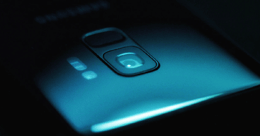
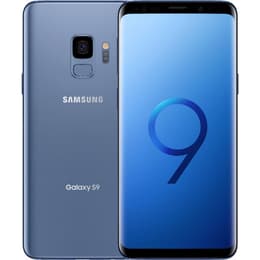
Galaxy S9 • Unlocked
Starting at

Refurbished price:$106.00

Versus $399.00 new

See options
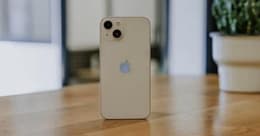
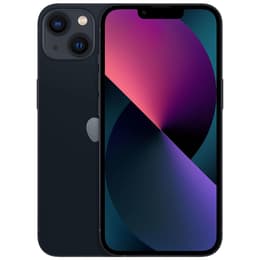
iPhone 13 • Unlocked
Starting at

Refurbished price:$225.00

Versus $629.00 new

See options

Ratings

The Samsung Galaxy S9, released in March 2018, and the Apple iPhone 13, launched in September 2021, represent different eras and ecosystems within the smartphone landscape. While both devices offered flagship experiences at their respective launch times, the iPhone 13 benefits from several years of technological advancements. The primary differentiators lie in their operating systems, overall performance capabilities, and camera technologies, reflecting the evolution of mobile devices over this period.

Scores

Durability

The practical lifespan of a smartphone is heavily influenced by its release date and subsequent software support, an area where these two devices show a significant difference.

  • Release Timeline: The Galaxy S9 was introduced in March 2018, making it a device from an earlier generation. The iPhone 13, on the other hand, was released in September 2021, positioning it as a much more recent model.
  • Software Longevity: The Galaxy S9 officially received major Android updates up to Android 10, concluding its software support cycle several years ago. The iPhone 13, launching with iOS 15, is expected to continue receiving major iOS updates for several more years, typically benefiting from 5 to 7 years of support from its release date. This extended support means the iPhone 13 will remain compatible with new apps and security features for a considerably longer period.
  • Physical Durability: Both devices feature an IP68 rating for dust and water resistance, indicating protection against immersion in water. The iPhone 13 incorporates a Ceramic Shield front cover, designed for enhanced drop performance, while the Galaxy S9 uses Gorilla Glass 5 for its front and back panels.

Release Year

2018

2021

Last OS Compatibility

No

Yes

OS

Android

iOS

Foldable

No

No

Performance

Performance is a key area where the generational gap between these two smartphones becomes evident, impacting everything from app responsiveness to gaming experiences.

  • System Responsiveness: The iPhone 13, equipped with a more recent processor, delivers a significantly faster and more fluid user experience, handling demanding applications, complex multitasking, and graphics-intensive games with greater ease and efficiency. The Galaxy S9, while a capable device in its time, will show its age with newer, more resource-intensive applications, potentially leading to slower loading times and less smooth transitions.
  • Multitasking Capabilities: Both devices feature 4GB of RAM. However, the iPhone 13's optimized operating system and more powerful processing architecture allow for more efficient management of background tasks and smoother switching between multiple open applications.
  • Storage Options: The Galaxy S9 offered internal storage options of 64GB, 128GB, or 256GB, with the added flexibility of expandable storage via a microSD card. The iPhone 13 comes with larger base storage options of 128GB, 256GB, or 512GB, but does not support expandable storage.
  • Battery Behavior: The iPhone 13 houses a 3227 mAh or 3240 mAh battery, which, combined with its power-efficient processor and software, generally provides longer usage times on a single charge for typical daily activities. The Galaxy S9 has a 3000 mAh battery, and while it offered decent battery life at its launch, its older components and software are less optimized for modern power demands, often requiring more frequent charging for heavy users.

Memory (GB)

4 GB

4 GB

Screen quality

Both smartphones feature vibrant OLED displays, but differences in size, resolution, and brightness contribute to distinct viewing experiences.

  • Display Technology and Clarity: The Galaxy S9 features a 5.8-inch Super AMOLED display with a resolution of 2960x1440 pixels, resulting in a high pixel density of approximately 570 pixels per inch (ppi). The iPhone 13 sports a slightly larger 6.1-inch Super Retina XDR OLED display with a resolution of 2532x1170 pixels, yielding about 460 ppi. While the S9 has a higher pixel density, both offer sharp and clear visuals for everyday viewing.
  • Brightness and Outdoor Visibility: The iPhone 13 offers superior brightness, with a typical maximum brightness of 800 nits and a peak HDR brightness of 1200 nits. The Galaxy S9 has a peak brightness of 864 nits. This difference means the iPhone 13's display will be more easily viewable in bright outdoor conditions.
  • Refresh Rate: Both the Galaxy S9 and the iPhone 13 feature a standard 60Hz refresh rate. This means the on-screen motion and scrolling will appear similar in smoothness on both devices.

Resolution

1440 x 2960

1170 x 2532

Screen type

Super AMOLED

Super Retina XDR OLED

Audiovisual

The camera systems on the Galaxy S9 and iPhone 13 reflect different approaches to mobile photography, with the iPhone 13 benefiting from more recent advancements in computational photography and a dual-lens setup.

  • Rear Camera System: The Galaxy S9 features a single 12-megapixel rear camera with a unique variable aperture (f/1.5-f/2.4), allowing it to adjust to different lighting conditions. The iPhone 13 comes with a dual 12-megapixel camera system, including a wide-angle lens (f/1.6) with sensor-shift optical image stabilization and an ultra-wide-angle lens (f/2.4). The iPhone 13's ultra-wide lens offers more versatility for capturing broader scenes.
  • Photography Performance: In everyday and low-light conditions, the iPhone 13 generally produces images with better detail, dynamic range, and color accuracy, thanks to its larger sensors and advanced computational photography features like Smart HDR 4, Night mode, and Deep Fusion. The Galaxy S9's variable aperture was innovative for its time, providing good low-light performance for a single-lens system.
  • Video Recording Capabilities: Both devices are capable of recording 4K video at 60 frames per second. The iPhone 13 introduces Cinematic mode, which allows for shallow depth of field effects in video, and supports HDR video recording with Dolby Vision. The Galaxy S9 offers impressive Super Slow-motion video recording at 720p and 960 frames per second.
  • Front Camera: The Galaxy S9 has an 8-megapixel front-facing camera with autofocus. The iPhone 13 features a 12-megapixel front-facing camera with improved low-light performance and supports features like Cinematic mode and Smart HDR 4.

Main camera

12 megapixels

12 megapixels

Front camera

8 megapixels

12 megapixels

Miscellaneous

Beyond core performance and camera, several practical elements differentiate the user experience between these two smartphones.

  • Connectivity: The iPhone 13 supports 5G cellular connectivity and Wi-Fi 6 (802.11ax), offering faster wireless speeds and improved network performance in compatible areas. The Galaxy S9 supports 4G LTE and Wi-Fi 5 (802.11ac). Both devices include Bluetooth 5.0 for wireless accessory connections.
  • Ports and Biometrics: The Galaxy S9 features a USB-C port for charging and data transfer, and notably includes a 3.5mm headphone jack, offering direct compatibility with wired headphones. It also provides multiple biometric options, including a rear-mounted fingerprint sensor and an iris scanner, in addition to facial recognition. The iPhone 13 uses Apple's proprietary Lightning port and relies solely on Face ID for secure facial recognition.
  • Physical Characteristics: The Galaxy S9 measures 147.7 x 68.7 x 8.5 mm and weighs 163 grams. The iPhone 13 is slightly more compact in height but wider, measuring 146.7 x 71.5 x 7.65 mm, and is slightly heavier at 174 grams. Both devices feature a premium build with glass front and back panels and an aluminum frame.

Weight

6 oz

6 oz

Screen size (inches)

5.8

6.1

Network

LTE

5G

SIM card

Physical SIM

Physical SIM + eSIM

Carrier compatibility

Unlocked

Unlocked

Connector

USB-C + Jack 3.5mm

Lightning

User feedback for the Samsung Galaxy S9 often highlighted its innovative variable aperture camera, vibrant Super AMOLED display, and the convenience of a headphone jack and expandable storage. However, common criticisms emerged regarding its battery life compared to some contemporaries and the eventual cessation of major software updates. The iPhone 13, conversely, is frequently praised for its robust performance, advanced camera capabilities, and extended software support, ensuring a longer period of up-to-date features and security. Some users have expressed a preference for a higher refresh rate display and the universal compatibility of a USB-C port over the Lightning connector.

For users who prioritize long-term software updates, cutting-edge performance for demanding applications, and advanced computational photography features, the iPhone 13 will be the more suitable choice. Its 5G connectivity and enhanced durability also cater to those seeking a modern, future-proof device. Conversely, individuals who value the flexibility of expandable storage, the presence of a traditional headphone jack, and a physical fingerprint sensor, and who primarily use their device for less intensive tasks, might find the Galaxy S9 still meets their needs. When considering either of these devices, exploring quality-assured refurbished options can provide an eco-friendly alternative, extending the life cycle of these capable smartphones.


See all articles

Our recent comparisons