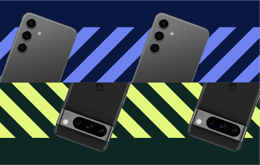


Compare models

Google Pixel 10 Pro • Unlocked vs OnePlus 13 • Unlocked

  • 1-year warranty
  • Free standard shipping
  • Free 30-day returns
Google Pixel 10 Pro • Unlocked
Starting at

Refurbished price:$587.00

Versus $999.00 new

See options
OnePlus 13 • Unlocked
Starting at

Refurbished price:$838.00

Versus $999.99 new

See options

Differences at a glance

The Google Pixel 10 Pro (2025) and the OnePlus 13 (2025) are high-end Android smartphones designed for users looking for robust daily capability, advanced optics, and modern design. While both devices deliver flagship-tier experiences, they approach hardware and software integration differently, with the Pixel focusing on Google's tailored ecosystem features and the OnePlus emphasizing raw hardware flexibility and fast charging capabilities.

Available Models

Color

Storage (GB)

Scores

Durability

Both smartphones are built to remain relevant for years, featuring robust materials and extended software support timelines typical of modern flagship devices.

  • Software Support: Both manufacturers provide multi-year operating system update commitments, ensuring long-term access to security patches and new software features.
  • Build and Repairability: Each model incorporates durable glass and metal frames alongside standard IP68 dust and water resistance ratings, though repair networks vary by region.
  • Expected Lifespan: High-capacity internal components and generous memory configurations allow both devices to maintain functional longevity through years of daily use.

Release Year

2025

2024

OS

Android

Android

Foldable

No

No

Performance

Performance across everyday tasks, multitasking, and demanding applications remains swift and responsive on both handsets thanks to contemporary processing hardware.

  • Multitasking and Memory: Generous RAM allocations allow heavy applications and numerous background tabs to run concurrently without requiring frequent reloads.
  • Battery and Charging: The OnePlus 13 utilizes a high-capacity silicon-carbon battery paired with extremely fast wired and wireless charging support, whereas the Pixel 10 Pro relies on standard Qi2 wireless charging standards and moderate power delivery speeds.
  • Storage Configurations: Multiple internal storage tiers accommodate large media libraries and offline files, though neither model includes expandable storage slots.

Screen quality

Viewing media, reading text, and navigating interfaces are exceptionally crisp due to high-resolution panel technology and fluid refresh rates.

  • Display Technology: Both devices feature advanced LTPO OLED panels capable of scaling refresh rates down dynamically to conserve battery while maintaining smooth scrolling.
  • Brightness and Outdoor Legibility: Peak brightness levels ensure content remains visible even under direct sunlight, while vibrant contrast ratios deliver deep blacks.
  • Form Factor: The Pixel 10 Pro offers a compact 6.3-inch footprint for single-handed usability, while the OnePlus 13 features a larger 6.82-inch screen suited for immersive media consumption.

Resolution

1280 x 2856

1440x3168

Screen type

LTPO OLED

LTPO 4.1 AMOLED

Audiovisual

Optics and media recording are primary focal points for both smartphones, offering versatile multi-lens rear setups for varied photographic styles.

  • Rear Camera Versatility: Both models include high-resolution main, ultra-wide, and telephoto sensors equipped with optical image stabilization for sharp detail capture.
  • Zoom and Low Light: The Pixel series leans heavily on computational photography for detailed long-range zoom and low-light processing, while OnePlus focuses on natural color tuning developed in partnership with Hasselblad.
  • Audio and Video: High-definition video recording capabilities and clear multi-microphone arrays make both devices well-suited for content creation and hands-free calling.

Main camera

Pro triple rear camera system

64

Miscellaneous

Practical daily usability is shaped by connectivity standards, physical dimensions, and biometric security integration.

  • Connectivity: Modern 5G capabilities, Wi-Fi 7 support, and precise multi-frequency GPS ensure reliable connectivity and fast data transfer speeds.
  • Biometrics: Both phones utilize responsive under-display fingerprint sensors alongside secure facial recognition options.
  • Physical Handling: The Pixel 10 Pro features a more pocket-friendly, slightly lighter body, whereas the OnePlus 13 carries a slightly heavier footprint to accommodate its larger screen and battery capacity.

Weight

1 oz

7 oz

Screen size (inches)

6.3

6.82

Network

5G

5G

SIM card

eSIM

Dual Physical SIM

Carrier compatibility

Unlocked

Unlocked

Connector

USB-C

USB-C

What the community thinks

Users prioritizing deep software integration, automated daily assistance features, and a compact physical footprint often lean toward the Google Pixel 10 Pro. Conversely, users who value rapid charging speeds, a larger screen for media, and expansive hardware specifications tend to prefer the OnePlus 13. Both devices offer capable flagship experiences tailored to different user preferences rather than a single superior option.

For those interested in sustainable alternatives, choosing a quality-assured refurbished option provides a practical way to access these high-end technologies while reducing electronic waste.


Our recent comparisons