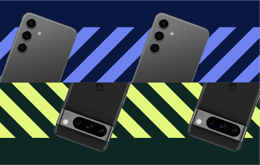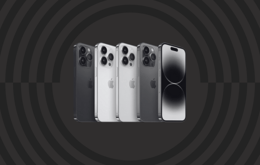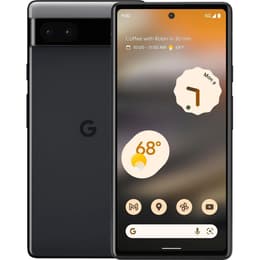
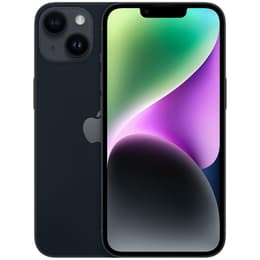
Google Pixel 6a • Unlocked vs iPhone 14 • Unlocked

Google Pixel 6a • Unlocked
Starting at

Refurbished price:$141.00

Versus $399.00 new

See options
iPhone 14 • Unlocked
Starting at

Refurbished price:$256.00

Versus $629.00 new

See options

Ratings

The Google Pixel 6A and the iPhone 14, both released in 2022, represent distinct approaches to the smartphone experience. While the Pixel 6A operates on Google's Android platform, the iPhone 14 runs on Apple's iOS, offering users different ecosystems and philosophies. This comparison will explore their core differences in design, performance, camera capabilities, and overall user experience to help consumers make an informed decision.

Scores

Durability

Both the Google Pixel 6A and the iPhone 14 offer solid longevity, though their software support timelines and repairability aspects present some distinctions.

  • Software Support: The Google Pixel 6A is expected to receive OS updates until at least July 2025 and security updates until at least July 2027. The iPhone 14 typically receives major iOS updates for a longer period, often 5-6 years from its September 2022 release, extending its software longevity further into the future.
  • Repairability: The iPhone 14 initially received a positive repairability score due to its internal redesign making the back panel more accessible. However, this score was later downgraded due to software limitations that require official Apple parts and validation for repairs, which can complicate independent repairs. Information regarding the Pixel 6A's repairability is less prominent, but generally, Android devices can sometimes offer more flexibility for third-party repairs.
  • Practical Lifespan: Both devices are built to last several years with proper care. The iPhone 14's extended software support may offer a slightly longer period of receiving the latest features and security patches, potentially extending its practical usability for some users.

Release Year

2022

2022

Last OS Compatibility

Yes

Yes

OS

Android

iOS

Foldable

No

No

Performance

When evaluating performance, both smartphones handle daily tasks efficiently, but they differ in their underlying architecture and how they manage demanding applications.

  • Everyday Responsiveness: The iPhone 14 delivers consistently smooth performance across applications and multitasking, providing a fluid user experience. The Pixel 6A also offers a responsive experience for general use, with quick app loading and navigation.
  • Demanding Applications and Gaming: The iPhone 14 is well-suited for graphically intensive games and demanding applications, maintaining smooth frame rates and efficient operation. The Pixel 6A capably handles most games and heavy apps, though it may exhibit more noticeable performance fluctuations during extended intense usage compared to the iPhone 14.
  • Multitasking and Storage: Both devices come with sufficient RAM to manage multiple applications running simultaneously without significant slowdowns. The Pixel 6A typically offers 128GB of internal storage, while the iPhone 14 provides storage options up to 512GB, offering more choice for users with extensive media libraries or numerous applications.

Memory (GB)

6 GB

6 GB

Screen quality

Both the Google Pixel 6A and the iPhone 14 feature OLED displays, providing vibrant visuals, but there are differences in their specifications that impact the viewing experience.

  • Display Technology and Clarity: Both phones utilize OLED technology, which delivers deep blacks and high contrast. The iPhone 14 features a Super Retina XDR OLED display with a resolution of 2532 x 1170 pixels at approximately 460 ppi, offering sharp and detailed visuals. The Pixel 6A has a 6.1-inch OLED display with a resolution of 1080 x 2400 pixels at around 429 ppi, also providing clear imagery.
  • Brightness and Outdoor Visibility: The iPhone 14 offers higher typical and peak brightness levels, reaching up to 800 nits typical and 1200 nits peak for HDR content, which enhances visibility in bright outdoor conditions. The Pixel 6A's display is also bright and generally performs well outdoors, though it may not reach the same peak brightness levels as the iPhone 14.
  • Refresh Rate and Smoothness: Both the Pixel 6A and the iPhone 14 feature a standard 60Hz refresh rate. This provides a smooth experience for most everyday interactions, but users accustomed to higher refresh rate displays might notice a difference in scrolling fluidity.

Resolution

1080 x 2400

1170 x 2532

Screen type

OLED

Super Retina XDR OLED

Audiovisual

The camera systems on the Google Pixel 6A and the iPhone 14 approach photography with different strengths, each excelling in various scenarios.

  • Main and Ultra-Wide Cameras: The Google Pixel 6A features a dual-camera setup with a 12.2 MP main sensor and a 12 MP ultrawide lens. It is known for its computational photography, producing consistent and detailed images, particularly in everyday conditions. The iPhone 14 also has a dual-camera system with a 12 MP main camera and a 12 MP ultrawide camera, featuring a larger sensor and wider aperture on the main lens for improved light gathering.
  • Low-Light and Video Performance: The iPhone 14 offers enhanced low-light performance due to its improved main camera sensor and the Photonic Engine, which processes images earlier in the pipeline. It also provides advanced video recording capabilities, including Cinematic mode and Action mode, with strong stabilization. The Pixel 6A delivers good low-light results through its Night Sight feature and records 4K video at 30 or 60 fps.
  • Front Camera and Features: The iPhone 14 includes a 12 MP TrueDepth front camera with autofocus and improved low-light capabilities. The Pixel 6A has an 8 MP front camera that provides good quality selfies, especially with its Auto-HDR mode.

Main camera

12.2 megapixels

12 megapixels

Front camera

8 megapixels

12 megapixels

Miscellaneous

Beyond core features, several practical elements differentiate the Google Pixel 6A and the iPhone 14, influencing daily usability and connectivity.

  • Connectivity and Ports: Both devices support 5G connectivity for fast mobile data. The Pixel 6A includes Wi-Fi 6E and Bluetooth 5.2, while the iPhone 14 supports Wi-Fi 6 and Bluetooth 5.3. The Pixel 6A uses a USB-C 3.1 port for charging and data transfer, whereas the iPhone 14 retains the Lightning port.
  • Security and Biometrics: The Pixel 6A features an under-display fingerprint sensor for secure unlocking. The iPhone 14 relies on Face ID, Apple's facial recognition system, for biometric authentication.
  • Design and Durability: The iPhone 14 features a Ceramic Shield front cover and an aluminum design with glass back, offering IP68 water and dust resistance. The Pixel 6A has a plastic back and an aluminum frame with Gorilla Glass 3 on the front, providing IP67 water and dust resistance. The iPhone 14 is slightly heavier at 172 grams compared to the Pixel 6A's 178 grams.

Weight

6 oz

6 oz

Screen size (inches)

6.1

6.1

Network

5G

5G

SIM card

Physical SIM + eSIM

eSIM

Carrier compatibility

Unlocked

Unlocked

User sentiment for both the Google Pixel 6A and the iPhone 14 often highlights their respective strengths. Users frequently praise the Pixel 6A for its camera's consistent image quality and the clean Android experience. Some common criticisms for the Pixel 6A have included its 60Hz display and occasional reports of connectivity issues. The iPhone 14 is often lauded for its robust performance, seamless iOS ecosystem, and strong video capabilities. However, some users have noted concerns regarding battery degradation over time.

Users prioritizing a straightforward, intuitive operating system with strong privacy features and a comprehensive app ecosystem may find the iPhone 14 well-suited to their needs. Its advanced video recording and consistent performance make it a strong contender for those who frequently capture content or engage in demanding tasks. Conversely, users who value computational photography, a customizable Android experience, and a potentially more open repair ecosystem might lean toward the Google Pixel 6A. Its camera capabilities, particularly for still photos, are often highlighted as a significant advantage.

Ultimately, the choice between these two devices depends on individual preferences for operating system, camera priorities, and specific usage patterns. Both offer a quality-assured refurbished option, providing an eco-friendly alternative for consumers.

See all articles

Our recent comparisons