
Google Pixel 7 Pro • Unlocked vs iPhone 14 • Locked AT&T

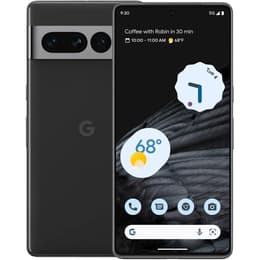
Google Pixel 7 Pro • Unlocked
Starting at

Refurbished price:$221.00

Versus $899.99 new

See options
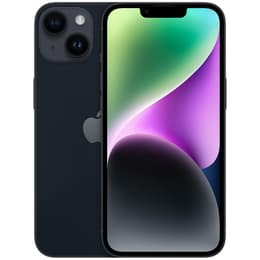
iPhone 14 • Locked AT&T
Starting at

Refurbished price:$225.72

Versus $629.00 new

See options

Ratings

The Google Pixel 7 Pro (2022) and the iPhone 14 (2022) are contemporary smartphones that offer distinct approaches to mobile technology. While both devices launched in the same year, they cater to different user preferences through their respective operating systems and hardware philosophies. The Pixel 7 Pro runs on Android, emphasizing advanced computational photography and AI-driven features, whereas the iPhone 14 operates on iOS, focusing on a streamlined user experience and robust ecosystem. Key differentiators include their camera systems, display technologies, and overall design.

Scores

Durability

Evaluating the practical lifespan of these devices involves considering their release timelines, software support, and physical resilience.

  • Release Timeline: The iPhone 14 was released in September 2022, while the Google Pixel 7 Pro followed in October 2022 [1, 3]. This means both devices are relatively close in age, offering a similar starting point for their expected lifecycles.
  • Software Longevity: Apple typically provides iOS updates for five to six years, suggesting the iPhone 14 will receive support for an extended period. Google also offers several years of Android version updates and security patches for its Pixel devices, ensuring continued functionality and security for the Pixel 7 Pro.
  • Physical Durability: Both the Pixel 7 Pro and iPhone 14 carry an IP68 rating for dust and water resistance, indicating protection against immersion in water up to 6 meters for 30 minutes [5, 17, 24]. The iPhone 14 features a Ceramic Shield front cover, designed for enhanced drop protection [5]. User reports and drop tests suggest that while the iPhone 14's glass back can be prone to shattering upon impact, its frame shows resilience against bending [14, 26, 37, 41]. The Pixel 7 Pro, protected by Gorilla Glass Victus, has shown some susceptibility to scratches on its camera bar and notable flex in bend tests, which could potentially compromise its water resistance over time [3, 15, 38, 39, 40].

Release Year

2022

2022

Last OS Compatibility

Yes

Yes

OS

Android

iOS

Foldable

No

No

Performance

Performance in a smartphone is measured by its ability to handle daily tasks, demanding applications, and overall system responsiveness.

  • Everyday Responsiveness: The iPhone 14 is equipped with a processor that delivers smooth performance for general navigation, app launches, and multitasking. It handles graphically intensive games and demanding applications with consistent fluidity [1, 5]. The Pixel 7 Pro, powered by its custom-designed processor, also provides a highly responsive experience, excelling in AI-driven tasks and computational photography, which can translate to quicker image processing and smart feature execution [3, 19].
  • Multitasking and Storage: The iPhone 14 comes with 6 GB of RAM, allowing for efficient app switching and background process management [1]. The Pixel 7 Pro features 12 GB of RAM, which provides additional headroom for extensive multitasking and keeping more applications active in memory simultaneously [3, 27]. Both devices offer storage options up to 512 GB, providing ample space for apps, photos, and media [1, 3].
  • Battery Behavior: The iPhone 14 has a battery capacity of approximately 3279 mAh, designed to provide a full day of typical use [12]. The Pixel 7 Pro houses a larger 5000 mAh battery, which generally translates to extended usage times, especially for users who frequently engage in power-intensive activities [3, 17]. Both support wireless charging, with the iPhone 14 also supporting MagSafe accessories [24].

Memory (GB)

8 GB

6 GB

Screen quality

The visual experience is largely defined by the display's technology, resolution, and overall clarity.

  • Display Technology and Clarity: The iPhone 14 features a 6.1-inch Super Retina XDR OLED display, offering deep blacks, vibrant colors, and excellent contrast [1, 20]. It has a resolution of 2532 x 1170 pixels, resulting in a pixel density of approximately 460 ppi [1, 2]. The Pixel 7 Pro boasts a larger 6.7-inch LTPO OLED display with a higher QHD+ resolution of 3120 x 1440 pixels, yielding a sharper 512 ppi [3, 17, 19]. This higher pixel density on the Pixel 7 Pro can result in slightly finer detail, particularly noticeable when viewing high-resolution content.
  • Brightness and Refresh Rate: The iPhone 14's display reaches a typical brightness of 800 nits and a peak HDR brightness of 1200 nits, ensuring good visibility in various lighting conditions [1, 2]. It operates at a standard 60 Hz refresh rate [1, 24]. The Pixel 7 Pro offers a 120 Hz variable refresh rate, providing smoother scrolling and more fluid animations, and can reach a peak brightness of 1500 nits, enhancing outdoor visibility [3, 17, 19, 33].
  • Viewing Experience: The Pixel 7 Pro's larger screen and higher refresh rate contribute to a more immersive and fluid viewing experience, especially for media consumption and gaming [19, 31]. The iPhone 14's display, while smaller and with a lower refresh rate, still delivers a high-quality visual experience with accurate color reproduction [30].

Resolution

1440 x 3120

1170 x 2532

Screen type

LTPO AMOLED

Super Retina XDR OLED

Audiovisual

The camera systems on both devices are central to their appeal, offering distinct capabilities for photography and videography.

  • Rear Camera Systems: The iPhone 14 features a dual-camera setup with a 12 MP main sensor and a 12 MP ultrawide sensor [2, 24]. Its main camera has a wider aperture and sensor-shift optical image stabilization, along with the Photonic Engine for improved low-light performance [5, 23, 24]. The Pixel 7 Pro offers a more versatile triple-camera system, including a 50 MP main sensor, a 12 MP ultrawide sensor with autofocus and macro capabilities, and a 48 MP telephoto lens with 5x optical zoom [3, 10, 13, 17, 22]. This telephoto lens allows for significant optical zoom and up to 30x Super Res Zoom [10, 22].
  • Photography Performance: The Pixel 7 Pro excels in zoom capabilities and offers a dedicated macro mode, making it suitable for capturing distant subjects or intricate close-ups [10, 13, 22]. Both phones deliver strong everyday photography, with the iPhone 14 providing consistent image quality and improved low-light performance through its Photonic Engine [5, 23]. The Pixel 7 Pro's computational photography is known for its detail and dynamic range [7].
  • Video Recording and Front Camera: Both devices support 4K video recording at 60 frames per second. The iPhone 14 includes Cinematic mode and Action mode for enhanced video features [2, 24]. The Pixel 7 Pro offers 10-bit HDR video recording and Cinematic Blur [13, 34]. For selfies, the iPhone 14 has a 12 MP front camera with autofocus [2, 24], while the Pixel 7 Pro features a 10.8 MP ultrawide front camera [3, 17].

Main camera

50 megapixels

12 megapixels

Front camera

10.8 megapixels

12 megapixels

Miscellaneous

Beyond core features, several practical elements contribute to the overall user experience and device utility.

  • Connectivity and Ports: Both the Pixel 7 Pro and iPhone 14 support 5G connectivity and Wi-Fi 6 for fast wireless internet [2, 24, 35]. The iPhone 14 utilizes a Lightning port for charging and data transfer [1]. The Pixel 7 Pro uses a USB-C port, which offers broader compatibility with other electronic devices [29]. Notably, US models of the iPhone 14 are eSIM-only, lacking a physical SIM card slot [30].
  • Biometric Security: The iPhone 14 relies on Face ID for secure facial recognition [24]. The Pixel 7 Pro offers both an under-display optical fingerprint scanner and face unlock for biometric authentication [3, 35, 43].
  • Design and Handling: The iPhone 14 features an aerospace-grade aluminum frame and a glass back, weighing 172 grams and measuring 146.7 x 71.5 x 7.8 mm [2, 5, 30]. The Pixel 7 Pro has an aluminum finish and a glass back, weighing 212 grams and measuring 162.9 x 76.6 x 8.9 mm [3, 35]. The Pixel 7 Pro is noticeably larger and heavier, which can impact one-handed use, while the iPhone 14 offers a more compact and lighter form factor.

Weight

7 oz

6 oz

Screen size (inches)

6.7

6.1

Network

5G

5G

SIM card

Physical SIM + eSIM

eSIM

Carrier compatibility

Unlocked

AT&T

User sentiment for the Google Pixel 7 Pro often highlights its exceptional camera capabilities, particularly its versatile zoom and computational photography features, as well as its clean Android experience and smart AI integrations. Some users have expressed concerns regarding the durability of the camera bar and the phone's susceptibility to bending in extreme stress tests. The iPhone 14 is frequently praised for its consistent performance, reliable camera, and the robust iOS ecosystem, including its safety features. Common feedback sometimes points to its 60 Hz display as a less fluid experience compared to higher refresh rate competitors and its design being similar to its predecessor.

Users prioritizing advanced camera versatility, especially telephoto zoom and macro photography, along with a larger, high-resolution, high-refresh-rate display and a pure Android experience, may find the Google Pixel 7 Pro well-suited to their needs. Conversely, individuals who value a compact design, a highly integrated ecosystem, consistent performance, and strong software support with a focus on ease of use might lean towards the iPhone 14. Both devices represent solid choices in the smartphone market, and considering a quality-assured refurbished option for either model can be an eco-friendly alternative to purchasing new.

See all articles

Our recent comparisons