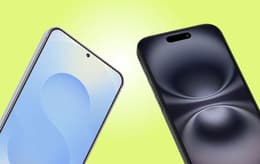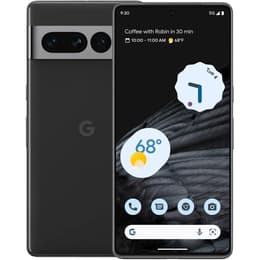
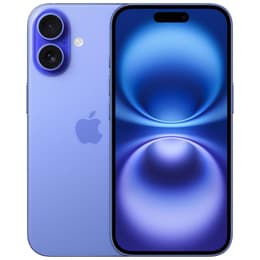
Google Pixel 7 Pro • Unlocked vs iPhone 16 • Unlocked

Google Pixel 7 Pro • Unlocked
Starting at

Refurbished price:$221.00

Versus $899.99 new

See options
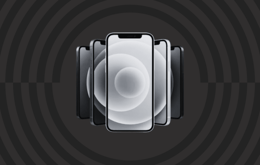
iPhone 16 • Unlocked
Starting at

Refurbished price:$516.00

Versus $729.00 new

See options

Ratings

The Google Pixel 7 Pro, released in October 2022, is a flagship Android smartphone known for its advanced camera system and Google's Tensor G2 processor. In contrast, the iPhone 16, launched in September 2024, represents Apple's standard-tier offering, featuring the A18 Bionic chip and running on iOS. While the Pixel 7 Pro emphasizes computational photography and a high-resolution display, the iPhone 16 focuses on a refined user experience within the Apple ecosystem, with notable advancements in its internal components and software integration.

Scores

Durability

When considering the long-term usability of these devices, both offer substantial software support, though with different approaches.

  • Software Longevity: The Google Pixel 7 Pro is guaranteed to receive five years of software support, including three years of OS updates and five years of monthly security updates, extending until at least October 2027. The iPhone 16, on the other hand, is expected to receive software support for a minimum of five years from its supply date, with Apple historically providing updates for 6-7 years.
  • Physical Durability: The Pixel 7 Pro features Gorilla Glass Victus for screen protection and an IP68 rating for water and dust resistance. The iPhone 16 incorporates Ceramic Shield for its display, which Apple states is tougher than previous generations, and also carries an IP68 rating. While both offer robust protection, real-world drop tests indicate that glass remains vulnerable to shattering on both devices.
  • Practical Lifespan: Users typically upgrade smartphones every 4 years or longer. Both devices are designed to remain functional and secure for several years, with the iPhone 16 potentially offering a slightly longer period of major OS updates due to Apple's extended support cycles.

Release Year

2022

2024

Last OS Compatibility

Yes

Yes

Foldable

No

No

Performance

The performance of a smartphone is crucial for daily tasks, from app usage to demanding games and multitasking.

  • Processor Capabilities: The Google Pixel 7 Pro is powered by the Google Tensor G2, designed to enhance AI and machine learning tasks, contributing to features like advanced computational photography. The iPhone 16 features the A18 Bionic chip, which is expected to deliver faster performance and greater efficiency, particularly for AI-related tasks introduced with iOS 18.
  • System Responsiveness: The Pixel 7 Pro offers 12GB of RAM, supporting smooth multitasking and app handling. The iPhone 16 comes with 8GB of RAM. Both devices are engineered to provide a fluid user experience, with their respective processors optimizing app loading times and overall system speed.
  • Battery Behavior: The Pixel 7 Pro is equipped with a 5000 mAh battery. User reports indicate that its battery life can vary, with heavy use, especially camera usage or high screen brightness outdoors, leading to faster drain. The iPhone 16 has a 3561 mAh battery, which is an increase over its predecessor, and is expected to offer improved power efficiency, potentially leading to extended usage times.

Memory (GB)

8 GB

8 GB

Screen quality

The display is a primary interface for smartphone interaction, and both devices offer distinct visual experiences.

  • Display Technology and Resolution: The Google Pixel 7 Pro features a 6.7-inch LTPO AMOLED display with a resolution of 1440 x 3120 pixels, resulting in sharp and clear visuals. The iPhone 16 comes with a 6.1-inch Super Retina XDR OLED display with a resolution of 2556 x 1179 pixels, offering vibrant colors and deep blacks.
  • Brightness and Refresh Rate: The Pixel 7 Pro's display can reach a peak brightness of 1500 nits and features an adaptive refresh rate that ranges from 10Hz to 120Hz for smooth scrolling and responsiveness. The iPhone 16's display also offers high brightness and a 60Hz refresh rate, with Pro models typically featuring 120Hz.
  • Viewing Experience: The larger, higher-resolution screen of the Pixel 7 Pro provides more screen real estate, which can be beneficial for media consumption and multitasking. The iPhone 16's display, while smaller, delivers a consistent and high-quality viewing experience characteristic of Apple's OLED panels.

Resolution

1440 x 3120

1179 x 2556

Screen type

LTPO AMOLED

Super Retina XDR OLED

Audiovisual

Both smartphones offer advanced camera systems, each with its own strengths in capturing photos and videos.

  • Camera System Capabilities: The Google Pixel 7 Pro features a triple rear camera system, including a 50MP main sensor, a 48MP telephoto lens with 5x optical zoom, and a 12MP ultrawide lens. It is known for its computational photography features, such as Night Sight for low-light conditions. The iPhone 16 includes a dual-camera system with a 48MP wide-angle main camera and a 12MP ultra-wide camera.
  • Photography Performance: The Pixel 7 Pro excels in low-light photography, producing bright and clear shots even in challenging conditions. Its telephoto lens provides significant optical zoom capabilities. The iPhone 16's camera system is expected to offer improved sensors and enhanced computational photography, with a focus on delivering high-quality images in various lighting scenarios.
  • Video Recording Quality: The Pixel 7 Pro supports 4K video recording at 30/60fps and offers features like gyro-EIS and OIS for stable footage. Users have noted good color tone maintenance in low-light video, though with some noise. The iPhone 16 also supports 4K Dolby Vision video recording and includes cinematic video stabilization.
  • Audio Experience: The Pixel 7 Pro includes stereo speakers and noise-cancellation microphones for clear audio. The iPhone 16 offers Dolby Atmos-tuned Spatial Audio and stereo recording, providing an immersive audio experience for media consumption and clear microphone quality for calls.

Main camera

50 megapixels

48 megapixels

Front camera

10.8 megapixels

12 megapixels

Miscellaneous

Beyond core features, several practical elements contribute to the overall user experience of these devices.

  • Connectivity Options: Both the Google Pixel 7 Pro and the iPhone 16 support 5G connectivity. The Pixel 7 Pro includes Bluetooth 5.2 and Wi-Fi 6 (ax). The iPhone 16 features Bluetooth 5.3 and Wi-Fi 7 (802.11a/b/g/n/ac/ax/be).
  • Port Types and Sensors: The Pixel 7 Pro utilizes a USB-C port and features an in-display fingerprint scanner and facial scanning for security. The iPhone 16 also uses a USB-C port and relies on Face ID for facial recognition. Neither device includes a 3.5mm headphone jack.
  • Physical Characteristics: The Pixel 7 Pro measures 162.9 x 76.6 x 8.9 mm and weighs 212g. The iPhone 16 is slightly smaller and lighter, with dimensions of 147.6 × 71.6 × 7.8 mm and a weight of 170g. The Pixel 7 Pro has an aluminum frame, while the iPhone 16 uses an aluminum frame with a glass front and back.

Weight

7 oz

6000 oz

Screen size (inches)

6.7

6.1

Network

5G

5G

SIM card

Physical SIM + eSIM

eSIM

Carrier compatibility

Unlocked

Unlocked

The Google Pixel 7 Pro and iPhone 16 cater to different user preferences, each excelling in specific areas. The Pixel 7 Pro is frequently praised for its exceptional camera capabilities, particularly its computational photography features that deliver impressive results in various lighting conditions. Users often highlight its clean Android experience and the integration of Google's AI features. Some criticisms have been noted regarding its battery life under heavy usage, especially with the display at maximum brightness.

The iPhone 16, as a newer device, benefits from a more efficient processor and Apple's consistent software support, which users appreciate for its longevity and seamless ecosystem integration. Common praise points for the iPhone series include its robust build quality and user-friendly interface. While specific user feedback for the iPhone 16 is still emerging, general iPhone user sentiment often points to reliable performance and strong privacy features. Some users might find the standard iPhone 16's display refresh rate to be a point of consideration compared to higher-end or older Pro models.

Users prioritizing advanced computational photography, a larger, high-resolution display with a high refresh rate, and a pure Android experience may find the Google Pixel 7 Pro well-suited to their needs. Conversely, users who value a compact design, a long-term software update commitment, and the integrated Apple ecosystem will likely lean toward the iPhone 16. Both devices represent quality choices, and considering a quality-assured refurbished option for either model can be an eco-friendly alternative for making an informed and sustainable choice.

See all articles

Our recent comparisons