Google Pixel 7 • Unlocked vs iPhone 14 Pro Max • Locked T-Mobile

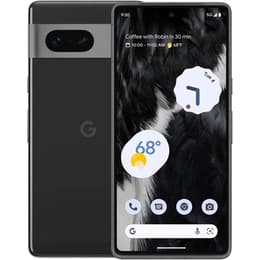
Google Pixel 7 • Unlocked
Starting at

Refurbished price:$185.00

Versus $599.99 new

See options
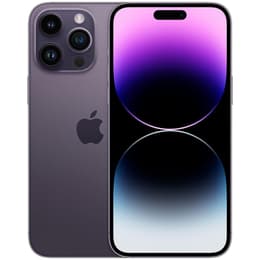
iPhone 14 Pro Max • Locked T-Mobile
Starting at

Refurbished price:$413.00

Versus $1,099.00 new

See options

Ratings

The Google Pixel 7, released in October 2022, and the iPhone 14 Pro Max, launched in September 2022, represent distinct approaches to high-end smartphone design and functionality. While both devices offer advanced camera systems and robust performance, they differ significantly in their operating systems, display technologies, and overall user experience. This comparison aims to highlight these practical differences to help users make an informed decision, especially when considering quality-assured refurbished options.

Scores

Durability

When evaluating the longevity of a smartphone, software support and physical durability are key considerations. Both devices offer substantial support, but their timelines and repairability aspects present different long-term prospects.

  • Software Longevity: The Google Pixel 7 launched with Android 13 and is guaranteed to receive five years of both OS and security updates, extending its support until at least October 2027 for security and potentially Android 18 for OS updates. The iPhone 14 Pro Max, running iOS 16 at launch, typically receives iOS updates for approximately 5-6 years from its release, with support confirmed for iOS 17, iOS 18, and iOS 26.
  • Physical Durability: Both the Pixel 7 and iPhone 14 Pro Max feature an IP68 rating for dust and water resistance, indicating a high level of protection against environmental elements. The iPhone 14 Pro Max incorporates a Ceramic Shield front cover, while the Pixel 7 uses Gorilla Glass Victus for screen protection.
  • Repairability: The Google Pixel 7 has a repairability score of around 6 to 6.5 out of 10, with screen replacements being relatively straightforward, though the USB-C port is soldered, and the battery can be challenging to remove. While specific repairability scores for the iPhone 14 Pro Max are less commonly cited, Apple devices generally require specialized tools and expertise for repairs.

Release Year

2022

2022

Last OS Compatibility

Yes

Yes

OS

Android

iOS

Foldable

No

No

Performance

The performance of a smartphone is crucial for handling daily tasks, demanding applications, and multitasking. Both the Pixel 7 and iPhone 14 Pro Max are equipped with powerful internal components designed for smooth operation.

  • Processing Power: The Google Pixel 7 is powered by a current-generation processor designed to enhance machine learning capabilities, leading to improvements in areas like photo processing, video enhancements, and speech recognition. The iPhone 14 Pro Max features a highly capable processor known for its significant boost in graphics processing and overall system responsiveness, ensuring smooth performance across various applications and games.
  • Multitasking and Responsiveness: The Pixel 7 comes with 8GB of RAM, which contributes to efficient multitasking and app management. The iPhone 14 Pro Max, with 6GB of RAM, is optimized by its operating system to manage background processes effectively, providing a fluid user experience even with multiple applications open.
  • Storage Options: The Pixel 7 offers storage configurations of 128GB and 256GB. The iPhone 14 Pro Max provides a wider range of storage options, including 128GB, 256GB, 512GB, and 1TB, catering to users with extensive storage needs.
  • Battery Behavior: The Pixel 7 houses a 4355 mAh battery, with real-world usage tests indicating approximately 7 hours and 14 minutes of battery life. The iPhone 14 Pro Max, with a 4323 mAh battery, demonstrates longer endurance, often lasting over 13 hours in web browsing tests and up to 29 hours for video playback, making it suitable for extended use.

Memory (GB)

8 GB

6 GB

Screen quality

The display is a primary interface for smartphone interaction, and both devices offer high-quality viewing experiences with distinct characteristics.

  • Display Technology and Clarity: The Google Pixel 7 features a 6.3-inch OLED display with a resolution of 1080 x 2400 pixels, resulting in a pixel density of 416 ppi. This provides clear and vibrant visuals for everyday use. The iPhone 14 Pro Max boasts a larger 6.7-inch Super Retina XDR OLED display with a resolution of 2796 x 1290 pixels and a pixel density of 460 ppi, offering exceptional sharpness and detail.
  • Refresh Rate and Smoothness: The Pixel 7 has a 90Hz refresh rate, which provides a smoother scrolling experience and more fluid animations compared to standard 60Hz displays. The iPhone 14 Pro Max features ProMotion technology with an adaptive refresh rate that can go up to 120Hz, dynamically adjusting to content for optimal smoothness and power efficiency, even dropping to 1Hz for static content.
  • Brightness and Outdoor Visibility: The Pixel 7's display can reach a high brightness mode of 1400 nits, ensuring good visibility in various lighting conditions. The iPhone 14 Pro Max offers higher peak brightness levels, reaching 1000 nits typical, 1600 nits for HDR content, and an impressive 2000 nits for outdoor use, making it highly legible even in direct sunlight.
  • Unique Display Features: The iPhone 14 Pro Max introduces the Dynamic Island, an interactive area around the front camera cutout that displays alerts, notifications, and background activities. It also includes an Always-On display feature. The Pixel 7 does not have these specific features.

Resolution

1080 x 2400

1290 x 2796

Screen type

AMOLED

LTPO Super Retina XDR OLED

Audiovisual

Both smartphones are recognized for their advanced photographic capabilities, offering users versatile tools for capturing images and videos. Their camera systems, however, are configured differently.

  • Rear Camera Systems: The Google Pixel 7 features a dual-camera setup on the rear, consisting of a 50MP wide-angle main camera and a 12MP ultrawide camera. It utilizes computational photography for features like 8x Super Res Zoom (digital) and Photo Unblur. The iPhone 14 Pro Max comes with a triple-camera system, including a 48MP main camera with second-generation sensor-shift optical image stabilization, a 12MP ultrawide camera, and a 12MP telephoto lens offering 3x optical zoom.
  • Low-Light and Everyday Photography: The Pixel 7 is known for its strong performance in low-light conditions with features like Night Sight and Real Tone, which accurately capture skin tones. The iPhone 14 Pro Max also excels in low-light photography, benefiting from its larger main sensor and advanced image processing through the Photonic Engine and Deep Fusion.
  • Video Recording Capabilities: Both devices support 4K video recording at 30 or 60 frames per second. The iPhone 14 Pro Max offers additional video features such as Cinematic mode for shallow depth-of-field effects up to 4K HDR at 30 fps, Action mode for smooth handheld footage, and ProRes video recording for professional-grade editing. The Pixel 7 also provides good video stabilization.
  • Front Camera: The Pixel 7 has a 10.8MP ultrawide front camera. The iPhone 14 Pro Max features a 12MP TrueDepth front camera with autofocus.

Main camera

50 megapixels

48 megapixels

Front camera

10.8 megapixels

12 megapixels

Miscellaneous

Beyond core performance and camera, several practical elements contribute to the overall user experience, including connectivity, physical design, and additional features.

  • Connectivity Standards: The Google Pixel 7 supports Wi-Fi 6E, offering access to the less congested 6GHz band for potentially faster wireless speeds, alongside Bluetooth 5.2 and 5G connectivity. The iPhone 14 Pro Max supports Wi-Fi 6 and Bluetooth 5.3, also providing robust 5G capabilities. Some Pixel 7 users have reported occasional connectivity issues, such as dropping 5G signals.
  • Ports and Biometrics: The Pixel 7 uses a USB-C 3.2 port for charging and data transfer and features an under-display fingerprint sensor for secure unlocking. The iPhone 14 Pro Max utilizes Apple's proprietary Lightning port and relies on Face ID for biometric authentication.
  • Physical Design and Handling: The Pixel 7 is a more compact device, measuring 155.6 x 73.2 x 8.7 mm and weighing 197g. This makes it easier for one-handed use and pocketability. The iPhone 14 Pro Max is larger and heavier at 160.7 x 77.6 x 7.85 mm and 240g, offering a more expansive screen but requiring a firmer grip.
  • Additional Sensors: Both phones include standard sensors like accelerometers, gyroscopes, and ambient light sensors. The iPhone 14 Pro Max also features a LiDAR scanner, which enhances augmented reality experiences and improves autofocus in low light.

Weight

6 oz

8 oz

Screen size (inches)

6.3

6.7

Network

5G

5G

SIM card

Physical SIM + eSIM

eSIM

Carrier compatibility

Unlocked

T-Mobile

The Google Pixel 7 and iPhone 14 Pro Max cater to different user preferences, each excelling in specific areas. Users often praise the Pixel 7 for its exceptional computational photography, delivering consistent and high-quality images, particularly in challenging lighting conditions. Its clean Android experience and timely software updates are also frequently highlighted as strong points. Some common criticisms, however, have included reports of inconsistent cellular connectivity for some users.

The iPhone 14 Pro Max is widely lauded for its industry-leading performance, extended battery life, and the vibrant, bright display with its adaptive refresh rate. The advanced video recording capabilities and the innovative Dynamic Island feature also receive significant positive attention. A frequent consideration for some users is its larger size and weight, which can impact one-handed usability.

Users prioritizing a compact device with advanced AI-driven camera features and a pure Android experience may find the Google Pixel 7 well-suited to their needs. Conversely, those who value a larger, brighter display, class-leading processing power, superior battery endurance, and a comprehensive video toolkit will likely lean towards the iPhone 14 Pro Max. When considering either of these devices, exploring quality-assured refurbished options can provide a sustainable choice for acquiring advanced technology.

See all articles

Our recent comparisons