
Compare models

Google Pixel 7a • Unlocked vs iPhone 17 Pro Max • Unlocked

  • 1-year warranty
  • Free standard shipping
  • Free 30-day returns
Google Pixel 7a • Unlocked
Starting at

Refurbished price:$223.00

Versus $450.00 new

See options
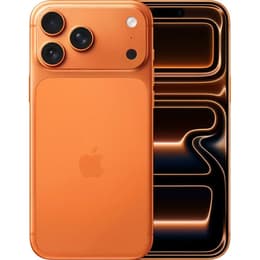
iPhone 17 Pro Max • Unlocked
Starting at

Refurbished price:$1,223.00

Versus $1,199.00 new

See options

Differences at a glance

The Google Pixel 7a (2023) and the iPhone 17 Pro Max (2025) represent very different eras, form factors, and tiers in the smartphone market. While the Pixel 7a targets everyday usability in a compact footprint, the iPhone 17 Pro Max functions as an expansive, high-tier device equipped with cutting-edge mobile hardware. Operating on distinct software ecosystems with Android and iOS respectively, these models cater to completely different user priorities and technical expectations.

Available Models

Color

Storage (GB)

Scores

Durability

When examining longevity and long-term utility, these devices approach software support and hardware durability from different timelines. Software schedules and build standards dictate how long each phone remains viable for daily deployment.

  • Software Support Windows: The iPhone 17 Pro Max benefits from Apple's extended update cycles lasting many years, whereas the Pixel 7a operates under a structured five-year support window from its release date.
  • Hardware Resilience: Both models incorporate robust water and dust resistance, though the iPhone 17 Pro Max utilizes advanced front glass protection designed to withstand impact more effectively over years of use.
  • Repairability Outlook: Parts availability and modular component design allow both devices to be serviced relatively easily through official and quality-assured refurbished options, helping extend their functional lifespan.

Release Year

2023

2025

Last OS Compatibility

Yes

Yes

OS

Android

iOS

Foldable

No

No

Performance

System responsiveness and day-to-day execution differ significantly, driven by generational gaps in silicon capability and memory allocation. Both platforms handle common tasks well, but heavy workflows highlight contrasting capabilities.

  • Multitasking and App Switching: The iPhone 17 Pro Max features high-capacity memory architecture that keeps numerous demanding applications open simultaneously without background reloading, while the Pixel 7a manages standard multitasking reliably for everyday apps.
  • Gaming and Heavy Workloads: Demanding 3D titles and resource-heavy editing software run with advanced thermal efficiency and faster rendering times on the iPhone 17 Pro Max, whereas the Pixel 7a handles casual gaming and standard daily utilities smoothly.
  • Storage Configurations: The iPhone 17 Pro Max offers expansive tiers starting at higher capacities, whereas the Pixel 7a provides a streamlined storage option tailored to moderate media users.

Screen quality

Visual output and display engineering vary notably in size, fluidity, and peak luminance, influencing media consumption and outdoor usability.

  • Refresh Rate and Fluidity: The iPhone 17 Pro Max utilizes advanced adaptive refresh rate technology scaling up to 120Hz for fluid scrolling, while the Pixel 7a employs a standard 90Hz refresh rate.
  • Outdoor Brightness: High peak luminance levels on the iPhone 17 Pro Max ensure legibility under direct sunlight, whereas the Pixel 7a offers adequate brightness for typical daylight conditions.
  • Display Size and Panel Type: The iPhone 17 Pro Max presents a large 6.9-inch OLED canvas, compared to the more compact 6.1-inch OLED screen found on the Pixel 7a, altering one-handed usability versus immersive viewing.

Resolution

1080 x 2400

2868x1320

Screen type

OLED

Super Retina XDR

Audiovisual

Media capture and audio output capabilities diverge between a versatile multi-lens powerhouse and a streamlined single-tier photographic tool.

  • Camera System Versatility: The iPhone 17 Pro Max features a triple high-resolution lens array with extensive optical zoom range, whereas the Pixel 7a relies on a dual-sensor setup focused on computational photography.
  • Video Recording Quality: Professional-grade video formats, stabilization modes, and cinematic features are heavily emphasized on the iPhone 17 Pro Max, while the Pixel 7a captures crisp, stabilized clips for casual sharing.
  • Audio and Speaker Output: Stereo speakers on both devices provide clear dialogue and media playback, though the larger chassis of the iPhone 17 Pro Max allows for a wider soundstage and deeper bass response.

Main camera

64 megapixels

48 megapixels

Front camera

13 megapixels

18 megapixels

Miscellaneous

Physical characteristics, connectivity standards, and daily ergonomic factors complete the practical profile of each device.

  • Build and Ergonomics: The Pixel 7a provides a lightweight, compact footprint that is easy to manage with one hand, contrasting with the heavier, premium titanium-class build of the iPhone 17 Pro Max.
  • Connectivity and Ports: Both models support modern 5G networks and fast Wi-Fi standards, utilizing a universal USB-C port for charging and data transfer.
  • Security Authentication: The Pixel 7a uses an under-display optical fingerprint sensor alongside facial recognition, while the iPhone 17 Pro Max relies exclusively on advanced biometric facial scanning.

Weight

6 oz

185 oz

Screen size (inches)

6.1

6.9

Network

5G

5G

SIM card

Physical SIM + eSIM

eSIM

Carrier compatibility

Unlocked

Unlocked

What the community thinks

User feedback from online communities highlights distinct preferences for each smartphone. Pixel 7a users frequently praise its clean software interface, manageable size, and reliable everyday camera performance at a balanced scale. Conversely, owners of the iPhone 17 Pro Max emphasize satisfaction with its exceptional battery longevity, expansive high-refresh display, and robust processing headroom for intensive tasks.

Users prioritizing a compact footprint, straightforward everyday operation, and a streamlined mobile experience will find the Google Pixel 7a well-suited to their needs. On the other hand, users prioritizing maximum display real estate, advanced photography tools, and heavy-duty performance capability may lean toward the iPhone 17 Pro Max. For consumers seeking a sustainable choice, exploring quality-assured refurbished options for either model provides an eco-friendly alternative without compromising core functionality. Ultimately, evaluating individual daily workflow requirements will determine which device aligns best with specific usage goals.

Our recent comparisons