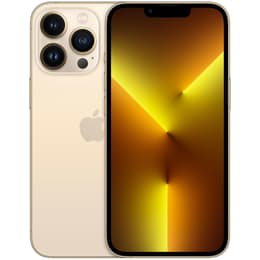
Google Pixel 8 Pro • Unlocked vs iPhone 13 Pro • Unlocked

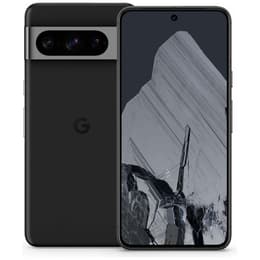
Google Pixel 8 Pro • Unlocked
Starting at

Refurbished price:$296.00

Versus $899.99 new

See options
iPhone 13 Pro • Unlocked
Starting at

Refurbished price:$299.99

Versus $899.00 new

See options

Ratings

The Google Pixel 8 Pro, released in October 2023, and the Apple iPhone 13 Pro, launched in September 2021, represent distinct approaches to high-end smartphone design and functionality. While both offer premium experiences, the Pixel 8 Pro emphasizes advanced computational photography and extended software support, running on Android, whereas the iPhone 13 Pro focuses on a refined user experience within the iOS ecosystem, with a strong emphasis on consistent performance and camera capabilities.

Scores

Durability

When considering the long-term usability of these devices, their release timelines and software support policies are key differentiators.

  • Release Timeline and Software Support: The Google Pixel 8 Pro, being a newer device, benefits from Google's commitment to providing seven years of OS upgrades, security updates, and feature drops, extending its official support until 2030. This makes it a sustainable choice for users prioritizing long-term software longevity. The iPhone 13 Pro, released two years earlier, typically receives major iOS updates for approximately five to six years from its launch, with security updates often continuing for a longer period.
  • Repairability: The iPhone 13 Pro received a repairability score of 5 out of 10 from iFixit, noting that display and battery replacements are prioritized in its design, though replacing the rear glass remains challenging. Software limitations can also complicate third-party repairs, potentially affecting features like Face ID if non-genuine parts are used. The Google Pixel 8 Pro has a repairability score that varies, with some assessments placing it around 4.0 out of 10 due to difficulties with battery removal and a soldered charging port, while others suggest it's moderately repairable with a score of 7/10, similar to newer iPhones.
  • Expected Practical Lifespan: Both devices are built with quality materials and are designed for durability, including IP68 water and dust resistance. However, the Pixel 8 Pro's significantly longer software support commitment suggests a longer period of receiving new features and security patches, potentially extending its practical lifespan in terms of software functionality. Users of the iPhone 13 Pro may find its hardware remains capable for many years, but new software features might eventually become unavailable.

Release Year

2023

2021

Last OS Compatibility

Yes

Yes

OS

Android

iOS

Foldable

No

No

Performance

The performance of both smartphones is robust, though they approach processing power and efficiency from different architectural standpoints.

  • Processing Capabilities: The Google Pixel 8 Pro handles demanding applications and multitasking smoothly, thanks to its current-generation processor, which is optimized for AI-driven tasks and computational photography. The iPhone 13 Pro, powered by its own advanced chip, delivers consistent and responsive performance across applications, including graphically intensive games and video editing. While the Pixel 8 Pro's raw processing power might not always match the iPhone 13 Pro in synthetic benchmarks, its real-world snappiness and efficiency for everyday tasks are comparable.
  • Multitasking and Responsiveness: The Pixel 8 Pro comes with 12GB of RAM, contributing to smooth multitasking and app retention. Users generally report a fluid interface, though some have noted occasional micro-stutters in certain applications. The iPhone 13 Pro features 6GB of RAM, which, combined with iOS's efficient memory management, provides a highly responsive user experience, making app switching and navigation feel seamless.
  • Battery Behavior: The Pixel 8 Pro is equipped with a larger 5050 mAh battery, which generally offers longer battery life than the iPhone 13 Pro, especially with normal usage. However, some users have reported inconsistent battery life and increased drain when using mobile data or during intensive tasks like camera use. The iPhone 13 Pro, with its 3095 mAh battery, is known for its strong battery life, often lasting a full day for most users, though battery health can degrade over time, leading to more frequent charging for older units. Both devices support fast wired charging, though the Pixel 8 Pro's charging speeds are considered moderate compared to some competitors.

Memory (GB)

12 GB

6 GB

Screen quality

Both devices offer high-quality displays, but with differences in size, brightness, and underlying technology that cater to varying user preferences.

  • Display Technology and Clarity: The Google Pixel 8 Pro features a 6.7-inch LTPO OLED 'Super Actua' display with a resolution of 1244 x 2992 pixels, providing a sharp and vibrant viewing experience. The iPhone 13 Pro has a 6.1-inch Super Retina XDR OLED display with a resolution of 2532 x 1170 pixels. Both OLED panels deliver deep blacks and excellent contrast, making content visually engaging.
  • Brightness and Refresh Rate: The Pixel 8 Pro's display is notably bright, offering up to 1600 nits in HDR and a peak brightness of 2400 nits, ensuring excellent visibility even in direct sunlight. It also boasts an adaptive refresh rate ranging from 1Hz to 120Hz, contributing to smooth scrolling and efficient power usage. The iPhone 13 Pro's display features ProMotion technology, providing an adaptive refresh rate from 10Hz to 120Hz, which enhances the fluidity of animations and interactions. Its typical maximum brightness is 1000 nits, with a peak HDR brightness of 1200 nits, offering clear viewing in most conditions.
  • Screen Size and Viewing Experience: The Pixel 8 Pro's larger 6.7-inch screen offers a more expansive canvas for media consumption, gaming, and productivity. The iPhone 13 Pro's 6.1-inch display provides a more compact form factor, which some users find easier for one-handed use. Both displays offer excellent color accuracy and a premium visual experience, with the choice largely depending on whether a larger screen or a more manageable size is preferred.

Resolution

1344 x 2992

1170 x 2532

Screen type

LTPO OLED

Super Retina XDR OLED

Audiovisual

Both smartphones are highly regarded for their camera systems, each offering distinct strengths in photography and videography.

  • Camera System Capabilities: The Google Pixel 8 Pro features a versatile triple-camera setup on the rear, including a 50MP main sensor, a 48MP ultrawide lens, and a 48MP telephoto lens with 5x optical zoom and up to 30x Super Res Zoom. Its front camera is 10.5MP with autofocus. The iPhone 13 Pro also has a triple 12MP camera system on the rear, comprising wide, ultrawide, and telephoto lenses with 3x optical zoom, alongside a 12MP front camera.
  • Photography Performance: The Pixel 8 Pro is renowned for its computational photography, delivering detailed and clear photos with excellent dynamic range and strong low-light performance. Its AI-powered features offer unique editing capabilities. The iPhone 13 Pro provides consistently excellent picture quality with natural colors and impressive detail, particularly in good lighting. Its dedicated night mode is effective, and it introduced macro photography capabilities.
  • Video Recording and Audio: The Pixel 8 Pro offers good video quality, though some users have reported choppy or stuttering 4K videos in low-light conditions. The iPhone 13 Pro is highly praised for its video recording capabilities, including features like Cinematic Mode, which allows for depth-of-field effects. Both devices offer capable microphone quality for calls and recordings, and their speaker outputs provide a good media consumption experience.

Main camera

50 megapixels

12 megapixels

Front camera

10.5 megapixels

12 megapixels

Miscellaneous

Beyond core performance, several practical elements contribute to the overall user experience and differentiate these two devices.

  • Connectivity Options: The Google Pixel 8 Pro supports modern connectivity standards including 5G, Wi-Fi 7, and Bluetooth 5.3, along with eSIM and Ultra Wideband. However, some users have reported inconsistent Wi-Fi performance and a sub-par 5G experience, particularly in areas with weaker reception. The iPhone 13 Pro supports 5G, Wi-Fi 6, and Bluetooth 5.0. While generally reliable, some users have noted occasional cellular data and Wi-Fi connectivity issues.
  • Port Types and Sensors: The Pixel 8 Pro uses a USB-C port for charging and data transfer. It includes useful sensors like an in-display fingerprint scanner and Face Unlock. The iPhone 13 Pro utilizes Apple's proprietary Lightning port, which some users find slow for transferring large video files. It relies primarily on Face ID for secure authentication.
  • Weight, Dimensions, and Build Materials: The Pixel 8 Pro measures 162.6 x 76.5 x 8.8mm and weighs 213 grams, featuring a frame made from 100% recycled aluminum and glass front and back. The iPhone 13 Pro is more compact at 146.7 x 71.5 x 7.65mm and weighs 204 grams, featuring a Ceramic Shield front cover, a stainless steel frame, and a glass back. Both offer a premium feel and IP68 water resistance.

Weight

7 oz

6 oz

Screen size (inches)

6.7

6.1

Network

5G

5G

SIM card

Physical SIM + eSIM

Physical SIM + eSIM

Carrier compatibility

Unlocked

Unlocked

Connector

USB-C

Lightning

The Google Pixel 8 Pro and iPhone 13 Pro each offer compelling features, catering to different user priorities. User feedback for the Pixel 8 Pro often praises its exceptional camera system, long software support commitment, and bright, fluid display. However, some common criticisms include inconsistent battery performance, occasional overheating, and connectivity issues with 5G and Wi-Fi.

For the iPhone 13 Pro, users frequently commend its consistent and powerful performance, excellent camera capabilities, and the smooth, integrated experience within the iOS ecosystem. Common concerns that have emerged over time include battery degradation, potential Face ID issues with third-party repairs, and the slower data transfer speeds of its Lightning port.

Users prioritizing cutting-edge computational photography, a larger display, and the longest possible software support in an Android device may find the Google Pixel 8 Pro well-suited to their needs. Its AI-driven features and commitment to updates make it a forward-looking choice. Conversely, users who value a highly refined and consistent operating system, a compact form factor, and a proven track record of reliable performance and video capabilities may lean toward the iPhone 13 Pro. Both devices are available as quality-assured refurbished options, providing an eco-friendly alternative for those seeking premium technology with a reduced environmental impact.


See all articles

Our recent comparisons