Google Pixel 8 Pro • Unlocked vs iPhone 16 • Unlocked

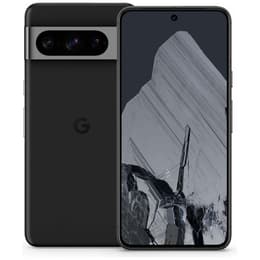
Google Pixel 8 Pro • Unlocked
Starting at

Refurbished price:$296.00

Versus $899.99 new

See options
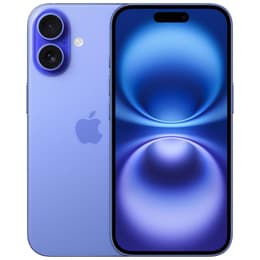
iPhone 16 • Unlocked
Starting at

Refurbished price:$516.00

Versus $729.00 new

See options

Ratings

The Google Pixel 8 Pro, released in October 2023, and the iPhone 16, launched in September 2024, represent distinct approaches to the modern smartphone experience. While both devices offer advanced capabilities, they cater to different user preferences through their respective operating systems and hardware philosophies. The Pixel 8 Pro emphasizes artificial intelligence integration and a comprehensive camera system, running on Android, while the iPhone 16 focuses on a refined user experience, robust performance, and an evolving camera setup within the iOS ecosystem.

Scores

Durability

When considering the long-term usability of these devices, their release timelines and software support policies are key factors.

  • Release and Age: The Google Pixel 8 Pro was introduced in October 2023, making it nearly a year older than the iPhone 16, which debuted in September 2024. This difference in release date impacts the remaining duration of official software support.
  • Software Longevity: Google has committed to providing seven years of OS and security updates for the Pixel 8 Pro, extending its support until 2030. [12, 13, 17, 18, 20] The iPhone 16, while not having an explicit seven-year guarantee from Apple, is historically expected to receive major iOS updates for approximately seven years, with security updates often continuing beyond that period. [39, 40]
  • Repairability: The iPhone 16 has demonstrated improved repairability, earning an iFixit score of 7 out of 10, a notable increase over its predecessor. [2, 3, 4, 5, 7] This is attributed to easier battery replacement and more modular components. [3, 4, 7] The Google Pixel 8 Pro's repairability has been rated lower by some, with scores around 4 out of 10, due to challenges like strong adhesive for the battery and a soldered charging port, though other assessments place it closer to 7 out of 10. [10, 23]

Release Year

2023

2024

Last OS Compatibility

Yes

Yes

Foldable

No

No

Performance

Both smartphones deliver robust performance suitable for demanding applications and multitasking, though they achieve this through different hardware and software optimizations.

  • Processing Power: The iPhone 16 features a current-generation processor that provides substantial speed improvements, resulting in smooth operation for everyday tasks, gaming, and video editing. [16, 26] The Google Pixel 8 Pro is equipped with a powerful processor designed to handle intensive applications and leverage advanced on-device artificial intelligence features, ensuring a responsive user experience. [11, 27]
  • Multitasking and Storage: The Pixel 8 Pro typically includes 12GB of RAM, which supports efficient multitasking and keeps numerous applications active in the background. [6, 11, 14] The iPhone 16 comes with 8GB of RAM, optimized by iOS to manage applications effectively for a fluid user experience. [1] Both devices offer various storage options, including 128GB, 256GB, and 512GB, with the Pixel 8 Pro also offering a 1TB option in some regions. [1, 11, 21]
  • Battery Behavior: The Pixel 8 Pro houses a 5050 mAh battery, designed to provide over 24 hours of usage for many users. [11, 14] In real-world tests, it has shown to last a full day with heavy use. [28, 29, 31] The iPhone 16, with a 3561 mAh battery, has also been noted by users for its impressive battery life, often extending to two days of typical use. [1, 8, 25, 26]

Memory (GB)

12 GB

8 GB

Screen quality

The visual experience on both devices is characterized by high-quality displays, each with distinct advantages in technology and features.

  • Display Technology and Resolution: The Google Pixel 8 Pro features a 6.7-inch LTPO OLED display with a resolution of 2992x1344 pixels, offering sharp images and vibrant colors. [11, 21, 22] The iPhone 16 comes with a 6.1-inch Super Retina XDR OLED display, providing a resolution of 2556 × 1179 pixels, known for its deep blacks and accurate color reproduction. [1, 8]
  • Brightness and Outdoor Visibility: The Pixel 8 Pro's display can reach a peak brightness of 2400 nits, making it highly visible even in bright outdoor conditions. [11, 22] The iPhone 16 offers similar brightness and crispness to its predecessor, ensuring good visibility in various lighting environments. [25]
  • Refresh Rate and Smoothness: The Pixel 8 Pro boasts an adaptive refresh rate that can scale from 1Hz to 120Hz, contributing to smooth scrolling and power efficiency. [21] The iPhone 16 features a 60Hz refresh rate, which provides a consistent visual experience, though it does not offer the same level of fluidity as higher refresh rate displays. [25]

Resolution

1344 x 2992

1179 x 2556

Screen type

LTPO OLED

Super Retina XDR OLED

Audiovisual

Both smartphones are equipped with advanced camera systems, each excelling in different aspects of photography and videography.

  • Rear Camera Systems: The Google Pixel 8 Pro features a versatile triple-camera setup, including a 50MP main sensor, a 48MP ultrawide lens, and a 48MP telephoto lens with 5x optical zoom. [14, 21, 22] This configuration allows for detailed shots across various focal lengths and impressive macro photography. [29] The iPhone 16 utilizes a dual-camera system with a 48MP main camera and a 12MP ultrawide lens, which now includes autofocus and a wider aperture for improved low-light performance. [1, 25]
  • Photography Performance: The Pixel 8 Pro is praised for its computational photography, delivering exceptionally detailed and clear photos with a strong night mode and excellent dynamic range. [22, 27] The iPhone 16's main camera captures great images in diverse lighting conditions, and its ultrawide lens performs well in dimmer environments. [25] Both devices offer features like Photographic Styles for creative control over image processing. [24]
  • Video Recording and Audio: The Pixel 8 Pro offers good video quality, with strong stabilization. [28] The iPhone 16 supports 4K 120fps slow-motion video recording and includes an Audio Mix feature for enhanced microphone audio in videos. [24, 25] Users report that the iPhone 16's microphone quality is clear for calls and recordings. [26]

Main camera

50 megapixels

48 megapixels

Front camera

10.5 megapixels

12 megapixels

Miscellaneous

Beyond core features, several practical elements differentiate the user experience of these two devices.

  • Connectivity and Ports: Both the Pixel 8 Pro and iPhone 16 support 5G connectivity and modern Wi-Fi standards, with the iPhone 16 specifically supporting Wi-Fi 7. [1] Both devices utilize a USB-C port for charging and data transfer. [1, 15]
  • Biometric Security: The Google Pixel 8 Pro offers both secure Face Unlock and an under-display fingerprint sensor for convenient and robust biometric authentication. [11, 28] The iPhone 16 relies on Face ID for secure facial recognition. [25]
  • Design and Handling: The Pixel 8 Pro measures 162.6 x 76.5 x 8.8mm and weighs 213g, featuring a design with a recycled aluminum frame and Gorilla Glass Victus 2 for durability. [11, 21, 22, 37] The iPhone 16 is more compact and lighter at 147.6 × 71.6 × 7.8 mm and 170g, constructed with an aluminum and glass design, and includes IP68 water resistance. [1, 25]
  • Unique Features: The iPhone 16 incorporates an Action Button, customizable for various functions, and a dedicated Camera Control button for enhanced photography. [16, 25] The Pixel 8 Pro emphasizes its AI capabilities, offering smart features like enhanced call screening and AI-assisted photo editing. [11, 27]

Weight

7 oz

6000 oz

Screen size (inches)

6.7

6.1

Network

5G

5G

SIM card

Physical SIM + eSIM

eSIM

Carrier compatibility

Unlocked

Unlocked

Connector

USB-C

USB-C (USB 2)

User feedback for the Google Pixel 8 Pro often highlights its exceptional camera performance, particularly in computational photography and low-light conditions, and its commitment to long-term software support. [22, 27, 29] Some users have noted that the front camera's performance within certain apps could be improved, and battery life, while generally good, might not always match its predecessor in specific heavy-use scenarios. [22, 27]

The iPhone 16 receives praise for its strong overall performance, improved repairability, and excellent battery life that can extend to two days for many. [2, 3, 4, 5, 7, 25, 26] Common observations include its 60Hz display, which some users find less fluid compared to devices with higher refresh rates, and the absence of a dedicated telephoto lens on the standard model. [25]

Users prioritizing advanced computational photography, a dedicated telephoto lens, and a longer guaranteed software update period may find the Google Pixel 8 Pro well-suited to their needs. Those who value a compact design, a highly repairable device, and a refined iOS experience with new physical controls like the Action Button might lean toward the iPhone 16. Both devices offer compelling features, and choosing between them often comes down to individual preferences for operating system, camera versatility, and design. For those considering either of these capable smartphones, exploring quality-assured refurbished options can be an eco-friendly alternative.

See all articles

Our recent comparisons