
Google Pixel 8 Pro • Unlocked vs Motorola Moto G Stylus 5G (2023) • Unlocked

Google Pixel 8 Pro • Unlocked
Starting at

Refurbished price:$296.00

Versus $899.99 new

See options
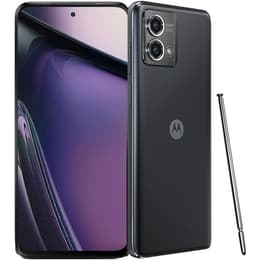
Motorola Moto G Stylus 5G (2023) • Unlocked
Starting at

Refurbished price:$106.00

Versus $237.99 new

See options

Ratings

The Google Pixel 8 Pro, released in October 2023, and the Motorola Moto G Stylus 5G (2023), launched in June 2023, are both Android smartphones offering distinct user experiences. While the Pixel 8 Pro focuses on advanced computational photography and long-term software support, the Moto G Stylus 5G (2023) distinguishes itself with an integrated stylus and extended battery life, catering to different user priorities.

Scores

Durability

When considering the long-term usability of these devices, their release timelines and software support policies are key differentiators.

  • Software Longevity: The Google Pixel 8 Pro offers an extensive commitment of seven years of Android OS, security, and Feature Drops, ensuring support until October 2030. This provides a significantly longer period of guaranteed updates compared to the Motorola Moto G Stylus 5G (2023), which has a more limited software upgrade roadmap.
  • Repairability: The Pixel 8 Pro generally receives moderate repairability scores, with Google providing public service manuals and OEM replacement parts to facilitate repairs. The Moto G Stylus 5G (2023) also has a moderate repairability score, indicating that some self-repairs are possible, though not always recommended for inexperienced users.
  • Practical Lifespan: Users prioritizing the latest software features and security updates for an extended period will find the Pixel 8 Pro's support policy beneficial for a longer practical lifespan. The Moto G Stylus 5G (2023) is designed for users who may upgrade more frequently or prioritize initial features over multi-year software commitments.

Release Year

2023

2023

Last OS Compatibility

Yes

Yes

OS

Android

Android

Foldable

No

No

Performance

The performance of a smartphone is crucial for daily tasks, app responsiveness, and multitasking capabilities. Both devices offer capable performance, but they cater to different levels of demand.

  • Processing Power: The Google Pixel 8 Pro is equipped with a high-performance processor designed to handle demanding applications, complex AI features, and intensive multitasking smoothly. Users report a very quick and fluid experience for everyday processes. The Motorola Moto G Stylus 5G (2023) features a processor that provides solid performance for general use, web browsing, and casual gaming, with some users noting it performs better than expected for its class.
  • Memory and Storage: The Pixel 8 Pro comes with a substantial amount of RAM, contributing to efficient multitasking and app management. It offers various internal storage options but does not support expandable storage. The Moto G Stylus 5G (2023) provides a respectable amount of RAM for its segment and includes the flexibility of expandable storage via a microSD card, which is beneficial for users with large media libraries.
  • Battery Behavior: Both devices feature large battery capacities. The Moto G Stylus 5G (2023) is frequently praised for its long battery life, often lasting up to two days on a single charge with typical usage. The Pixel 8 Pro also offers good battery life, though some users have noted inconsistencies or faster drain under heavy 5G usage or with certain applications. The Pixel 8 Pro supports faster wired and wireless charging, while the Moto G Stylus 5G (2023) has slower wired charging and does not support wireless charging.

Memory (GB)

12 GB

6 GB

Screen quality

The display is a primary interface for any smartphone, and these two models offer different visual experiences tailored to their respective designs.

  • Display Technology and Resolution: The Google Pixel 8 Pro features an LTPO OLED display with a high QHD+ resolution, delivering deep blacks, vibrant colors, and sharp detail. The Motorola Moto G Stylus 5G (2023) utilizes an IPS LCD panel with a Full HD+ resolution, providing a clear and bright viewing experience for everyday content.
  • Brightness and Refresh Rate: The Pixel 8 Pro boasts a high peak brightness, making it highly visible even in bright outdoor conditions, and offers a variable refresh rate that can scale from 1Hz to 120Hz for smooth scrolling and power efficiency. The Moto G Stylus 5G (2023) has a 120Hz refresh rate for fluid visuals, but its screen brightness can be a limitation in direct sunlight.
  • Screen Size and Viewing: Both phones offer large displays, with the Pixel 8 Pro having a 6.7-inch screen and the Moto G Stylus 5G (2023) featuring a 6.6-inch screen. The Pixel's higher resolution and OLED technology provide a more immersive and detailed viewing experience, particularly for high-quality media.

Resolution

1344 x 2992

1080 x 2400

Screen type

LTPO OLED

IPS LCD

Audiovisual

Camera capabilities are a significant factor for many users, and these devices approach photography with different strengths.

  • Rear Camera System: The Google Pixel 8 Pro features a versatile triple-camera setup, including a high-resolution main sensor, a capable ultrawide lens with autofocus, and a telephoto lens offering significant optical zoom. This system is known for producing exceptionally detailed photos, strong low-light performance, and advanced computational photography features. The Motorola Moto G Stylus 5G (2023) includes a dual-camera system with a 50MP main sensor and an 8MP ultrawide lens that also functions for macro and depth sensing. It performs well in good lighting conditions but may struggle in dim light.
  • Front Camera and Video: The Pixel 8 Pro has a 10.5MP front camera and offers high-quality 4K video recording with good stabilization. The Moto G Stylus 5G (2023) features a 16MP front camera and records video at 1080p. While the Pixel's video quality is generally strong, some users note that lens switching can be less seamless than on some competitors.
  • Photography Features: The Pixel 8 Pro integrates advanced AI-driven photo editing tools and features like Night Sight for enhanced low-light photography. Users praise its overall camera output, though some report occasional lag in the camera app or during photo processing. The Moto G Stylus 5G (2023) provides respectable camera performance for its price point, with some users appreciating its dedicated macro capabilities.

Main camera

50 megapixels

50 megapixels

Front camera

10.5 megapixels

16 megapixels

Miscellaneous

Beyond core specifications, several practical elements contribute to the overall user experience and device utility.

  • Connectivity and Ports: Both devices support 5G connectivity. The Google Pixel 8 Pro features newer Wi-Fi 7 and Bluetooth 5.3 standards, along with a USB-C 3.2 port. The Motorola Moto G Stylus 5G (2023) includes a USB-C port and notably retains a 3.5mm headphone jack, a feature absent on the Pixel 8 Pro.
  • Physical Design and Handling: The Pixel 8 Pro has a premium build with Gorilla Glass Victus 2 on both the front and back, and an IP68 rating for dust and water resistance. It measures 162.6 x 76.5 x 8.8 mm and weighs 213g. The Moto G Stylus 5G (2023) has a plastic back and is splash-proof, measuring 162.8 x 73.8 x 9.2 mm and weighing 202g. The Pixel's design is often described as premium, while the Moto G Stylus 5G (2023) offers a more utilitarian feel.
  • Unique Features: A standout feature of the Moto G Stylus 5G (2023) is its integrated stylus, useful for note-taking, drawing, and precise navigation, though it is a basic stylus without pressure sensitivity. The Pixel 8 Pro includes advanced sensors like a thermometer and focuses heavily on AI-driven software enhancements across its operating system. Both devices include fingerprint sensors for security, with the Pixel 8 Pro featuring an in-display sensor and the Moto G Stylus 5G (2023) using a side-mounted sensor.

Weight

7 oz

202 oz

Screen size (inches)

6.7

6.8

Network

5G

5G

SIM card

Physical SIM + eSIM

Physical SIM

Carrier compatibility

Unlocked

Unlocked

Connector

USB-C

USB-C

The Google Pixel 8 Pro and the Motorola Moto G Stylus 5G (2023) cater to different segments of the smartphone market, each with its own set of strengths and user appeal.

Users frequently praise the Pixel 8 Pro for its exceptional camera system, delivering detailed photos and strong low-light performance. Its bright, high-resolution OLED display and Google's commitment to seven years of software updates are also highly regarded. Common criticisms from users sometimes point to modem performance issues, which can affect connectivity and lead to the device warming up, as well as occasional inconsistencies in battery life and minor software bugs. The camera app can also experience lag during processing.

The Motorola Moto G Stylus 5G (2023) is often lauded by users for its impressive battery life, frequently lasting well over a day, and the inclusion of a built-in stylus for productivity and creative tasks. Its large 120Hz display and expandable storage are also popular features. However, users sometimes note that its cameras, while respectable for its category, do not perform as strongly in challenging lighting conditions compared to higher-end devices. The software update policy is also a point of concern for some, and the screen can be dim in bright outdoor environments.

Users prioritizing a premium camera experience, cutting-edge software features, and long-term software support may find the Google Pixel 8 Pro well-suited to their needs. Conversely, individuals who value extended battery life, the utility of an integrated stylus, expandable storage, and a 3.5mm headphone jack might lean towards the Motorola Moto G Stylus 5G (2023). Both devices offer a quality-assured refurbished option, providing an eco-friendly alternative for consumers.

See all articles

Our recent comparisons