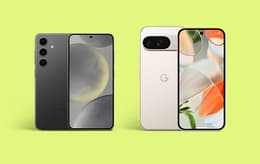
Google Pixel 8 • Unlocked vs iPhone SE (2020) • Unlocked

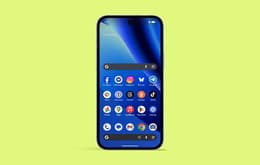
Google Pixel 8 • Unlocked
Starting at

Refurbished price:$254.00

Versus $699.99 new

See options
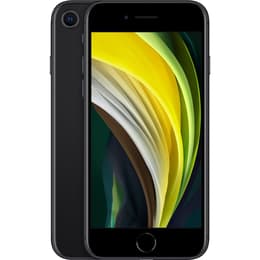
iPhone SE (2020) • Unlocked
Starting at

Refurbished price:$107.00

Versus $399.00 new

See options

Ratings

The Google Pixel 8, released in October 2023, and the Apple iPhone SE 2020, launched in April 2020, represent distinct approaches to smartphone design and functionality. While the Pixel 8 offers a modern Android experience with advanced computational photography and a contemporary design, the iPhone SE 2020 provides a compact iOS experience with a traditional form factor. These devices cater to different user preferences, primarily differing in their operating systems, display technologies, and camera capabilities.

Scores

Durability

When considering the longevity of these devices, their release timelines and software support policies are key differentiators.

  • Software Support: The Google Pixel 8 stands out with an impressive commitment to seven years of OS, security, and Feature Drop updates, extending its support until 2030. This makes it a sustainable choice for users seeking long-term software longevity. In contrast, the iPhone SE 2020, released in 2020, has already received several major iOS updates and is expected to continue receiving major OS updates for approximately 5-7 years from its release, with security updates potentially extending for a couple more years.
  • Repairability: The Google Pixel 8 generally receives a decent repairability score, with some sources giving it a 7 out of 10, indicating that self-repairs are possible for those with some experience. However, removing the back panel can be difficult without damage, and the battery can be tricky to remove due to adhesives. The iPhone SE 2020 also has a moderate repairability score, often rated around 6 out of 10 by iFixit. Its design, which reuses many components from the iPhone 8, makes common repairs like display and battery replacement relatively straightforward, though the glass back is noted as impractical to replace.
  • Practical Lifespan: Given Google's extended software support, the Pixel 8 is designed to remain current and secure for a significantly longer period than many other smartphones, including the iPhone SE 2020, which is nearing the end of its major OS update cycle.

Release Year

2023

2020

Last OS Compatibility

Yes

Yes

OS

Android

iOS

Foldable

No

No

Performance

The performance of a smartphone is crucial for daily tasks, and both devices offer capable experiences, though with different levels of power and efficiency.

  • Processing Power: The Google Pixel 8 is equipped with a newer, more advanced processor designed to handle demanding applications, complex multitasking, and modern gaming titles with fluidity. This results in a highly responsive user experience, especially with AI-driven features. The iPhone SE 2020 features an older, yet still capable, processor that delivers smooth performance for everyday tasks and most applications. While it handles current apps well, it may show limitations with very intensive tasks or as software demands increase over time.
  • Multitasking and Responsiveness: With its more recent processor and typically more RAM (8GB LPDDR5X), the Pixel 8 offers a more robust platform for seamless multitasking, allowing users to switch between numerous applications without noticeable slowdowns. The iPhone SE 2020, with 3GB of RAM, provides a responsive experience for typical usage but might exhibit more frequent app reloads when managing many applications simultaneously.
  • Storage Options: Both devices offer various internal storage configurations to suit different user needs, with the Pixel 8 available in 128GB and 256GB options, and the iPhone SE 2020 offering 64GB, 128GB, and 256GB. Neither device supports expandable storage.

Memory (GB)

8 GB

3 GB

Screen quality

The visual experience is a significant aspect of smartphone use, and these two models present distinct display technologies and designs.

  • Display Technology and Clarity: The Google Pixel 8 features a 6.2-inch OLED display with a Full HD+ resolution (2400 x 1080 pixels), providing vibrant colors, deep blacks, and excellent contrast. The iPhone SE 2020 utilizes a 4.7-inch IPS LCD screen with a resolution of 1334x750 pixels. While its LCD offers good color accuracy, it does not achieve the same level of contrast or true blacks as an OLED panel.
  • Brightness and Refresh Rate: The Pixel 8's display can reach a peak brightness of up to 2000 nits, ensuring good visibility even in bright outdoor conditions. It also boasts a variable refresh rate of 60-120Hz, which contributes to smoother scrolling and a more fluid visual experience. The iPhone SE 2020 has a standard refresh rate and lower peak brightness, which may make it less comfortable to view under direct sunlight compared to the Pixel 8.
  • Screen Size and Design: The Pixel 8 offers a larger, more immersive viewing area with minimal bezels, suitable for media consumption and detailed content. The iPhone SE 2020, with its smaller screen and prominent top and bottom bezels, provides a compact form factor that is easy to use with one hand, appealing to users who prefer a smaller device.

Resolution

1080 x 2400

750 x 1334

Screen type

OLED

Retina IPS LCD

Audiovisual

Camera capabilities are often a deciding factor for many users, and both phones offer competent photography, though with different strengths.

  • Rear Camera System: The Google Pixel 8 features a versatile dual-camera setup, including a 50-megapixel main sensor with optical image stabilization and a 12-megapixel ultrawide lens. This system excels in computational photography, delivering detailed images with accurate colors and impressive dynamic range, particularly in challenging lighting conditions. The iPhone SE 2020 is equipped with a single 12-megapixel wide camera with optical image stabilization. It performs well in good lighting, producing sharp and natural-looking photos, but it lacks the versatility of an ultrawide lens and struggles more in low-light environments.
  • Advanced Features and Video: The Pixel 8 incorporates advanced AI-powered camera features such as Magic Eraser, Best Take, and Audio Magic Eraser, enhancing photo and video editing capabilities directly on the device. It records high-quality video at up to 4K resolution at 60 frames per second. The iPhone SE 2020 also offers strong video recording capabilities, supporting 4K video at up to 60 frames per second, with good stabilization. However, it lacks a dedicated night mode for photos and advanced computational features found on the Pixel 8.
  • Front Camera: The Pixel 8 has a 10.5-megapixel front-facing camera, capable of capturing detailed selfies and supporting facial scanning for unlocking. The iPhone SE 2020 features a 7-megapixel front camera, suitable for video calls and everyday selfies.

Main camera

50 megapixels

12 megapixels

Front camera

10.5 megapixels

7 megapixels

Miscellaneous

Beyond core features, several practical elements contribute to the overall user experience and differentiate these two smartphones.

  • Connectivity and Ports: The Google Pixel 8 supports the latest connectivity standards, including 5G for faster mobile data, Wi-Fi 7 for high-speed wireless internet, and Bluetooth 5.3 for efficient accessory connections. It features a USB-C 3.2 port for charging and data transfer. The iPhone SE 2020 supports 4G LTE networks, Wi-Fi 6, and Bluetooth 5.0. It uses Apple's proprietary Lightning port for charging and data.
  • Biometric Security: For secure unlocking, the Pixel 8 offers both an in-display fingerprint scanner and facial recognition. The iPhone SE 2020 relies on Touch ID, an integrated fingerprint sensor within its physical home button, which some users find intuitive and reliable.
  • Design and Handling: The Pixel 8 features a modern design with a larger, edge-to-edge display and a more contemporary aesthetic. It measures 150.5 x 70.8 x 8.9mm and weighs 187 grams. The iPhone SE 2020 maintains the classic iPhone design with a physical home button and significant bezels. Its compact dimensions of 138.4 x 67.3 x 7.3 mm and lighter weight of 148 grams make it exceptionally easy for one-handed use and pocketability. Both devices offer water and dust resistance, with the Pixel 8 rated IP68 and the iPhone SE 2020 rated IP67.

Weight

7 oz

5 oz

Screen size (inches)

6.2

4.7

Network

5G

LTE

SIM card

Physical SIM + eSIM

Physical SIM + eSIM

Carrier compatibility

Unlocked

Unlocked

Connector

USB-C

Lightning

The Google Pixel 8 and iPhone SE 2020 cater to distinct user preferences, each offering a compelling set of features within their respective ecosystems. Users frequently praise the Pixel 8 for its exceptional camera capabilities, particularly its computational photography and AI-driven editing tools, which consistently produce high-quality images. Its vibrant OLED display, smooth 120Hz refresh rate, and the promise of seven years of software updates are also significant advantages. Some users, however, note that while battery life is improved over previous Pixel models, it may not be class-leading for heavy usage, and performance, while strong, might not always match the absolute top-tier flagships in raw benchmarks.

Conversely, the iPhone SE 2020 is often lauded for its compact size, making it ideal for one-handed operation and easy portability. Its familiar design with the physical home button and Touch ID remains a preference for many, and its processor, though older, still delivers a fluid iOS experience for most daily tasks. Common criticisms include its dated design with large bezels, the LCD display which lacks the vibrancy and contrast of modern OLEDs, and its battery life, which heavy users often find requires frequent charging.

Users prioritizing a cutting-edge camera, a modern full-screen display, and the longest possible software support within the Android ecosystem will find the Google Pixel 8 well-suited to their needs. Those who value a highly compact device, the traditional iPhone experience with a physical home button, and a reliable performance for everyday tasks within the iOS ecosystem may lean toward the iPhone SE 2020. Both devices offer a quality-assured refurbished option, providing an eco-friendly alternative for consumers looking to make informed and sustainable choices.
See all articles

Our recent comparisons