
Google Pixel 8 • Unlocked vs OnePlus 12 • Unlocked

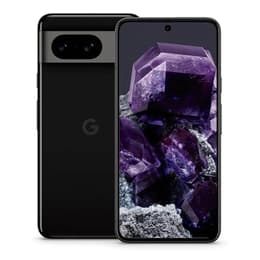
Google Pixel 8 • Unlocked
Starting at

Refurbished price:$245.00

Versus $899.99 new

See options
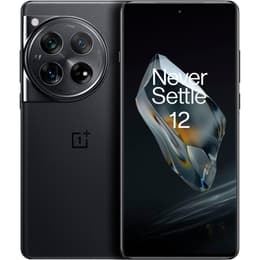
OnePlus 12 • Unlocked
Starting at

Refurbished price:$746.99

Versus $1,200.00 new

See options

Ratings

The Google Pixel 8, released in October 2023, and the OnePlus 12, launched globally in February 2024, are contemporary Android smartphones offering distinct user experiences. While both devices provide robust performance and advanced camera systems, they differentiate themselves through their approach to software, display technology, and battery endurance. The Pixel 8 emphasizes AI-driven features and a compact design, whereas the OnePlus 12 focuses on raw power, a larger display, and rapid charging capabilities.

Scores

Durability

When considering the long-term usability of a smartphone, factors like software support, physical resilience, and repairability are key. The Pixel 8 and OnePlus 12 offer different propositions in these areas.

  • Software Longevity: The Google Pixel 8 is notable for its extended software support, promising up to seven years of Android updates and security patches from its release date. This commitment ensures the device remains current and secure for a significantly longer period than many competitors. The OnePlus 12, running OxygenOS based on Android, typically receives four major Android updates and five years of security updates, offering a solid but shorter support window compared to the Pixel 8.
  • Physical Durability: Both phones feature glass and aluminum constructions. The Pixel 8 uses Corning Gorilla Glass Victus for its front and back, along with an aluminum frame, and carries an IP68 rating for dust and water resistance. The OnePlus 12 upgrades to Corning Gorilla Glass Victus 2 on its display and has an IP65 rating, indicating good protection against dust and water jets, though slightly less immersion resistance than the Pixel 8. User reports for the Pixel 8 have occasionally noted paint chipping with minor drops, while the OnePlus 12 has shown improved structural integrity in durability tests compared to some of its predecessors.
  • Expected Lifespan: Users prioritizing the absolute longest software support and the latest Android features will find the Pixel 8's seven-year commitment appealing. For those who typically upgrade their devices within a five-year cycle, the OnePlus 12's update policy is still substantial. Both devices are built with quality materials designed for daily use, and choosing a quality-assured refurbished option can further extend their practical lifespan sustainably.

Release Year

2023

2023

Last OS Compatibility

Yes

Yes

OS

Android

Android

Foldable

No

No

Performance

The performance of a smartphone is crucial for daily tasks, from browsing to demanding applications. Both the Pixel 8 and OnePlus 12 deliver capable experiences, though with different underlying architectures.

  • Processing Power: The Google Pixel 8 is powered by Google's Tensor G3, an internally developed processor designed to optimize AI and machine learning tasks directly on the device. This results in smooth operation for everyday apps, efficient handling of complex photo and video editing features, and responsive AI-driven functionalities. The OnePlus 12 features a current-generation flagship processor from Qualcomm, known for its raw computational power and graphical capabilities. This allows for exceptionally fluid multitasking, high-performance gaming, and rapid app loading times.
  • Multitasking and Storage: The Pixel 8 typically comes with 8GB of RAM, which is sufficient for most users to switch between multiple applications without significant slowdowns. Storage options include 128GB and 256GB. The OnePlus 12 offers more generous RAM configurations, with options for 12GB or 16GB, providing additional headroom for heavy multitasking and ensuring applications remain active in the background for longer periods. It also provides larger storage choices, including 256GB and 512GB, with some regions offering up to 1TB.
  • Battery Behavior: The Pixel 8, with its 4575 mAh battery, generally offers a full day of use for most users, though heavy usage, particularly with mobile data, can lead to more frequent charging. Its adaptive battery features help optimize power consumption over time. The OnePlus 12 boasts a larger 5400 mAh battery, consistently praised by users for its extended endurance, often lasting well beyond a full day even with intensive use. It also supports very fast wired charging at 100W and 50W wireless charging, allowing for quick power-ups.

Memory (GB)

8 GB

16 GB

Screen quality

The display is a primary interface for any smartphone, and both the Pixel 8 and OnePlus 12 offer high-quality viewing experiences with distinct characteristics.

  • Display Technology and Clarity: The Google Pixel 8 features a 6.2-inch OLED display with a Full HD+ resolution (2400x1080 pixels), resulting in sharp images and vibrant colors. The OnePlus 12 sports a larger 6.82-inch LTPO AMOLED display with a Quad HD+ resolution (3168x1440 pixels), offering even greater detail and clarity, particularly noticeable on its expansive screen.
  • Brightness and Smoothness: The Pixel 8's display can reach up to 1400 nits in high brightness mode and a peak of 2000 nits, ensuring good visibility in various lighting conditions. It features a refresh rate that dynamically adjusts between 60Hz and 120Hz for smooth scrolling and responsive interactions. The OnePlus 12 excels in brightness, with a high brightness mode of 1600 nits and an impressive peak brightness of 4500 nits, making it exceptionally legible even under direct sunlight. Its LTPO technology allows for a more adaptive refresh rate, ranging from 1Hz to 120Hz, which can contribute to power efficiency while maintaining visual fluidity.
  • Viewing Experience: The Pixel 8's more compact screen size makes it easier for one-handed use, appealing to users who prefer a smaller device. The OnePlus 12's larger, curved display provides a more immersive viewing experience for media consumption and gaming, though some users may find curved edges less practical. Both displays offer excellent color accuracy and contrast typical of OLED panels.

Resolution

1080 x 2400

1440 x 3168

Screen type

OLED

LTPO AMOLED

Audiovisual

Both the Google Pixel 8 and OnePlus 12 offer advanced camera systems, each with its own strengths in capturing photos and videos.

  • Rear Camera Systems: The Google Pixel 8 features a dual-camera setup, including a 50MP main sensor with a wide aperture and optical image stabilization, alongside a 12MP ultrawide lens that now includes autofocus for improved macro capabilities. The OnePlus 12 boasts a versatile triple-camera system co-developed with Hasselblad. It includes a 50MP main sensor, a 48MP ultrawide lens with autofocus, and a 64MP telephoto lens offering 3x optical zoom and 6x in-sensor zoom for detailed distant shots.
  • Photography Performance: The Pixel 8 is renowned for its computational photography, leveraging AI to produce consistently high-quality images with excellent dynamic range and color accuracy, particularly in everyday and low-light conditions. Its AI features like Magic Editor and Best Take allow for significant post-capture adjustments. The OnePlus 12 delivers strong performance across its lenses, with its main and telephoto cameras often praised for their detail and color reproduction, especially with Hasselblad's color calibration. Its ultrawide and selfie cameras are generally good, though some users note they might not perform as strongly in very low light compared to the main sensor.
  • Video and Audio: Both devices are capable of recording high-resolution video. The Pixel 8 supports 4K video recording at up to 60 frames per second and introduces features like Video Boost for improved low-light video and Audio Magic Eraser to reduce background noise. The OnePlus 12 can record up to 8K video at 24 frames per second and 4K at 60 frames per second, offering high-resolution capture. Both phones feature stereo speakers, with the OnePlus 12 often highlighted by users for its loud and clear audio output.

Main camera

50 megapixels

50 megapixels

Front camera

10.5 megapixels

32 megapixels

Miscellaneous

Beyond core performance and camera, several practical features contribute to the overall user experience of these smartphones.

  • Connectivity and Ports: Both the Pixel 8 and OnePlus 12 support modern connectivity standards, including 5G for fast mobile data and Wi-Fi 7 for high-speed wireless internet. They both utilize USB Type-C for charging and data transfer, with the OnePlus 12 featuring USB 3.2 Gen 1 for potentially faster data speeds. The OnePlus 12 also includes an infrared (IR) blaster, allowing it to function as a universal remote control for various electronics.
  • Biometric Security and Haptics: For security, both phones incorporate in-display fingerprint sensors and face recognition. User feedback suggests the Pixel 8's fingerprint sensor is improved over previous generations, and its face unlock is reliable. The OnePlus 12's fingerprint and face unlock are noted for their speed and responsiveness. The haptic feedback system on the OnePlus 12 is frequently praised by users for its precision and customization options, enhancing the tactile experience.
  • Design and Handling: The Pixel 8 offers a more compact form factor, measuring 150.5 x 70.8 x 8.9 mm and weighing 187g, making it easier to handle with one hand. The OnePlus 12 is a larger device at 164.3 x 75.8 x 9.2 mm and 220g, providing a more expansive screen but requiring a two-handed grip for many tasks. The OnePlus 12 retains its signature alert slider, a physical switch for quickly changing notification modes, which is a favored feature among its users.

Weight

7 oz

8 oz

Screen size (inches)

6.1

6.82

Network

5G

5G

SIM card

Physical SIM + eSIM

Physical SIM

Carrier compatibility

Unlocked

Unlocked

Connector

USB-C

USB-C

The Google Pixel 8 and OnePlus 12 each present a compelling package for different types of smartphone users. User feedback for the Pixel 8 often highlights its exceptional camera capabilities, particularly its AI-driven photo enhancements and consistent image quality across various conditions. Its long-term software support is also a significant draw, ensuring the device remains updated for many years. However, some users have expressed concerns about its battery life, especially with heavy mobile data usage, and occasional reports of build quality issues like paint chipping have surfaced.

The OnePlus 12 receives consistent praise for its outstanding battery life and incredibly fast charging speeds, making it a strong contender for users who prioritize endurance and quick power-ups. Its large, bright, and fluid display is also a frequently lauded feature, providing an immersive viewing experience. While its camera system is generally well-regarded, particularly the main and telephoto lenses, some users have noted that the ultrawide and selfie cameras might not always match the low-light performance of the primary sensor.

Users prioritizing a compact device with a strong emphasis on computational photography, AI features, and extended software longevity may find the Google Pixel 8 well-suited to their needs. Its consistent camera performance and commitment to updates offer a reliable experience. Conversely, individuals who value a larger, more immersive display, exceptional battery life with rapid charging, and robust overall performance for demanding tasks like gaming will likely lean towards the OnePlus 12. Both devices offer a premium Android experience, and considering a quality-assured refurbished option for either model can be an eco-friendly alternative to purchasing new.

See all articles

Our recent comparisons