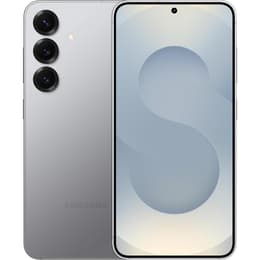
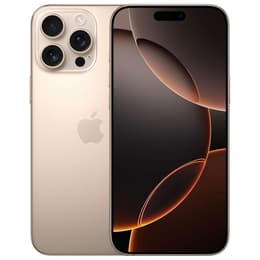

Galaxy S25 • Unlocked vs iPhone 16 Pro Max • Unlocked

Galaxy S25 • Unlocked
Starting at

Refurbished price:$425.00

Versus $1,299.00 new

See options
iPhone 16 Pro Max • Unlocked
Starting at

Refurbished price:$759.00

Versus $1,199.00 new

See options

Ratings

The Samsung Galaxy S25, an Android smartphone released in February 2025, and the iPhone 16 Pro Max, an iOS device launched in September 2024, represent the latest flagship offerings from their respective manufacturers. While both devices deliver premium smartphone experiences, they differ in their operating systems, camera philosophies, and display characteristics. This comparison aims to highlight the practical distinctions to assist consumers in making an informed choice.

Scores

Durability

Both the Galaxy S25 and the iPhone 16 Pro Max are designed for extended use, offering robust build quality and significant software support.

  • Release Timeline: The iPhone 16 Pro Max was released in September 2024, preceding the Galaxy S25, which launched in February 2025. This difference in release dates means the iPhone 16 Pro Max will likely conclude its software support cycle slightly earlier than the Galaxy S25.
  • Software Longevity: Samsung typically provides several years of operating system updates for its flagship devices, often extending to seven years for recent models. Apple also offers substantial iOS support, generally providing 5-6 years of updates from a device's release. Both approaches ensure a prolonged period of access to new features and security enhancements.
  • Physical Durability: The iPhone 16 Pro Max features a titanium frame and a Ceramic Shield glass front, designed for enhanced resistance against drops and scratches. The Galaxy S25 utilizes an aluminum frame and Corning Gorilla Glass Victus 2 for both its front and back panels. Both devices carry an IP68 rating for dust and water resistance, indicating protection against immersion in up to 6 meters of water for 30 minutes.

Release Year

2025

2024

Last OS Compatibility

Yes

Yes

Foldable

No

No

Performance

Both smartphones are equipped with advanced processors designed to handle demanding applications and multitasking with ease, though they approach performance from different architectural standpoints.

  • Processing Power: The Galaxy S25 is powered by the Snapdragon 8 Elite chipset, manufactured using a 3nm process, featuring an octa-core CPU and an Adreno 830 GPU. The iPhone 16 Pro Max incorporates Apple's A18 Pro chip, also built on a 3nm process, with a Hexa-core CPU, a 6-core GPU, and a 16-core Neural Engine. Benchmarking tests suggest the Galaxy S25's processor offers a performance advantage over the iPhone 16 in certain metrics.
  • Memory and Storage: The Galaxy S25 comes with 12GB of RAM, providing ample capacity for running multiple applications simultaneously. Storage options for the Galaxy S25 include 128GB and 256GB. The iPhone 16 Pro Max is equipped with 8GB of RAM and offers storage configurations of 256GB, 512GB, and 1TB.
  • Real-world Responsiveness: Users can expect smooth operation, quick app loading, and efficient multitasking from both devices. The Galaxy S25's higher RAM capacity may offer a slight edge in managing a very large number of open applications, while the iPhone's optimized iOS ecosystem ensures consistent fluidity with its available memory.

Memory (GB)

12 GB

8 GB

Screen quality

The visual experience on both devices is characterized by vibrant colors and sharp details, though they present these qualities through different display technologies and sizes.

  • Display Technology and Size: The iPhone 16 Pro Max features a larger 6.9-inch Super Retina XDR OLED display. The Galaxy S25 offers a 6.2-inch Dynamic LTPO AMOLED 2X display. Both OLED technologies deliver deep blacks and high contrast.
  • Resolution and Clarity: The iPhone 16 Pro Max has a resolution of 2868 x 1320 pixels, resulting in approximately 460 pixels per inch (ppi). The Galaxy S25 has a resolution of 2340 x 1080 pixels, with a pixel density of around 416 ppi. The iPhone offers a slightly sharper image due to its higher resolution and similar pixel density on a larger screen.
  • Brightness and Refresh Rate: The Galaxy S25 boasts a peak brightness of up to 2600 nits, providing excellent visibility in bright outdoor conditions. The iPhone 16 Pro Max reaches a peak brightness of 2000 nits in High Brightness Mode (HBM). Both phones feature adaptive refresh rates of up to 120Hz, ensuring smooth scrolling and responsive visuals.

Resolution

1080x2340

1320 x 2868

Screen type

Dynamic LTPO AMOLED 2X

LTPO Super Retina XDR OLED

Audiovisual

Both smartphones offer advanced camera systems capable of capturing high-quality photos and videos, but they differ in their sensor configurations and processing approaches.

  • Rear Camera Systems: The Galaxy S25 is equipped with a triple rear camera setup, including a 50MP wide-angle main sensor with optical image stabilization (OIS), a 12MP ultra-wide camera with a 120-degree field of view, and a 10MP telephoto lens offering 3x optical zoom. The iPhone 16 Pro Max also features a triple rear camera system, comprising a 48MP wide main sensor with sensor-shift OIS, a 48MP ultra-wide lens with a 120-degree field of view, and a 12MP periscope telephoto lens capable of 5x optical zoom.
  • Photography Performance: The Galaxy S25 delivers natural colors and balanced dynamic range in daylight, with decent low-light performance from its main sensor when Night mode is active. The iPhone 16 Pro Max is noted for its strong dynamic range and consistent color reproduction across all its lenses, performing well in various lighting conditions. The iPhone's 48MP ultra-wide lens is an improvement over previous generations, offering more detail and better low-light quality.
  • Video Capabilities: The Galaxy S25 can record video up to 8K resolution at 30 frames per second (fps) from its main camera. The iPhone 16 Pro Max excels in video recording, supporting 4K Dolby Vision video at up to 120fps from its main camera, and ProRes video recording up to 4K at 120fps with external storage. It is also praised for its excellent video stabilization.

Miscellaneous

Beyond core performance, several practical features and design elements differentiate these two flagship devices, influencing daily usability and interaction.

  • Connectivity and Ports: Both devices support 5G connectivity and the latest Wi-Fi standards, with the Galaxy S25 supporting Wi-Fi 7 and Bluetooth 5.4, while the iPhone 16 Pro Max supports Wi-Fi 6e/7 and Bluetooth 5.3. Both utilize a USB Type-C port for charging and data transfer.
  • Biometric Security: The Galaxy S25 incorporates an ultrasonic in-screen fingerprint sensor for secure unlocking and authentication. The iPhone 16 Pro Max relies on Face ID, Apple's facial recognition system, for biometric security.
  • Design and Handling: The Galaxy S25 features an aluminum frame and weighs approximately 162g for the base model. The iPhone 16 Pro Max has a titanium frame and a weight of 227g. The iPhone 16 Pro Max also includes a customizable Action Button, offering quick access to various functions. The larger size of the iPhone 16 Pro Max may be a consideration for users preferring a more compact device.

Weight

8 oz

7990 oz

Screen size (inches)

6.2

6.9

Network

5G

5G

SIM card

Physical SIM + eSIM

eSIM

Carrier compatibility

Unlocked

Unlocked

Connector

USB-C

USB-C (USB 3)

Choosing between the Samsung Galaxy S25 and the iPhone 16 Pro Max depends largely on individual priorities and ecosystem preferences. Both devices offer top-tier performance and features, but cater to slightly different user needs.

The Galaxy S25 is often praised for its powerful Android experience, versatile camera system with strong daylight performance, and vibrant display with high peak brightness. Users appreciate its extended software support and the integration of AI features. However, some users have noted that the base model's battery life, while capable of lasting a full day for many, is not its strongest attribute, and overall upgrades can be incremental.

Conversely, the iPhone 16 Pro Max receives acclaim for its exceptional battery life, often cited as one of the longest-lasting iPhones. Its large, immersive OLED display and class-leading video recording capabilities are also significant highlights. Some criticisms include the secondary cameras not always matching the primary sensor's strength, and its substantial size, which might be less comfortable for users preferring a smaller device.

Users prioritizing a powerful Android device with a versatile camera for everyday photography and extensive software longevity may find the Galaxy S25 well-suited to their needs. Those who value an exceptionally long-lasting battery, a large and vibrant display for media consumption, and professional-grade video recording within the iOS ecosystem will likely lean towards the iPhone 16 Pro Max. For consumers seeking a quality-assured refurbished option, both models are available, offering a sustainable choice for acquiring these advanced smartphones.


See all articles

Our recent comparisons