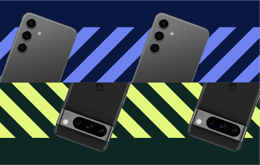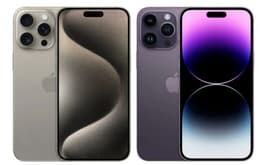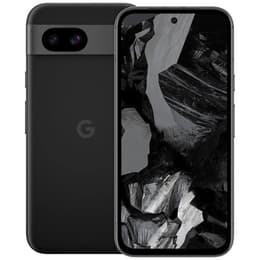
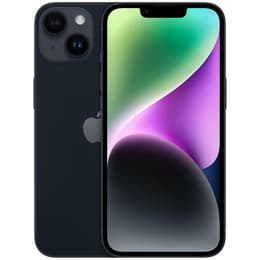
Google Pixel 8a • Unlocked vs iPhone 14 • Locked T-Mobile

Google Pixel 8a • Unlocked
Starting at

Refurbished price:$229.00

Versus $899.99 new

See options
iPhone 14 • Locked T-Mobile
Starting at

Refurbished price:$239.00

Versus $599.00 new

See options

Ratings

The Google Pixel 8a, released in May 2024, and the iPhone 14, launched in September 2022, represent distinct approaches to the modern smartphone experience. While both devices offer capable performance and advanced camera systems, they differ significantly in their operating systems and overall ecosystem. The Pixel 8a runs on Google's Android platform, emphasizing AI-driven features and a clean user interface, whereas the iPhone 14 operates on Apple's iOS, known for its integrated services and strong privacy focus.

Scores

Durability

When considering the long-term usability of these devices, their respective release timelines and software support policies are key differentiators.

  • Release Timeline and Age: The Google Pixel 8a is a newer device, having been released in May 2024. The iPhone 14 was released earlier, in September 2022. This difference in launch dates means the Pixel 8a benefits from more recent hardware and a longer runway for future updates.
  • OS Support Duration: Google has committed to an extensive seven years of OS updates, security updates, and Pixel Feature Drops for the Pixel 8a, ensuring software longevity well into the future. The iPhone 14 typically receives 5-6 years of major iOS updates from its release date, providing a robust but generally shorter support period compared to the Pixel 8a's stated commitment.
  • Repairability: The iPhone 14 initially received a favorable repairability score due to its internal redesign making back glass replacement easier. However, this score was later downgraded due to software limitations and parts pairing requirements that complicate unauthorized repairs. Information on the Pixel 8a's repairability is less extensively documented, but Google has indicated a commitment to providing replacement parts for its devices for an extended period.

Release Year

2024

2022

Last OS Compatibility

Yes

Yes

OS

Android

iOS

Foldable

No

No

Performance

Both the Pixel 8a and iPhone 14 deliver smooth performance for daily tasks, but their underlying architectures lead to different strengths in specific usage scenarios.

  • Processor Capabilities: The Pixel 8a is equipped with a current-generation processor that handles demanding applications and multitasking efficiently, providing a responsive experience for most users. The iPhone 14 features a powerful processor that ensures fluid navigation, quick app launches, and strong performance in graphically intensive games.
  • System Responsiveness and Multitasking: Users of both devices can expect a highly responsive interface. The Pixel 8a, with its 8GB of RAM, is well-suited for juggling multiple applications and browser tabs without significant slowdowns. The iPhone 14 also offers seamless multitasking, maintaining app states effectively in the background.
  • Storage Options: The Pixel 8a is available with 128GB or 256GB of internal storage. The iPhone 14 offers more flexibility with storage, providing options for 128GB, 256GB, and 512GB, catering to users with larger storage needs for media and applications.

Memory (GB)

8 GB

6 GB

Screen quality

The visual experience on both smartphones is delivered through high-quality OLED displays, though with some distinctions in their specifications.

  • Display Technology and Clarity: Both devices feature vibrant OLED displays, offering deep blacks and excellent contrast for media consumption and general use. The Pixel 8a has a 6.1-inch OLED screen with a 2400 x 1080 pixel resolution, resulting in sharp images and text. The iPhone 14 also sports a 6.1-inch Super Retina XDR OLED display with a resolution of 2532 x 1170 pixels, providing comparable clarity and detail.
  • Refresh Rate and Smoothness: The Pixel 8a offers a smoother scrolling and gaming experience with its adaptive refresh rate, capable of reaching up to 120 Hz. In contrast, the iPhone 14 maintains a standard 60 Hz refresh rate, which is sufficient for most daily interactions but may appear less fluid to users accustomed to higher refresh rates.
  • Brightness Levels: For outdoor visibility, the Pixel 8a can achieve a peak brightness of up to 2000 nits, making content easily viewable even in bright sunlight. The iPhone 14 provides a typical brightness of 800 nits and can reach a peak of 1200 nits for HDR content, offering strong visibility in various lighting conditions.

Resolution

1080 x 2400

1170 x 2532

Screen type

OLED

Super Retina XDR OLED

Audiovisual

Both the Google Pixel 8a and the iPhone 14 are recognized for their strong photographic capabilities, each leveraging different hardware and software approaches to image capture.

  • Camera System Capabilities: The Pixel 8a features a dual-camera system on the rear, comprising a 64-megapixel main sensor and a 13-megapixel ultrawide lens, complemented by a 13-megapixel front camera. The iPhone 14 also has a dual-camera setup with two 12-megapixel lenses for its main and ultrawide cameras, alongside a 12-megapixel TrueDepth front camera.
  • Photography Performance: The Pixel 8a is praised for its consistent point-and-shoot performance, producing images with rich color and detail across various lighting conditions, including good low-light results, largely due to Google's computational photography. The iPhone 14 delivers reliable image quality with accurate colors and good dynamic range, benefiting from its Photonic Engine for improved low-light performance.
  • Video Recording and Features: Both devices are capable of recording 4K video. The Pixel 8a supports 4K recording at 30 frames per second. The iPhone 14 offers 4K video recording at up to 60 frames per second, along with features like Cinematic mode and Action mode for enhanced video capture. The iPhone 14 is also noted for its effective video stabilization.

Main camera

64 megapixels

12 megapixels

Front camera

13 megapixels

12 megapixels

Miscellaneous

Beyond core performance, several practical elements contribute to the overall user experience and differentiate the Pixel 8a and iPhone 14.

  • Connectivity and Ports: The Pixel 8a supports Wi-Fi 6e and Bluetooth 5.3, and uses a USB-C 3.2 port for charging and data transfer. It does not include a traditional headphone jack. The iPhone 14 features Wi-Fi 6 and Bluetooth 5.3, and utilizes Apple's proprietary Lightning port. Both devices offer 5G connectivity.
  • Biometric Security: The Pixel 8a offers both an in-display fingerprint sensor and face unlock for secure access. The iPhone 14 relies solely on Face ID, Apple's facial recognition system, for biometric authentication.
  • Design and Handling: The Pixel 8a measures 152.1 x 72.7 x 8.9 mm and weighs 188 grams, with a design that users often find comfortable for one-handed use. The iPhone 14 is slightly more compact and lighter at 146.7 x 71.5 x 7.8 mm and 172 grams. Both devices feature durable build materials, with the Pixel 8a having Corning Gorilla Glass 3 and an IP67 rating for dust and water resistance, while the iPhone 14 boasts a Ceramic Shield front and an IP68 rating.

Weight

7 oz

6 oz

Screen size (inches)

6.1

6.1

Network

5G

5G

SIM card

Physical SIM + eSIM

eSIM

Carrier compatibility

Unlocked

T-Mobile

Connector

USB-C

Lightning

The Google Pixel 8a and iPhone 14 cater to users with varying priorities, each excelling in different areas based on user feedback and specifications. The Pixel 8a is frequently praised for its exceptional camera performance, often outperforming expectations for its category, and its integration of advanced AI features. Users also appreciate its commitment to seven years of software updates, ensuring a long lifespan for the device. Some common criticisms include noticeable screen bezels and charging speeds that are not as fast as some competitors.

The iPhone 14 is lauded for its consistent camera quality, particularly its video capabilities with strong stabilization, and its robust build quality including Ceramic Shield. Its performance is generally considered very fluid for everyday use. However, some users note its 60Hz display as a potential drawback compared to devices with higher refresh rates, and its repairability has been a point of concern due to software-related parts pairing requirements.

Users prioritizing long-term software support, advanced AI features, and a highly capable point-and-shoot camera may find the Google Pixel 8a well-suited to their needs. Conversely, individuals who value a highly integrated ecosystem, consistent video recording quality, and a slightly more compact design might lean towards the iPhone 14. Both devices are available as quality-assured refurbished options, providing an eco-friendly alternative for consumers looking to make informed and sustainable choices.

See all articles

Our recent comparisons