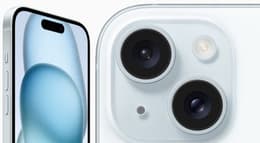
iPhones
Compare models
Differences at a glance
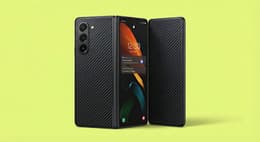
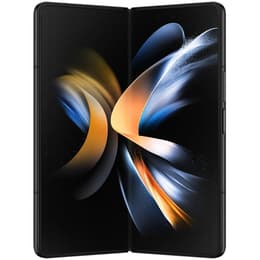
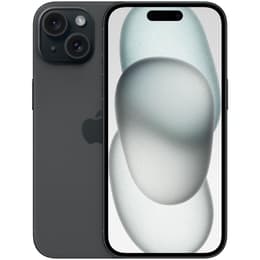
The Samsung Galaxy Z Fold4, released in August 2022, and the iPhone 15, launched in September 2023, offer distinct smartphone experiences. The Galaxy Z Fold4 features a unique foldable design that transforms into a larger tablet-like display, while the iPhone 15 provides a refined, conventional smartphone form. Both devices run on their respective advanced mobile operating systems, Android and iOS, offering diverse ecosystems and user interfaces.
Color
Storage (GB)
The Galaxy Z Fold4 and iPhone 15 offer different levels of physical resilience and software longevity. The Galaxy Z Fold4, released in 2022, typically receives four major Android OS updates and five years of security updates from its launch. Its foldable design introduces a hinge, and while robust, it lacks official dust resistance, carrying an IPX8 water resistance rating. The iPhone 15, launched in 2023, benefits from a newer release date, generally translating to a longer period of iOS software support, often extending to five or six years. It features Ceramic Shield on the front and an aluminum frame, along with an IP68 rating for both dust and water resistance. Users prioritizing the longest possible software support and comprehensive dust and water protection might lean towards the iPhone 15, while the Z Fold4's unique form factor comes with its own durability considerations.
Release Year
Last OS Compatibility
OS
Foldable
Both the Galaxy Z Fold4 and the iPhone 15 deliver robust performance for daily tasks and demanding applications, though they achieve this with different internal architectures. The Galaxy Z Fold4, equipped with a powerful processor and a substantial amount of RAM, handles extensive multitasking, graphic-intensive games, and productivity apps on its larger display with fluidity. Its design allows for multiple apps to run simultaneously on the expansive inner screen without noticeable slowdowns. The iPhone 15, featuring a highly optimized processor, provides a consistently smooth and responsive user experience across its operating system and applications. Everyday actions like app loading, web browsing, and photo editing are executed quickly. Users who frequently engage in heavy multitasking or require the processing power for specialized applications on a larger canvas may find the Z Fold4's setup beneficial, while the iPhone 15 offers reliable and efficient performance for a wide range of typical smartphone uses.
The display experiences offered by the Galaxy Z Fold4 and iPhone 15 diverge significantly due to their fundamental designs. The Galaxy Z Fold4 features two Dynamic AMOLED 2X displays: a 6.2-inch cover screen and a larger 7.6-inch foldable inner screen. Both screens offer adaptive refresh rates up to 120Hz, providing smooth scrolling and responsive interactions. The inner display's expansive size is well-suited for immersive media consumption and productivity tasks, offering vibrant colors and deep blacks. The iPhone 15 comes with a 6.1-inch Super Retina XDR OLED display, known for its high resolution, excellent color accuracy, and impressive brightness levels, making it clear and legible even in bright outdoor conditions. Its standard 60Hz refresh rate provides a consistent viewing experience.
Resolution
Screen type
The audio and visual capabilities of these devices cater to different user preferences. The Galaxy Z Fold4 features a versatile camera system with a 50-megapixel main sensor, a 12-megapixel ultrawide lens, and a 10-megapixel telephoto lens offering 3x optical zoom, providing flexibility for various photographic scenarios. Its video recording capabilities extend to 8K resolution. The device also includes stereo speakers for an immersive audio experience. The iPhone 15 is equipped with a 48-megapixel main camera that excels in capturing detailed images, especially in varying lighting conditions, and a 12-megapixel ultrawide camera. Its video recording is capable of 4K resolution at up to 60 frames per second, known for its stability and quality. Both devices offer capable front-facing cameras for selfies and video calls, and both provide stereo speaker output for media consumption.
Main camera
Front camera
Beyond core features, the Galaxy Z Fold4 and iPhone 15 present distinct practical elements. The Galaxy Z Fold4 supports the S Pen (Fold Edition), enhancing its utility for note-taking and drawing on the large inner display, and features a side-mounted fingerprint sensor for biometric authentication. It offers Wi-Fi 6E and Bluetooth 5.2 connectivity. Its folded dimensions make it narrower but thicker than a standard smartphone, while unfolded it provides a tablet-like experience. The iPhone 15 incorporates the Dynamic Island for interactive alerts and activities, and relies on Face ID for secure unlocking and payments. It utilizes a USB-C port for charging and data transfer, and supports Wi-Fi 6 and Bluetooth 5.3. Its lighter weight and more traditional form factor contribute to easier one-handed use.
Weight
Screen size (inches)
Network
SIM card
Carrier compatibility
User feedback on the Galaxy Z Fold4 often praises its innovative foldable design, providing a large, immersive display for productivity and media consumption, effectively combining a phone and a small tablet. Many users appreciate its multitasking capabilities and S Pen support for creative tasks. Criticisms sometimes point to its bulkier form factor when folded and the perceived fragility of the inner screen. The iPhone 15 is frequently lauded for its consistent performance, high-quality camera system, and intuitive iOS ecosystem. Users often highlight its reliable battery life for single-day use and polished user experience. Some feedback notes the standard 60Hz refresh rate display.
Users prioritizing a versatile device with a large screen for enhanced productivity, media viewing, and stylus input will find the Galaxy Z Fold4 well-suited. Its unique form factor caters to those wanting a tablet-like experience in a pocketable device. Conversely, users who value a consistently smooth and reliable smartphone experience, a high-quality camera for everyday use, and a more compact, traditional design will likely prefer the iPhone 15. Both devices offer distinct advantages, and choosing depends on individual priorities regarding form factor, software ecosystem, and specific use cases. Exploring quality-assured refurbished options can be a sustainable choice.