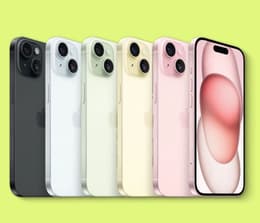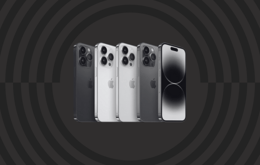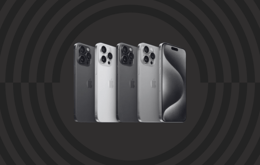
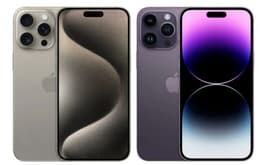
iPhone 14 • Unlocked vs iPhone 15 • Locked AT&T

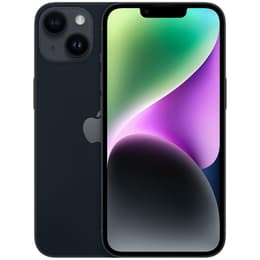
iPhone 14 • Unlocked
Starting at

Refurbished price:$254.00

Versus $629.00 new

See options
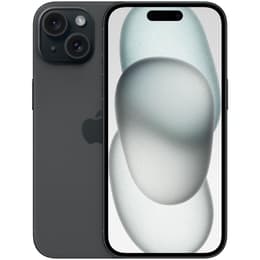
iPhone 15 • Locked AT&T
Starting at

Refurbished price:$348.00

Versus $729.00 new

See options

Ratings

The iPhone 14, released in September 2022, and the iPhone 15, launched in September 2023, are both standard models in Apple's smartphone lineup. While they share a similar design philosophy and operate on the iOS platform, the iPhone 15 introduces several key updates, including a more advanced processor, an upgraded camera system, and a shift to a universal charging port. This comparison will explore the practical differences between these two devices to help users make an informed decision, especially when considering quality-assured refurbished options.

Scores

Durability

When evaluating the long-term usability of these devices, several factors contribute to their expected lifespan, including software support and physical resilience.

  • Release Timeline: The iPhone 14 was released in September 2022, while the iPhone 15 followed a year later in September 2023. This difference in release date means the iPhone 15 will generally receive software updates for approximately one year longer than its predecessor, extending its functional life.
  • Software Longevity: Apple typically provides iOS updates for 5-6 years from a device's release. Given its newer launch, the iPhone 15 is projected to receive software support for a longer duration, ensuring access to the latest features and security patches for an extended period.
  • Battery Longevity: The iPhone 15 models are designed to retain 80% of their original battery capacity after 1,000 complete charge cycles under ideal conditions, an improvement over the 500 cycles for iPhone 14 models and earlier. This indicates a potentially longer period before battery replacement might be considered for the iPhone 15.
  • Physical Durability: Both models feature a Ceramic Shield front cover and an aluminum design, offering similar levels of splash, water, and dust resistance with an IP68 rating, allowing submersion up to 6 meters for 30 minutes.

Release Year

2022

2023

Last OS Compatibility

Yes

Yes

OS

iOS

iOS

Foldable

No

No

Performance

The performance of a smartphone is largely determined by its internal processing capabilities and how efficiently it manages power and applications.

  • Processing Power: The iPhone 14 is equipped with a processor that handles demanding tasks and multitasking smoothly. The iPhone 15 features a more advanced processor, which enhances computational photography, supports smoother graphics for high-performance games, and improves overall efficiency. This translates to faster app loading times and a more responsive user experience on the iPhone 15.
  • Multitasking and Responsiveness: Both devices offer a fluid experience for everyday tasks and app navigation. However, the iPhone 15's newer processor provides additional headroom for future software advancements and more intensive applications, potentially maintaining its responsiveness for a longer period.
  • Battery Behavior: The iPhone 14 generally provides a full day of battery life for typical usage. The iPhone 15 offers improved battery efficiency, with users experiencing approximately an hour and a half longer battery life in testing compared to the iPhone 14, even with a slightly larger battery capacity. This means the iPhone 15 may require less frequent charging for heavy users.
  • Storage Options: Both the iPhone 14 and iPhone 15 are available with internal storage options of 128GB, 256GB, and 512GB, providing ample space for apps, photos, and videos.

Memory (GB)

6 GB

6 GB

Screen quality

The visual experience on a smartphone is heavily influenced by its display technology, resolution, and brightness.

  • Display Technology and Resolution: Both the iPhone 14 and iPhone 15 feature a 6.1-inch Super Retina XDR OLED display, offering deep blacks, vibrant colors, and a resolution of approximately 2532 x 1170 pixels for the iPhone 14 and 2556 x 1179 pixels for the iPhone 15, resulting in a sharp visual experience.
  • Brightness Levels: The iPhone 14 has a typical maximum brightness of 800 nits and a peak HDR brightness of 1200 nits. The iPhone 15 significantly improves upon this, offering a typical brightness of up to 1000 nits, a peak HDR brightness of up to 1600 nits, and a peak outdoor brightness of up to 2000 nits, making it more visible in bright sunlight.
  • Dynamic Island: A notable difference is the inclusion of the Dynamic Island on the iPhone 15, which replaces the traditional notch found on the iPhone 14. This feature integrates alerts and background activities into an interactive area at the top of the display.
  • Refresh Rate: Both models maintain a standard 60Hz refresh rate, which provides a smooth experience for most daily interactions, though it does not offer the adaptive refresh rates found in Pro models.

Resolution

1170 x 2532

1179 x 2556

Screen type

Super Retina XDR OLED

Super Retina XDR OLED

Audiovisual

The camera systems on both iPhones are designed to capture high-quality images and videos, with the newer model introducing significant enhancements.

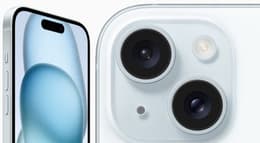
  • Main Camera System: The iPhone 14 features a dual-camera system with a 12MP main wide camera and a 12MP ultra-wide camera. The iPhone 15 upgrades the main camera to a 48MP sensor, which by default captures 24MP photos, offering greater detail and flexibility for cropping. Both include sensor-shift optical image stabilization for sharper images.
  • Low-Light and Everyday Photography: Both devices benefit from Apple's Photonic Engine, which improves mid to low-light photo performance. The iPhone 15's larger main sensor and improved computational photography capabilities contribute to better detail and color accuracy in various lighting conditions.
  • Video Recording: Both models support 4K video recording at up to 60 frames per second, Cinematic mode, and Action mode for stabilized video. The iPhone 15's camera system, with its enhanced sensor, may offer slightly improved video quality and dynamic range.
  • Front Camera and Audio: Both iPhones feature a 12MP TrueDepth front camera with autofocus, improving selfie quality. For audio, both provide stereo speakers and clear microphone quality for calls and recordings.

Main camera

12 megapixels

48 megapixels

Front camera

12 megapixels

12 megapixels

Miscellaneous

Beyond core features, several practical elements differentiate these two iPhone models, impacting daily use and connectivity.

  • Connectivity Options: Both the iPhone 14 and iPhone 15 support 5G cellular connectivity and Wi-Fi 6. The iPhone 15 also includes a second-generation Ultra Wideband chip, which can offer improved spatial awareness features.
  • Charging Port: A significant change in the iPhone 15 is the adoption of a USB-C port, replacing the Lightning port found on the iPhone 14. This transition offers broader compatibility with other electronic devices and accessories.
  • Biometric Security: Both models rely on Face ID for secure authentication, utilizing the TrueDepth camera system for facial recognition.
  • Physical Characteristics: The iPhone 14 measures 146.7 x 71.5 x 7.8 mm and weighs 172 grams. The iPhone 15 has very similar dimensions at 147.6 x 71.6 x 7.8 mm and a slightly lighter weight of 171 grams. These minor differences mean both devices offer a comparable in-hand feel.
  • SIM Card: The iPhone 14 supports both physical nano-SIM and eSIM. In the US, the iPhone 15 models are eSIM-only, while other regions may still support physical SIMs or dual SIM (nano-SIM and eSIM) configurations.

Weight

6 oz

171 oz

Screen size (inches)

6.1

6.1

Network

5G

5G

SIM card

eSIM

eSIM

Carrier compatibility

Unlocked

AT&T

Connector

Lightning

USB-C (USB 2)

The iPhone 14 and iPhone 15 both offer a robust smartphone experience, but the iPhone 15 brings a series of refinements and upgrades that enhance its capabilities. Users often praise the iPhone 14 for its reliable performance, good camera, and consistent software experience. However, some criticisms noted it as a more incremental update over its direct predecessor. The iPhone 15, on the other hand, has been well-received for its introduction of the Dynamic Island, the versatile USB-C port, and the significantly improved main camera, though some users might have wished for a higher refresh rate display.

Users prioritizing a device with a longer software support window, a more capable camera for detailed photography, and the convenience of a USB-C port may find the iPhone 15 to be a more suitable choice. Its enhanced battery longevity also appeals to those who need their device to last longer between charges. Conversely, individuals who value a dependable smartphone for everyday tasks and are content with the Lightning port and a still-excellent camera system may find the iPhone 14 meets their needs effectively. Both models represent solid choices, and opting for a quality-assured refurbished option for either device can provide an eco-friendly alternative, extending the life cycle of these electronics.

See all articles

Our recent comparisons