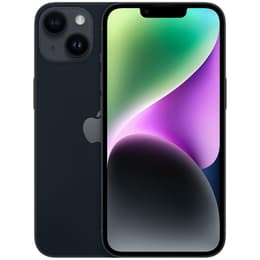
Galaxy Z Fold4 • Unlocked vs iPhone 14 • Unlocked

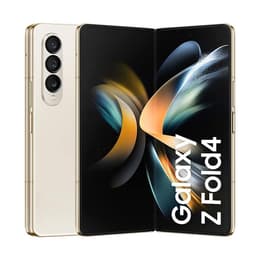
Galaxy Z Fold4 • Unlocked
Starting at

Refurbished price:$431.00

Versus $1,100.00 new

See options
iPhone 14 • Unlocked
Starting at

Refurbished price:$254.00

Versus $629.00 new

See options

Ratings

The Samsung Galaxy Z Fold4, released in August 2022, and the iPhone 14, launched in September 2022, represent distinct approaches to modern smartphone design. The Galaxy Z Fold4 offers a unique foldable form factor that transforms from a traditional smartphone into a larger tablet-like display, running on the Android operating system. In contrast, the iPhone 14 maintains a conventional smartphone design with a single display, powered by Apple's iOS. These devices cater to different user preferences, primarily differing in their physical design and operating system ecosystems.

Scores

Durability

When considering the longevity of these devices, both the Galaxy Z Fold4 and the iPhone 14 offer substantial software support and robust build qualities, though their designs present different durability considerations.

  • Software Support: The Galaxy Z Fold4 is eligible for four major Android OS updates and five years of security updates, meaning it is expected to receive updates until Android 16, likely in 2026, with security patches extending until 2027. The iPhone 14, running iOS, typically receives software updates for five to seven years after its release, suggesting support potentially until 2028 or iOS 22. This indicates a slightly longer software longevity expectation for the iPhone 14.
  • Physical Durability: The iPhone 14 features a Ceramic Shield front cover and an aerospace-grade aluminum design, along with an IP68 rating for water and dust resistance. The Galaxy Z Fold4 has an IPX8 water resistance rating and utilizes Gorilla Glass Victus+ for its outer display and back panel, with an Armor Aluminum frame. The foldable nature of the Z Fold4 introduces a hinge mechanism and a flexible inner screen, which some users have reported as a potential point of concern over long-term use, with some users on forums mentioning issues with the flex cable becoming loose.
  • Repairability: The iPhone 14 initially received a favorable repairability score due to its internal redesign making the back panel more accessible. However, this score was later downgraded due to Apple's parts pairing requirements, which can complicate independent repairs. Information regarding the specific repairability score for the Galaxy Z Fold4 is less prominent, but the complex foldable design generally suggests a more intricate repair process compared to traditional smartphones.

Release Year

2022

2022

Last OS Compatibility

Yes

Yes

OS

Android

iOS

Foldable

Yes

No

Performance

The performance of the Galaxy Z Fold4 and the iPhone 14 is influenced by their respective processors and system optimizations, impacting how they handle daily tasks and demanding applications.

  • Processing Power: The Galaxy Z Fold4 is equipped with a processor designed for efficient performance, capable of handling demanding applications and multitasking smoothly. The iPhone 14 utilizes a powerful processor from the previous year's Pro models, providing robust performance for a wide range of tasks, from everyday use to more intensive gaming.
  • Multitasking and RAM: The Galaxy Z Fold4 comes with 12 GB of RAM, which facilitates extensive multitasking, allowing users to run multiple applications simultaneously on its larger inner display without significant slowdowns. The iPhone 14 features 6 GB of RAM, an increase over its predecessor, contributing to smooth app switching and efficient background process management within the iOS ecosystem.
  • Storage Options: Both devices offer various internal storage configurations. The Galaxy Z Fold4 is available with 256 GB, 512 GB, and 1 TB storage options. The iPhone 14 offers 128 GB, 256 GB, and 512 GB storage capacities. Neither device supports expandable storage via microSD cards.
  • Battery Behavior: The Galaxy Z Fold4 houses a 4400 mAh battery, which, combined with its efficient processor and adaptive refresh rate displays, can provide a full day of use for many users, with some reports indicating up to 13 hours of usage. The iPhone 14 has a 3279 mAh battery, and user experiences suggest it can last a full day with moderate use, with some tests showing around 9 hours and 28 minutes of web browsing.

Memory (GB)

12 GB

6 GB

Screen quality

The display experience on the Galaxy Z Fold4 and the iPhone 14 differs significantly due to their fundamental design philosophies, offering distinct advantages for various use cases.

  • Display Technology and Size: The Galaxy Z Fold4 features two Dynamic AMOLED 2X displays: a 6.2-inch cover screen and a 7.6-inch foldable inner screen. This allows for a compact phone experience when folded and an expansive tablet-like view when unfolded. The iPhone 14 sports a single 6.1-inch Super Retina XDR OLED display.
  • Resolution and Clarity: The Z Fold4's inner display has a resolution of 2176 x 1812 pixels, while its cover screen is 904 x 2316 pixels. The iPhone 14 offers a resolution of 2532 x 1170 pixels, resulting in a pixel density of approximately 460 pixels per inch. Both devices provide clear and sharp visuals for text and images.
  • Brightness and Color: Both phones feature OLED technology, delivering deep blacks and vibrant colors. The iPhone 14's display can reach a typical brightness of 800 nits and a peak HDR brightness of 1200 nits. The Z Fold4's displays also offer high brightness levels suitable for outdoor visibility.
  • Refresh Rate: The Galaxy Z Fold4's displays both support an adaptive refresh rate of up to 120Hz, providing smooth scrolling and fluid animations. The iPhone 14 has a standard 60Hz refresh rate.

Resolution

1812 x 2176

1170 x 2532

Screen type

Foldable Dynamic AMOLED 2X

Super Retina XDR OLED

Audiovisual

The camera systems on the Galaxy Z Fold4 and the iPhone 14 are designed to capture high-quality images and videos, each with its own set of strengths and features.

  • Rear Camera System: The Galaxy Z Fold4 features a triple-camera setup on the rear, including a 50MP main sensor, a 12MP ultrawide lens, and a 10MP telephoto lens with 3x optical zoom. The iPhone 14 comes with a dual-camera system, consisting of a 12MP main camera with a larger sensor and a 12MP ultrawide camera.
  • Photography Performance: The Z Fold4's main camera offers improved low-light performance and detail capture, while its telephoto lens provides optical zoom capabilities. The iPhone 14's larger main sensor and Photonic Engine enhance mid-to-low light performance for both the main and ultrawide cameras.
  • Front-Facing Cameras: The Galaxy Z Fold4 has a 10MP camera on its cover display and a 4MP under-display camera on the main screen. The iPhone 14 features a 12MP front camera with autofocus, improving selfie quality and video calls.
  • Video Recording: Both devices are capable of recording high-quality video. The Galaxy Z Fold4 supports 8K video recording at 24fps. The iPhone 14 can record 4K Dolby Vision HDR video at up to 60fps and includes a Cinematic mode for depth-of-field effects.
  • Audio Experience: Both smartphones are equipped with stereo speakers, providing an immersive audio experience for media consumption.

Main camera

50 megapixels

12 megapixels

Front camera

4 megapixels

12 megapixels

Miscellaneous

Beyond their core functionalities, several practical elements contribute to the overall user experience of the Galaxy Z Fold4 and the iPhone 14.

  • Connectivity: Both devices support 5G connectivity for fast mobile data speeds. The Galaxy Z Fold4 includes Wi-Fi 6E and Bluetooth 5.2, while the iPhone 14 features Wi-Fi 6 and Bluetooth 5.3.
  • Ports and Biometrics: The Galaxy Z Fold4 utilizes a USB-C port for charging and data transfer. It incorporates a side-mounted fingerprint sensor for secure unlocking. The iPhone 14 uses Apple's proprietary Lightning port and relies on Face ID for biometric authentication.
  • Stylus Support: The Galaxy Z Fold4 supports the S Pen (Fold Edition), offering enhanced productivity and creative input on its large inner display. The iPhone 14 does not offer stylus support.
  • Physical Characteristics: The Galaxy Z Fold4, due to its foldable design, is heavier at 263 grams and thicker when folded (15.8-14.2 mm) compared to the iPhone 14, which weighs 172 grams and has a thickness of 7.8 mm. When unfolded, the Z Fold4 is considerably thinner at 6.3 mm.
  • Build Materials: The iPhone 14 features a Ceramic Shield front and an aluminum design. The Galaxy Z Fold4 uses Gorilla Glass Victus+ on its outer screen and back, with an Armor Aluminum frame.

Weight

9 oz

6 oz

Screen size (inches)

7.6

6.1

Network

5G

5G

SIM card

Physical SIM + eSIM

eSIM

Carrier compatibility

Unlocked

Unlocked

The Samsung Galaxy Z Fold4 and the iPhone 14 cater to distinct user preferences, each excelling in different areas based on user feedback and design. Users often praise the Galaxy Z Fold4 for its innovative foldable design, which offers a versatile experience, transforming from a compact phone to a larger tablet-like display for enhanced productivity and media consumption. The ability to multitask with multiple apps open simultaneously on the large inner screen is a frequently highlighted benefit. However, some users have expressed concerns about the long-term durability of the inner screen and the hinge mechanism, with reports of flex cable issues. The camera quality, while improved, is sometimes noted as not being on par with traditional flagship phones.

The iPhone 14 is generally lauded for its consistent performance, reliable camera system, and the seamless integration of the iOS ecosystem. Users appreciate its robust build quality and the extended software support Apple typically provides. Common criticisms sometimes revolve around the incremental nature of its upgrades compared to previous models and the standard 60Hz refresh rate of its display. Some users have also reported concerns about battery degradation over time.

Users prioritizing a large, adaptable screen for productivity, media consumption, and a unique form factor may find the Galaxy Z Fold4 well-suited to their needs. Its multitasking capabilities and S Pen support make it a compelling choice for those who want a tablet experience in a pocketable device. Conversely, users who value a traditional, highly polished smartphone experience with strong performance, a dependable camera, and long-term software support will likely lean towards the iPhone 14. It offers a straightforward, reliable experience within the Apple ecosystem.

Both devices are available as quality-assured refurbished options, providing an eco-friendly alternative for consumers seeking to make informed and sustainable choices.


See all articles

Our recent comparisons