Google Pixel 9 • Unlocked vs Google Pixel Fold • Unlocked

Google Pixel 9 • Unlocked
Starting at

Refurbished price:$379.00

Versus $799.00 new

See options
Google Pixel Fold • Unlocked
Starting at

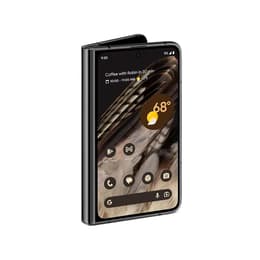
Refurbished price:$591.00

Versus $1,799.00 new

See options

Ratings

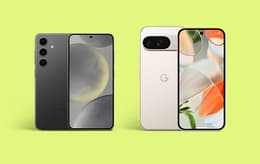
The Google Pixel 9, released in August 2024, represents the latest iteration of Google's traditional smartphone design, offering a refined experience in a familiar form factor. In contrast, the Google Pixel Fold, launched in June 2023, introduced Google's entry into the foldable smartphone market, providing a larger, adaptable screen experience. The primary distinction between these two devices lies in their fundamental design: the Pixel 9 is a conventional slab phone, while the Pixel Fold transforms from a compact smartphone into a tablet-like device. Both run on Google's Android operating system, offering a consistent software experience tailored to their respective hardware.

Scores

Durability

When considering the long-term usability of these devices, their release timelines and software support policies are key factors. The Pixel 9 benefits from a more recent launch, extending its practical lifespan through software updates.

  • Release Timeline: The Google Pixel 9 was released in August 2024, making it a newer device compared to the Google Pixel Fold, which launched in June 2023. This difference in release year directly impacts the duration of guaranteed software support.
  • Software Longevity: The Pixel 9 is set to receive 7 years of OS, security, and Pixel Feature Drop updates, ensuring it remains current and secure for an extended period. The Pixel Fold, while also receiving substantial support, is guaranteed 5 years of OS and security updates, extending until at least June 2028. [4, 12, 31, 33, 34, 35, 36]
  • Physical Durability: The Pixel 9 features a robust design with Gorilla Glass Victus 2 on both the front and back, along with an IP68 rating for dust and water resistance, offering strong protection against everyday wear and tear. [3, 25, 31] The Pixel Fold, as a foldable device, presents a different set of durability considerations; its outer screen is protected by Gorilla Glass Victus, while the inner folding display uses ultra-thin glass with a plastic protective layer, and it carries an IPX8 water resistance rating. [2, 6, 8, 16] Foldable screens, by their nature, introduce a hinge mechanism and a more flexible display, which can be perceived as having different long-term durability characteristics compared to a rigid slab display.

Release Year

2024

2023

Last OS Compatibility

Yes

Yes

OS

Android

Android

Foldable

No

Yes

Performance

The performance capabilities of the Pixel 9 and Pixel Fold are influenced by their respective processors and system configurations, impacting how smoothly they handle various tasks and applications.

  • Processing Power: The Pixel 9 is equipped with a newer generation processor, which translates to more efficient handling of demanding applications, faster app loading times, and smoother multitasking. This newer processor also enhances the device's ability to manage complex AI-driven features. [3, 5, 9, 17, 23, 31] The Pixel Fold utilizes an earlier generation processor, which still provides capable performance for daily tasks and most applications, but may show a difference in speed and efficiency when running the most intensive games or advanced computational tasks. [2, 8, 10, 11, 15, 16, 18, 19]
  • Multitasking and Responsiveness: Both devices come with 12GB of RAM, allowing for effective multitasking and quick switching between applications. [2, 3, 5, 8, 9, 11, 15, 16, 17, 18, 19, 31, 38] However, the Pixel 9's more advanced processor contributes to an overall snappier system responsiveness, particularly noticeable in scenarios involving heavy background processes or graphically intensive operations.
  • Battery Performance: The Pixel 9 houses a 4700 mAh battery, designed to provide extended usage on a single charge, with user reports indicating it can last through a full day of mixed use. [1, 5, 9, 14, 17, 31, 37, 38] The Pixel Fold features a larger 4821 mAh battery, which powers two displays. While its capacity is greater, the power demands of the larger internal screen mean its real-world battery life can vary depending on usage patterns, especially when the main foldable display is frequently in use. [2, 8, 11, 15, 16, 18, 19, 26]

Memory (GB)

12 GB

12 GB

Screen quality

The display experience is a major differentiator between these two Pixel devices, primarily due to their distinct form factors and display technologies.

  • Display Type and Size: The Pixel 9 features a 6.3-inch OLED display, offering a traditional smartphone viewing experience. [3, 4, 17, 21, 25, 29, 30, 31, 42] The Pixel Fold offers a dual-screen setup: a 5.8-inch OLED cover display for smartphone use and a 7.6-inch foldable OLED main display that provides a tablet-like canvas when unfolded. [2, 6, 7, 8, 10, 11, 16, 26] This allows the Pixel Fold to offer a significantly larger viewing area for media consumption and productivity.
  • Resolution and Clarity: The Pixel 9's 6.3-inch display has a 1080x2424 resolution with 422 pixels per inch (PPI), providing a sharp and clear image for everyday content. [3, 4, 17, 21, 25, 29, 30, 31, 42] The Pixel Fold's cover display offers a 1080x2092 resolution at 408 PPI, while its larger internal display has a 1840x2208 resolution at 380 PPI. [2, 6, 7, 8, 10, 11, 16, 26] Both devices deliver crisp visuals, but the Pixel Fold's larger unfolded screen provides a more expansive canvas for detailed viewing.
  • Brightness and Refresh Rate: The Pixel 9's display can reach up to 1800 nits in HDR and 2700 nits peak brightness, ensuring excellent visibility even in bright outdoor conditions. It supports a 60-120Hz refresh rate, providing smooth scrolling and animations. [4, 17, 25, 29, 30, 31, 42] The Pixel Fold's cover display reaches up to 1550 nits peak brightness, and its internal display up to 1450 nits, both with a 120Hz refresh rate, offering a vibrant and fluid visual experience across both screens. [6, 7, 8, 16, 26]

Resolution

1080 x 2424

1840 x 2208

Screen type

OLED

Foldable OLED

Audiovisual

Both the Pixel 9 and Pixel Fold leverage Google's renowned computational photography, but their hardware configurations present different capabilities for capturing photos and videos.

  • Rear Camera System: The Pixel 9 features a dual-camera setup on the rear, including a 50MP main sensor and a 48MP ultrawide sensor. [3, 17, 20, 21, 29, 30, 31, 32, 38, 39] It does not include a dedicated telephoto lens. The Pixel Fold, on the other hand, offers a triple-camera system: a 48MP main sensor, a 10.8MP ultrawide sensor, and a 10.8MP telephoto lens with 5x optical zoom. [2, 6, 7, 13, 15, 16, 19, 24, 26] This gives the Pixel Fold an advantage in capturing distant subjects with optical magnification.
  • Photography Performance: Both devices excel in everyday photography, producing images with accurate colors and good detail, especially in well-lit conditions, thanks to Google's image processing. The Pixel 9's newer main and ultrawide sensors may offer slight improvements in detail and low-light performance compared to the Pixel Fold's sensors. [27, 39] For low-light scenarios, both benefit from Night Sight. The Pixel Fold's unique form factor allows for creative photography, such as using the main camera for high-quality selfies by viewing the shot on the cover screen. [6, 24]
  • Video Recording and Front Cameras: Both devices support 4K video recording, with the Pixel 9 offering up to 60 frames per second (fps) and the Pixel Fold also supporting 4K at 60fps. [2, 21, 24, 26, 32] The Pixel 9 has a 10.5MP front camera. [3, 17, 20, 21, 32] The Pixel Fold has two front-facing cameras: a 9.5MP camera on the cover display and an 8MP camera on the inner folding display, providing flexibility for video calls and selfies in different orientations. [2, 6, 13, 16, 26]

Main camera

50 megapixels

48 megapixels

Front camera

10.5 megapixels

8 megapixels

Miscellaneous

Beyond core performance and display, several practical elements contribute to the overall user experience and differentiate the Pixel 9 and Pixel Fold.

  • Physical Design and Handling: The Pixel 9 maintains a traditional smartphone form factor, measuring 152.8 x 72 x 8.5 mm and weighing 198 grams, making it comfortable for one-handed use. [4, 9, 21, 25, 29, 30, 31, 32] The Pixel Fold, when folded, measures 139.7 x 79.5 x 12.1 mm and weighs 283 grams, making it thicker and heavier than the Pixel 9. [2, 6, 8, 11, 16, 18, 19, 22, 26, 28] When unfolded, it becomes a wider, thinner device at 139.7 x 158.7 x 5.8 mm, offering a different ergonomic experience. [2, 6, 8, 16, 22]
  • Connectivity and Ports: The Pixel 9 supports Wi-Fi 7 and Bluetooth 5.3, offering the latest in wireless connectivity for faster speeds and improved efficiency. [21, 29, 30] The Pixel Fold supports Wi-Fi 6 and Bluetooth 5.2. [8, 11, 19] Both devices feature a USB-C 3.2 port for charging and data transfer, and both support 5G cellular connectivity. [21, 29, 30] Neither device includes a traditional 3.5mm headphone jack.
  • Security and Sensors: Both smartphones incorporate advanced security features, including an under-display fingerprint sensor for convenient unlocking. [42] They also feature a suite of sensors like accelerometers, gyroscopes, and compasses for various functionalities. The Pixel 9 also introduces Satellite SOS capabilities, allowing for emergency communication in areas without cellular service. [38]

Weight

7 oz

7 oz

Screen size (inches)

6.3

7.6

Network

5G

5G

SIM card

Physical SIM + eSIM

Physical SIM + eSIM

Carrier compatibility

Unlocked

Unlocked

Connector

USB-C

USB-C

The Google Pixel 9 and Google Pixel Fold cater to distinct user preferences, primarily defined by their form factors and the experiences they offer. Users frequently praise the Pixel 9 for its balanced performance, excellent camera capabilities, and extended software support, making it a reliable choice for a traditional smartphone experience. [20, 25, 37, 38] Common criticisms are less prevalent for the Pixel 9, often focusing on incremental updates rather than significant drawbacks.

The Pixel Fold is often lauded for its innovative foldable design, providing the versatility of a large tablet screen in a portable format, which is particularly beneficial for productivity and media consumption. [2, 6, 7] Its camera system, including a telephoto lens, also receives positive remarks. However, some users have noted its weight and thickness when folded, and the durability of the inner folding screen has been a point of discussion. [2, 6, 7, 26]

Users prioritizing a compact, durable, and long-supported device for everyday tasks, photography, and the latest software updates will find the Pixel 9 well-suited to their needs. Its robust build and extended update policy offer peace of mind for long-term ownership. Conversely, users who value a larger, adaptable screen for multitasking, reading, or media viewing, and are willing to embrace the unique characteristics of a foldable device, may lean toward the Pixel Fold. Its ability to transform from a phone to a small tablet provides a distinct advantage for specific use cases.

For those considering either device, exploring quality-assured refurbished options can be an eco-friendly alternative, offering access to these technologies while supporting sustainable consumption.
See all articles

Our recent comparisons