Google Pixel 9 • Unlocked vs iPhone 14 Pro Max • Locked T-Mobile

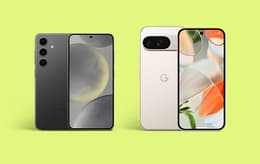
Google Pixel 9 • Unlocked
Starting at

Refurbished price:$379.00

Versus $799.00 new

See options
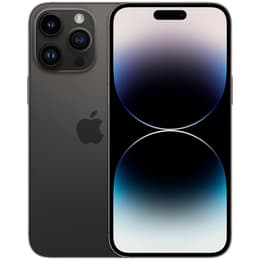
iPhone 14 Pro Max • Locked T-Mobile
Starting at

Refurbished price:$413.00

Versus $1,099.00 new

See options

Ratings

The Google Pixel 9 (released in August 2024) and the iPhone 14 Pro Max (released in September 2022) represent distinct approaches to flagship smartphones from their respective manufacturers. While the Pixel 9 offers a more recent Android experience in a compact form factor, the iPhone 14 Pro Max provides a larger display and Apple's established iOS ecosystem. The primary differentiators lie in their operating systems, physical dimensions, and camera hardware.

Scores

Durability

These devices offer different long-term prospects based on their release dates and manufacturer support policies.

  • Software Longevity: The Google Pixel 9 benefits from a commitment to seven years of operating system and security updates, potentially keeping the device current until 2031. In contrast, the iPhone 14 Pro Max, launched in 2022, typically receives around six years of software support, meaning its update cycle may conclude sooner than its competitor.
  • Physical Resilience: Both phones feature high-grade materials and an IP68 rating for dust and water resistance. The iPhone 14 Pro Max utilizes a stainless steel frame and Ceramic Shield front cover, while the Pixel 9 incorporates a refined aluminum build and Gorilla Glass Victus 2 for both the front and back.
  • Repairability: The Pixel 9 has been noted for its relatively high repairability, with an easily removable back plate and accessible components, including pull tabs for battery removal. However, some reports indicate challenges with battery removal due to strong adhesive. The iPhone 14 Pro Max, while having some internal redesigns for repair, faces limitations due to Apple's software validation requirements for parts, which can complicate independent repairs.

Release Year

2024

2022

Last OS Compatibility

Yes

Yes

OS

Android

iOS

Foldable

No

No

Performance

Both devices are engineered to handle demanding tasks, though their underlying architectures differ.

  • Everyday Responsiveness: The Google Pixel 9, powered by its current-generation processor, delivers smooth performance for daily applications, multitasking, and gaming. Users generally report a reliable experience, though some have noted occasional minor stutters or a slightly less snappy feel compared to other high-end devices. The iPhone 14 Pro Max, featuring its own advanced processor, offers consistently fluid performance across applications and demanding games, with users frequently praising its speed and overall system responsiveness.
  • Multitasking Capabilities: The Pixel 9 comes with 12GB of RAM, providing ample capacity for running multiple applications simultaneously and switching between them efficiently. The iPhone 14 Pro Max includes 6GB of RAM, which, combined with iOS optimization, allows for effective multitasking and app management.
  • Battery Behavior: The Pixel 9 is equipped with a 4700 mAh battery, which users often find lasts a full day or more with typical usage. The iPhone 14 Pro Max has a 4323 mAh battery, and while it offers impressive stamina for all-day use, its charging speed is limited to 20W, which can result in longer charging times.

Memory (GB)

12 GB

6 GB

Screen quality

The viewing experience on these devices differs primarily in scale and brightness, impacting how users consume media and interact with applications.

  • Display Technology and Clarity: Both devices utilize OLED technology, which provides deep blacks and high contrast for a vivid viewing experience. The Pixel 9 features a 6.3-inch OLED display with a 1080x2424 pixel resolution, resulting in a pixel density of 422 ppi. The iPhone 14 Pro Max offers a larger 6.7-inch Super Retina XDR OLED display with a 2796x1290 pixel resolution and 460 ppi, providing a slightly sharper image.
  • Brightness and Outdoor Visibility: The Pixel 9's display can reach up to 1800 nits for local brightness and 2700 nits at peak brightness, making it highly visible even under direct sunlight. The iPhone 14 Pro Max has a typical maximum brightness of 1000 nits, with peak HDR brightness reaching 1600 nits and an outdoor peak brightness of 2000 nits, ensuring good readability in various lighting conditions.
  • Refresh Rate and Smoothness: The Pixel 9 features a dynamic refresh rate that can adjust between 60Hz and 120Hz, providing smooth scrolling and animations. The iPhone 14 Pro Max includes ProMotion technology, offering an adaptive refresh rate from 1Hz to 120Hz, which contributes to a very fluid user experience and aids in battery efficiency.

Resolution

1080 x 2424

1290 x 2796

Screen type

OLED

LTPO Super Retina XDR OLED

Audiovisual

The camera systems on both smartphones are designed for high-quality imaging, though they offer different strengths and configurations.

  • Rear Camera System: The Google Pixel 9 features a dual-lens rear camera setup, including a 50MP main sensor and a 48MP ultra-wide lens with a 123-degree field of view. It relies on digital zoom (up to 8x Super Res Zoom) and lacks a dedicated telephoto lens. The iPhone 14 Pro Max boasts a triple-camera system, comprising a 48MP main sensor, a 12MP ultra-wide lens, and a 12MP telephoto lens capable of 3x optical zoom.
  • Photography Performance: The Pixel 9's main camera performs well across various lighting conditions, with its computational photography excelling in everyday shots. The ultra-wide also offers a macro photography feature. The iPhone 14 Pro Max is praised for its versatile camera system, capturing impressive detail and color balance, particularly noted for its strong video recording capabilities.
  • Front Camera and Audio: The Pixel 9 includes a 10.5MP front-facing camera. The iPhone 14 Pro Max features a 12MP front camera. Both devices offer stereo speakers and good microphone quality for calls and recording.

Main camera

50 megapixels

48 megapixels

Front camera

10.5 megapixels

12 megapixels

Miscellaneous

Beyond core specifications, several practical elements contribute to the overall user experience of these devices.

  • Connectivity and Ports: The Google Pixel 9 utilizes a universal USB-C port for charging and data transfer, aligning with many modern electronics. It supports 5G, Wi-Fi 7, and Bluetooth 5.3. The iPhone 14 Pro Max features Apple's proprietary Lightning port. It also supports 5G connectivity.
  • Physical Design and Handling: The Pixel 9 measures 152.8 x 72.0 x 8.5mm and weighs 198g, offering a more compact and lighter design that is comfortable for one-handed use. The iPhone 14 Pro Max is larger and heavier at 160.7 x 77.6 x 7.85mm and 240g, which can be a consideration for users preferring a smaller device or one-handed operation.
  • Security and Sensors: Both phones incorporate advanced security features. The Pixel 9 includes a fingerprint sensor and face recognition, along with a Titan M2 security chip. The iPhone 14 Pro Max relies on Face ID for secure authentication. Both devices include standard sensors like accelerometers, ambient light sensors, and gyroscopes.

Weight

7 oz

8 oz

Screen size (inches)

6.3

6.7

Network

5G

5G

SIM card

Physical SIM + eSIM

eSIM

Carrier compatibility

Unlocked

T-Mobile

Connector

USB-C

Lightning

The Google Pixel 9 and iPhone 14 Pro Max cater to different user preferences, each excelling in distinct areas. The Pixel 9 is often praised for its advanced computational photography, extended software support, and a more compact design that appeals to users seeking a smaller Android flagship. Criticisms sometimes point to the absence of a dedicated telephoto lens and occasional software stutters. Users appreciate its strong battery life for its size and the integration of Google's AI features.

The iPhone 14 Pro Max is frequently lauded for its robust performance, vibrant and large display, and exceptional video recording capabilities. Its Dynamic Island feature also receives positive feedback for its innovative approach to notifications and multitasking. Some users find its size and weight to be a drawback, and its charging speeds are not as fast as some competitors. The camera system, while capable, has sometimes been noted for being less ambitious in hardware upgrades compared to previous generations.

Users prioritizing a newer device with a long software support window, a more compact form factor, and Google's AI-centric features may find the Pixel 9 well-suited to their needs. Conversely, individuals who value a larger, brighter display, a powerful and consistently smooth iOS experience, and a versatile camera system with optical zoom, particularly for video, might lean towards the iPhone 14 Pro Max. Both devices offer premium experiences, and choosing between them depends on individual priorities regarding operating system, size, and specific feature sets. For those considering either device, exploring quality-assured refurbished options can provide an eco-friendly alternative.


See all articles

Our recent comparisons