Compare models
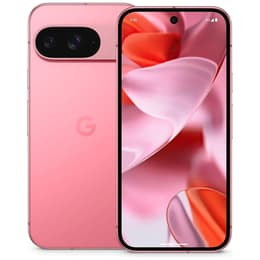
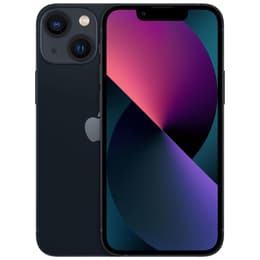
Google Pixel 9 • Unlocked vs iPhone 13 mini • Unlocked
- 1-year warranty
- Free standard shipping
- Free 30-day returns
Differences at a glance
The Google Pixel 9 and the iPhone 13 Mini represent distinct approaches to smartphone design and functionality, catering to different user preferences. The Pixel 9, released in August 2024, operates on the Android platform, emphasizing advanced computational photography and artificial intelligence features. In contrast, the iPhone 13 Mini, launched in September 2021, runs on Apple's iOS, offering a compact form factor with a focus on a streamlined user experience and a robust ecosystem. The primary differentiators between these two devices lie in their operating systems, physical size, and their respective camera philosophies.
Available Models
Color
Storage (GB)
Scores
Durability
The longevity of a smartphone is influenced by its release timeline, software support, and physical durability.
- Release Timeline: The Google Pixel 9, released in August 2024, benefits from a more recent launch, positioning it for a longer period of current software and hardware relevance. The iPhone 13 Mini, released in September 2021, is an older model, meaning it has already received several years of updates.
- Software Longevity: Google has committed to providing 7 years of OS, security, and Pixel Drop updates for the Pixel 9, ensuring extended software support. The iPhone 13 Mini, while still receiving updates (compatible with iOS 26.4 as of March 2026), will naturally have a shorter remaining update window due to its earlier release.
- Physical Durability: Both devices feature robust builds. The Pixel 9 incorporates Corning Gorilla Glass Victus 2 on both the front and back, along with an IP68 rating for dust and water resistance. The iPhone 13 Mini features a Ceramic Shield front cover and an IP68 rating, offering strong protection against everyday elements.
Release Year
2024
2021
Last OS Compatibility
Yes
Yes
OS
Android
iOS
Foldable
No
No
Performance
Performance in smartphones is determined by the underlying processing power, memory, and how efficiently the software utilizes these resources for daily tasks.
- Processing Power: The Google Pixel 9 is powered by Google's Tensor G4 processor, designed to handle demanding applications and advanced AI features efficiently. The iPhone 13 Mini utilizes the A15 Bionic chip, which continues to deliver smooth performance for general use, multitasking, and gaming, despite being an older generation.
- Multitasking and Responsiveness: With 12GB of RAM, the Pixel 9 is well-equipped for extensive multitasking and running numerous applications simultaneously without slowdowns. The iPhone 13 Mini, with 4GB of RAM, provides a responsive experience within the iOS ecosystem, though it may manage fewer active background applications compared to the Pixel 9.
- Storage Options: The Pixel 9 is available with 128GB or 256GB of internal storage. The iPhone 13 Mini offers more varied storage capacities, including 128GB, 256GB, and 512GB, providing more options for users with larger storage needs.
Screen quality
The display is a primary interface for smartphone interaction, with key differences in technology, size, and visual characteristics.
- Display Technology and Size: The Google Pixel 9 features a 6.3-inch OLED Actua display, offering vibrant colors and deep blacks. The iPhone 13 Mini has a smaller 5.4-inch Super Retina XDR OLED display, which also provides excellent contrast and color accuracy in a more compact form factor.
- Resolution and Clarity: The Pixel 9's display has a resolution of 1080 x 2424 pixels, resulting in a pixel density of 422 PPI. The iPhone 13 Mini offers a resolution of 2340 x 1080 pixels, with a higher pixel density of 476 PPI, contributing to sharp text and detailed images on its smaller screen.
- Brightness and Refresh Rate: The Pixel 9 boasts a dynamic refresh rate that can adapt from 60Hz to 120Hz for smoother scrolling and animations, and it can reach a peak brightness of 2700 nits, making it highly visible in bright outdoor conditions. The iPhone 13 Mini has a standard 60Hz refresh rate and a typical maximum brightness of 800 nits, with a peak HDR brightness of 1200 nits.
Resolution
1080 x 2424
1080 x 2340
Screen type
OLED
Super Retina XDR OLED
Audiovisual
Camera capabilities are a significant factor for many users, with both devices offering distinct photographic strengths.
- Rear Camera System: The Google Pixel 9 features a dual-camera setup with a 50MP wide-angle main camera (f/1.68) with optical image stabilization and a 48MP ultrawide camera (f/1.7) with a 123° field of view and autofocus. The iPhone 13 Mini also has a dual 12MP camera system, comprising a main wide-angle camera (f/1.6) with sensor-shift optical image stabilization and an ultrawide camera (f/2.4) with a 120° field of view.
- Photography Performance: The Pixel 9 is known for its computational photography, delivering sharp, clear images with strong low-light performance and advanced AI-based editing features. The iPhone 13 Mini offers excellent image quality in various conditions, with praise for its low-light capabilities, accurate colors, and features like Cinematic Mode and Photographic Styles.
- Front Camera and Video: The Pixel 9 includes a 10.5MP front-facing camera with autofocus. The iPhone 13 Mini features a 12MP TrueDepth front camera with similar advanced features like Night Mode and Cinematic Mode. Both devices are capable of recording video up to 4K at 60 frames per second.
Main camera
50 megapixels
12 megapixels
Front camera
10.5 megapixels
12 megapixels
Miscellaneous
Beyond core specifications, several practical elements contribute to the overall user experience and device utility.
- Connectivity and Ports: The Google Pixel 9 supports Wi-Fi 7 and 5G connectivity, along with Bluetooth v5.3 and NFC, and features a USB-C port for charging and data transfer. The iPhone 13 Mini supports Wi-Fi 6, 5G, Bluetooth 5.0, and NFC, but uses Apple's proprietary Lightning port.
- Biometric Security: The Pixel 9 utilizes an optical in-display fingerprint sensor for secure unlocking and authentication, alongside face unlock. The iPhone 13 Mini relies on Face ID, Apple's facial recognition system, for biometric security.
- Physical Design and Handling: The Pixel 9 measures 152.8 x 72.0 x 8.5 mm and weighs 198g, offering a modern design with an aluminum frame and glass back. The iPhone 13 Mini is significantly more compact and lighter at 131.5 x 64.2 x 7.65 mm and 141g, making it ideal for one-handed use and users who prefer smaller devices.
Weight
7 oz
6 oz
Screen size (inches)
6.3
5.4
Network
5G
5G
SIM card
Physical SIM + eSIM
Physical SIM + eSIM
Carrier compatibility
Unlocked
Unlocked
What the community thinks
The Google Pixel 9 and iPhone 13 Mini cater to different user priorities, reflecting their respective release timelines and operating system philosophies. Users often praise the Pixel 9 for its advanced camera capabilities, particularly its computational photography and AI-driven features, which consistently produce high-quality images. Its extended software support commitment is also a significant advantage for those seeking long-term device relevance. However, some users have noted that while battery life has improved significantly over previous Pixel models, it may still not match the endurance of some larger flagship devices under heavy usage.
The iPhone 13 Mini is frequently lauded for its exceptionally compact size, making it a preferred choice for users who prioritize one-handed usability and portability. Its camera system is also highly regarded for its consistent performance and features like Cinematic Mode. A common concern among users, however, is its battery life, which, while improved over its predecessor, can still be a limiting factor for heavy users or those who are frequently away from a charger.
Users prioritizing the latest Android innovations, advanced AI features, and a larger display with a high refresh rate will find the Google Pixel 9 well-suited to their needs. Its strong software support also makes it a compelling choice for long-term use. Conversely, individuals who value a highly compact device, the iOS ecosystem, and a reliable camera in a small form factor may lean towards the iPhone 13 Mini. Both devices offer quality-assured refurbished options, providing an eco-friendly alternative for consumers.