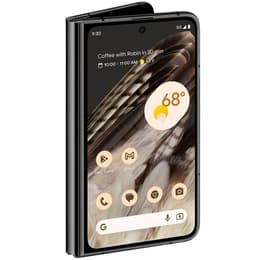
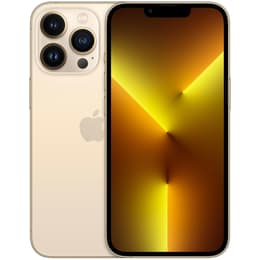

Google Pixel Fold • Unlocked vs iPhone 13 Pro • Unlocked

Google Pixel Fold • Unlocked
Starting at

Refurbished price:$591.00

Versus $1,799.00 new

See options
iPhone 13 Pro • Unlocked
Starting at

Refurbished price:$299.99

Versus $1,000.00 new

See options

Ratings

The Google Pixel Fold, released in June 2023, represents Google's entry into the foldable smartphone market, offering a unique form factor that transforms from a compact device into a larger tablet-like display. In contrast, the iPhone 13 Pro, launched in September 2021, is a traditional slab-style smartphone from Apple's flagship lineup. These devices operate on distinct ecosystems, Android and iOS respectively, and cater to different user preferences, primarily differing in their design philosophy and display experience.

Scores

Durability

When considering the long-term usability of these devices, their release timelines and software support policies are key differentiators.

  • Software Longevity: The Google Pixel Fold, being a newer device, is guaranteed five years of OS and security updates from its June 2023 release, extending support until at least June 2028. The iPhone 13 Pro, released in September 2021, typically receives major iOS updates for approximately 5-6 years from its launch, with security updates often continuing for longer. This means the iPhone 13 Pro has already received several major iOS versions and will continue to be supported for a few more years, though the Pixel Fold's support window extends further into the future due to its later release.
  • Physical Durability: The Pixel Fold features an IPX8 water resistance rating, indicating protection against submersion, and uses Gorilla Glass Victus for its cover screen. The iPhone 13 Pro boasts an IP68 rating for dust and water resistance and incorporates a Ceramic Shield front cover, designed for enhanced drop performance. The foldable nature of the Pixel Fold introduces additional considerations regarding the inner display's resilience and the hinge mechanism.
  • Repairability: The iPhone 13 Pro received an iFixit repairability score of 5 out of 10, with display and battery replacements being relatively accessible, though software limitations can complicate third-party repairs. The Pixel Fold received a PBK Reviews repairability score of 6.5 out of 10, with Google providing spare parts and repair guides through iFixit, making many components independently replaceable, though battery access can be challenging due to adhesive.

Release Year

2023

2021

Last OS Compatibility

Yes

Yes

OS

Android

iOS

Foldable

Yes

No

Performance

The performance of both devices is optimized for their respective operating systems, offering smooth experiences for daily tasks, though their underlying hardware and battery management differ.

  • Processing Power: The Google Pixel Fold is equipped with a processor designed for efficient AI and machine learning tasks, enabling smooth multitasking across its dual displays and responsive handling of demanding applications. The iPhone 13 Pro features a powerful processor that delivers strong performance for gaming, video editing, and general system responsiveness, ensuring applications launch quickly and run without interruption. Both devices handle everyday usage, from web browsing to social media, with ease.
  • Multitasking and RAM: The Pixel Fold comes with 12 GB of RAM, which supports its foldable design by allowing users to run multiple applications simultaneously on its larger inner screen without significant slowdowns. The iPhone 13 Pro features 6 GB of RAM, which, combined with iOS's efficient memory management, provides a fluid multitasking experience for typical smartphone usage.
  • Battery Behavior: The Pixel Fold houses a 4821 mAh battery, designed to power its two displays. Its battery life can vary significantly depending on the usage of the larger inner screen. The iPhone 13 Pro has a 3095 mAh battery, which, coupled with its efficient processor and adaptive refresh rate display, generally provides a full day of use for many users.

Memory (GB)

12 GB

6 GB

Screen quality

The display experience is a primary distinguishing factor, with the Pixel Fold offering a unique foldable design and the iPhone 13 Pro providing a high-quality traditional screen.

  • Display Technology and Size: The Google Pixel Fold features a 7.6-inch foldable OLED inner display and a 5.8-inch OLED cover display. This allows for a versatile experience, switching between a standard smartphone and a small tablet. The iPhone 13 Pro has a 6.1-inch Super Retina XDR OLED display, offering a consistent and premium viewing experience on a single screen.
  • Resolution and Clarity: The Pixel Fold's inner display has a resolution of 2208 x 1840 pixels, while its cover screen is 2092 x 1080 pixels. The iPhone 13 Pro features a 2532 x 1170 pixel resolution at 460 pixels per inch (ppi), providing sharp and detailed visuals. Both devices offer vibrant colors and deep blacks characteristic of OLED technology.
  • Brightness and Refresh Rate: The Pixel Fold's inner display reaches a peak brightness of 1450 nits, and its cover display reaches 1550 nits, with both supporting a 120 Hz refresh rate for smooth scrolling and responsiveness. The iPhone 13 Pro's display offers up to 1000 nits typical brightness and 1200 nits peak brightness for HDR content, featuring ProMotion technology with an adaptive refresh rate that can go from 10 Hz to 120 Hz, optimizing for both smoothness and power efficiency.

Resolution

1840 x 2208

1170 x 2532

Screen type

Foldable OLED

Super Retina XDR OLED

Audiovisual

Both devices offer advanced camera systems, but they approach computational photography and hardware capabilities from different perspectives.

  • Rear Camera System: The Google Pixel Fold features a triple rear camera setup, including a 48 MP wide lens with optical image stabilization (OIS), a 10.8 MP ultrawide lens, and a 10.8 MP telephoto lens with 5x optical zoom and OIS. This system is known for producing natural colors and strong low-light performance, benefiting from Google's image processing. The iPhone 13 Pro also has a triple 12 MP rear camera system, comprising a wide lens with sensor-shift OIS, an ultrawide lens, and a telephoto lens with 3x optical zoom and OIS, complemented by a LiDAR scanner for improved depth sensing.
  • Front-Facing Cameras: The Pixel Fold includes a 9.5 MP camera on its cover screen and an 8 MP camera above its inner display, offering flexibility for video calls and selfies in different form factors. The iPhone 13 Pro features a 12 MP front camera with a 3D depth sensor, providing detailed selfies and secure facial recognition.
  • Video Capabilities: Both devices are capable of recording 4K video at up to 60 frames per second. The iPhone 13 Pro introduced features like Cinematic mode for shallow depth-of-field effects and ProRes video recording for professional-grade video capture. The Pixel Fold also offers a suite of video modes, leveraging its processing for stable and clear footage.

Main camera

48 megapixels

12 megapixels

Front camera

8 megapixels

12 megapixels

Miscellaneous

Beyond core features, several practical elements contribute to the overall user experience and daily convenience of these smartphones.

  • Connectivity and Ports: The Google Pixel Fold supports 5G connectivity, Wi-Fi 6, Bluetooth 5.2, and uses a USB Type-C port for charging and data transfer. The iPhone 13 Pro also offers 5G, Wi-Fi 6, and Bluetooth 5.0, but utilizes Apple's proprietary Lightning port.
  • Biometric Security: The Pixel Fold incorporates a fingerprint sensor for secure unlocking. The iPhone 13 Pro relies on Face ID, Apple's facial recognition system, for biometric authentication.
  • Physical Design and Handling: The Pixel Fold, when folded, measures 139.7 x 79.5 x 12.1 mm and weighs 283 grams, making it a substantial device. When unfolded, it is 139.7 x 158.7 x 5.8 mm. The iPhone 13 Pro is more compact and lighter at 146.7 x 71.5 x 7.65 mm and 204 grams, offering a more traditional smartphone feel. The Pixel Fold's build materials include Gorilla Glass Victus and an aluminum frame, while the iPhone 13 Pro features a Ceramic Shield front, a matte glass back, and a stainless steel frame.

Weight

7 oz

6 oz

Screen size (inches)

7.6

6.1

Network

5G

5G

SIM card

Physical SIM + eSIM

Physical SIM + eSIM

Carrier compatibility

Unlocked

Unlocked

Connector

USB-C

Lightning

User feedback for the Google Pixel Fold often highlights its innovative foldable design and the versatility it offers, effectively combining a smartphone and a small tablet experience. Many users appreciate its camera system, which consistently delivers natural-looking photos with Google's computational photography strengths, particularly the 5x optical zoom telephoto lens. However, some common criticisms revolve around its weight and the perceived fragility of the inner display, as well as its overall thickness when folded.

The iPhone 13 Pro is frequently praised for its robust performance, the quality of its Super Retina XDR display with ProMotion, and its reliable battery life. Its camera system receives consistent acclaim for its image quality, especially in low light, and the introduction of features like Cinematic mode and an impressive macro mode were well-received. Users generally value the seamless integration within the Apple ecosystem and the device's overall build quality. Some minor criticisms have included the continued use of the Lightning port and the notch design, though these are often considered minor in the overall user experience.

Users prioritizing a versatile, larger screen experience for productivity and media consumption, coupled with a strong camera system and the Android ecosystem, may find the Google Pixel Fold well-suited to their needs. Its unique form factor offers a distinct advantage for those who frequently switch between phone and tablet modes. Conversely, users who prefer a more traditional, compact smartphone with a highly refined operating system, consistent performance, and a top-tier camera for both photos and video will likely lean towards the iPhone 13 Pro. Both devices represent excellent choices, and considering a quality-assured refurbished option can be a sustainable way to acquire either of these advanced smartphones.
See all articles

Our recent comparisons