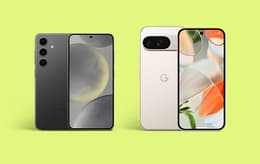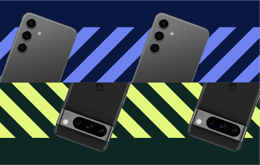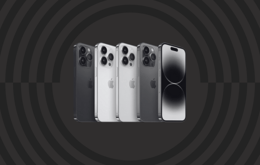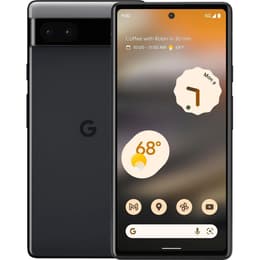
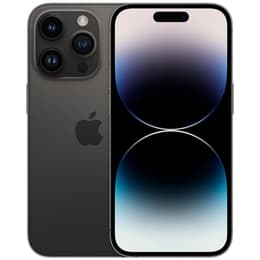

Google Pixel 6a • Unlocked vs iPhone 14 Pro • Unlocked

Google Pixel 6a • Unlocked
Starting at

Refurbished price:$141.00

Versus $399.00 new

See options
iPhone 14 Pro • Unlocked
Starting at

Refurbished price:$352.00

Versus $999.00 new

See options

Ratings

The Google Pixel 6a, released in July 2022, and the iPhone 14 Pro, launched in September 2022, represent distinct approaches to the smartphone experience. While both offer capable performance and camera systems, they differ significantly in their operating systems, display technology, and overall feature sets. The Pixel 6a runs on Android, emphasizing Google's software integration, while the iPhone 14 Pro operates on iOS, known for its ecosystem and advanced display features.

Scores

Durability

The practical lifespan and ongoing support for a smartphone are key considerations for users.

  • Release Timeline: The Google Pixel 6a was released in July 2022, while the iPhone 14 Pro followed shortly after in September 2022. This means both devices are relatively current, with the iPhone 14 Pro being slightly newer.
  • Software Longevity: Google initially promised 3 years of major Android OS updates and 5 years of security updates for the Pixel 6a. However, this has been extended, and the Pixel 6a is now expected to receive 5 years of Android OS and security updates, until at least July 2027. Apple generally offers 5-6 years of iOS updates for its flagship models. Therefore, the iPhone 14 Pro is expected to receive software support for a comparable or slightly longer duration, potentially extending its usable life in terms of new features and security.
  • Physical Resilience: The Pixel 6a features Corning Gorilla Glass 3 on its front and has an IP67 rating for dust and water resistance, meaning it can withstand immersion in up to 1 meter of water for 30 minutes. The iPhone 14 Pro utilizes Apple's Ceramic Shield front cover and boasts an IP68 rating, allowing for immersion in up to 6 meters of water for 30 minutes, suggesting a slightly higher degree of protection against environmental elements.

Release Year

2022

2022

Last OS Compatibility

Yes

Yes

OS

Android

iOS

Foldable

No

No

Performance

The responsiveness and capability of a smartphone's internal components directly impact daily usage, from app loading to multitasking.

  • Everyday Responsiveness: The Pixel 6a handles daily tasks, web browsing, and social media applications smoothly, powered by its Google Tensor chip. Users can expect a fluid experience for most common activities.
  • Demanding Applications: The iPhone 14 Pro is designed for more intensive workloads, offering very smooth performance even with graphically demanding games, video editing, and complex multitasking, thanks to its advanced internal architecture. Its internal architecture allows for quicker app launches and more efficient background processing.
  • Multitasking and Storage: Both devices come with 6GB of RAM, which is sufficient for managing multiple applications simultaneously. The Pixel 6a is available with 128GB of internal storage. The iPhone 14 Pro offers a wider range of storage options, including 128GB, 256GB, 512GB, and 1TB, catering to users with larger media libraries or extensive app collections.

Memory (GB)

6 GB

6 GB

Screen quality

The display is the primary interface for interacting with a smartphone, and its quality significantly influences the user experience.

  • Display Technology and Clarity: Both devices feature OLED displays, which provide deep blacks and vibrant colors. The Pixel 6a has a 6.1-inch display with a resolution of 1080 x 2400 pixels. The iPhone 14 Pro also has a 6.1-inch display but offers a higher resolution of 2556 x 1179 pixels, resulting in slightly sharper text and images.
  • Brightness and Outdoor Visibility: The Pixel 6a's display offers adequate brightness for indoor use and most outdoor conditions. The iPhone 14 Pro, however, features a significantly brighter display, with a peak brightness of up to 2000 nits in outdoor direct sunlight, making it easier to view content in very bright environments.
  • Refresh Rate and Smoothness: The Pixel 6a has a standard 60Hz refresh rate, providing a consistent visual experience. The iPhone 14 Pro incorporates ProMotion technology, offering an adaptive refresh rate that can scale from 1Hz to 120Hz. This results in noticeably smoother scrolling and more fluid animations, particularly in supported apps and games.

Resolution

1080 x 2400

1179 x 2556

Screen type

OLED

LTPO Super Retina XDR OLED

Audiovisual

Camera capabilities are a major factor for many smartphone users, influencing how they capture and share moments.

  • Rear Camera System: The Pixel 6a features a dual-camera setup with a 12.2 MP main sensor and a 12 MP ultrawide sensor. It relies heavily on Google's computational photography for image processing. The iPhone 14 Pro boasts a more versatile triple-camera system, including a 48 MP main sensor, a 12 MP ultrawide, and a 12 MP telephoto lens, offering optical zoom capabilities.
  • Photography Performance: Both phones excel in good lighting conditions, producing detailed and color-accurate photos. The Pixel 6a is often praised for its consistent image processing and excellent portrait mode. The iPhone 14 Pro offers greater flexibility with its telephoto lens and a larger main sensor that captures more light, leading to improved detail and low-light performance, especially with its ProRAW format for advanced users.
  • Video Recording and Audio: Both devices are capable of recording high-quality video. The iPhone 14 Pro offers advanced video features like Cinematic mode for depth-of-field effects and Action mode for stabilized footage, along with higher resolution and frame rate options for professional-grade video. Both phones provide clear audio recording and offer stereo speakers for media consumption, with the iPhone 14 Pro generally delivering a fuller sound profile.

Main camera

12.2 megapixels

48 megapixels

Front camera

8 megapixels

12 megapixels

Miscellaneous

Beyond core features, several practical elements contribute to the overall user experience and device utility.

  • Connectivity and Ports: Both devices support 5G cellular connectivity and modern Wi-Fi standards for fast internet access. The Pixel 6a uses a USB-C port for charging and data transfer, a widely adopted standard. The iPhone 14 Pro continues to use Apple's proprietary Lightning port.
  • Biometric Security: The Pixel 6a features an under-display fingerprint sensor for secure unlocking and authentication. The iPhone 14 Pro utilizes Face ID, Apple's facial recognition system, which is known for its speed and security.
  • Physical Design and Handling: The Pixel 6a weighs 178 grams and has dimensions of 152.2 x 71.8 x 8.9 mm, offering a comfortable grip for many users. The iPhone 14 Pro is slightly heavier at 206 grams and measures 147.5 x 71.5 x 7.9 mm. Its stainless steel frame contributes to its solid feel, while the Pixel 6a uses a plastic back.

Weight

6 oz

7 oz

Screen size (inches)

6.1

6.1

Network

5G

5G

SIM card

Physical SIM + eSIM

eSIM

Carrier compatibility

Unlocked

Unlocked

User feedback on forums like Reddit often highlights the Pixel 6a's strong camera performance, particularly its computational photography, and its clean Android experience as significant praise points. Some users note its 60Hz display as a potential drawback compared to devices with higher refresh rates. The iPhone 14 Pro frequently receives acclaim for its powerful performance, versatile camera system, and the fluidity of its ProMotion display. Criticisms sometimes point to its weight and the continued use of the Lightning port.

Users prioritizing a streamlined Android experience, excellent point-and-shoot photography, and a comfortable, lighter build may find the Google Pixel 6a well-suited to their needs. Its software longevity, while good, is generally shorter than its Apple counterpart. Conversely, users who require top-tier performance for demanding applications, a highly advanced and flexible camera system, a brighter and smoother display, and longer software support will likely lean towards the iPhone 14 Pro. Both devices are available as quality-assured refurbished options, providing an eco-friendly alternative for consumers. The choice ultimately depends on individual priorities regarding operating system preference, performance demands, and specific feature requirements.

See all articles

Our recent comparisons