

Compare models

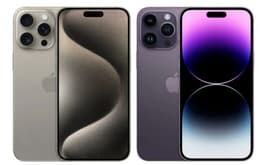
iPhone 14 Pro • Unlocked vs iPhone 17 • Unlocked

  • 1-year warranty
  • Free standard shipping
  • Free 30-day returns
iPhone 14 Pro • Unlocked
Starting at

Refurbished price:$432.00

Versus $999.00 new

See options
iPhone 17 • Unlocked
Starting at

Refurbished price:$1,026.70

Versus $1,029.00 new

See options

Differences at a glance

The iPhone 14 Pro (2022) and the iPhone 17 (2025) represent different generations and tiers within Apple's smartphone lineup. While the iPhone 14 Pro brings professional-grade build characteristics and a dedicated third camera lens, the newer iPhone 17 introduces a larger screen, updated internal processing, and modern connectivity standards. Both devices run on iOS and feature intuitive interfaces, though they cater to distinct feature preferences through their hardware updates.

Available Models

Color

Storage (GB)

Scores

Durability

When evaluating structural longevity, both models offer distinct timelines based on their respective release years and software support cycles.

  • Release timeline and support: The iPhone 14 Pro debuted in 2022, while the iPhone 17 launched in 2025, giving the newer model a three-year advantage in total expected software update longevity.
  • Build durability: Both devices feature robust water resistance ratings and durable glass construction, though users seeking a quality-assured refurbished option from Back Market will find both models thoroughly tested for reliable daily operation.
  • Expected practical lifespan: The iPhone 17 benefits from more recent hardware engineering, ensuring extended support for future operating system updates compared to its older counterpart.

Release Year

2022

2025

Last OS Compatibility

Yes

Yes

OS

iOS

iOS

Foldable

No

No

Performance

Day-to-day operation and multitasking behavior differ noticeably between these two generations due to hardware refinements.

  • System responsiveness: The iPhone 17 handles demanding apps, heavy multitasking, and modern gaming smoothly thanks to its current-generation processor and increased RAM allocation.
  • Storage configurations: The iPhone 14 Pro starts at lower baseline storage capacities, whereas the iPhone 17 begins with larger storage tiers to accommodate media-heavy workflows.
  • Battery behavior: Users report that both devices manage typical daily usage well, though the newer internal components in the iPhone 17 contribute to optimized energy efficiency during extended tasks.

Screen quality

Viewing experiences vary across these devices regarding physical dimensions, panel technology, and peak brightness capabilities.

  • Display size and panel: The iPhone 17 offers a slightly larger 6.3-inch OLED display compared to the 6.1-inch panel on the iPhone 14 Pro, while both deliver deep blacks and vibrant colors.
  • Refresh rate smoothness: Both devices support high refresh rates for fluid scrolling, though the newer panel technology on the iPhone 17 provides enhanced energy efficiency.
  • Outdoor visibility: High peak brightness levels on both models ensure clear readability under direct sunlight, making them practical for outdoor navigation and media viewing.

Resolution

1179 x 2556

2622x1206

Screen type

LTPO Super Retina XDR OLED

Super Retina XDR

Audiovisual

Optics and media playback capabilities differ depending on whether users prioritize telephoto reach or general everyday recording.

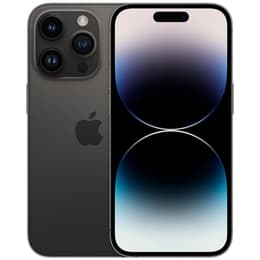
  • Camera systems: The iPhone 14 Pro features a triple-lens setup including a dedicated optical zoom lens, whereas the iPhone 17 utilizes a dual-lens system optimized for high-resolution wide and ultra-wide shots.
  • Low-light photography: Both models capture detailed images in challenging lighting conditions, though image processing software updates on the newer device refine clarity and color accuracy.
  • Video and audio output: Stereo speakers and microphone arrays on both smartphones deliver clear audio for phone calls and media consumption, supported by stable video stabilization modes.

Main camera

48 megapixels

48 megapixels

Front camera

12 megapixels

18 megapixels

Miscellaneous

Physical dimensions and connectivity standards shape the everyday handling and utility of each smartphone.

  • Connectivity standards: The iPhone 17 incorporates newer wireless communication protocols, including advanced Wi-Fi and Bluetooth standards, compared to the iPhone 14 Pro.
  • Handling and weight: The iPhone 14 Pro utilizes a stainless steel frame that adds noticeable weight, whereas the iPhone 17 features a lighter aluminum frame for more comfortable one-handed use.
  • Physical ports: The iPhone 14 Pro relies on a Lightning connector, while the iPhone 17 adopts the universally accepted USB-C port for charging and data transfer.

Weight

7 oz

185 oz

Screen size (inches)

6.1

6.3

Network

5G

5G

SIM card

eSIM

eSIM

Carrier compatibility

Unlocked

Unlocked

Connector

Lightning

USB-C

What the community thinks

Choosing between these two smartphones depends heavily on individual feature preferences and everyday usage habits. Users prioritizing a dedicated telephoto zoom lens and a heavier, stainless steel build often lean toward the iPhone 14 Pro. Conversely, users prioritizing a larger screen, a lightweight aluminum frame, USB-C connectivity, and extended software support tend to favor the iPhone 17. Selecting a quality-assured refurbished option through Back Market provides a sustainable and reliable path to owning either device.

Ultimately, both models offer capable performance, responsive displays, and robust daily utility tailored to different user priorities without clear industry ranking.

Our recent comparisons