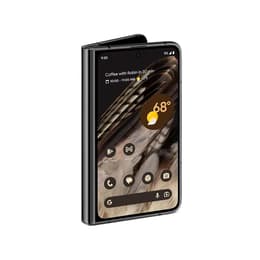
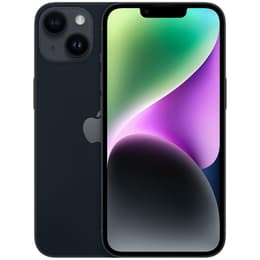

Google Pixel Fold • Unlocked vs iPhone 14 • Unlocked

Google Pixel Fold • Unlocked
Starting at

Refurbished price:$591.00

Versus $1,799.00 new

See options
iPhone 14 • Unlocked
Starting at

Refurbished price:$254.00

Versus $629.00 new

See options

Ratings

The Google Pixel Fold, released in June 2023, and the iPhone 14, launched in September 2022, represent distinct approaches to modern smartphone design. The Pixel Fold introduces a foldable form factor, offering a large tablet-like display when unfolded, while the iPhone 14 maintains a traditional smartphone design. Both devices operate on their respective proprietary ecosystems, Android for the Pixel Fold and iOS for the iPhone 14, providing different user experiences and software environments.

Scores

Durability

The expected practical lifespan of a smartphone is influenced by its release timeline, software support, and repairability.

  • Release Timeline: The iPhone 14 was released in September 2022, making it an earlier model compared to the Google Pixel Fold, which launched in June 2023.
  • Software Longevity: The Google Pixel Fold is set to receive five years of OS and security updates, extending its support until 2028. The iPhone 14, typically receives iOS updates for approximately 5-6 years from its release, offering a comparable, though potentially slightly shorter, software support window.
  • Repairability: The iPhone 14 initially received a positive repairability assessment due to its internal redesign, making components like the back glass more accessible. However, this score was later downgraded due to software authentication requirements for replacement parts, which can complicate independent repairs. Information regarding the Pixel Fold's repairability has been mixed, with some critics noting durability concerns related to its foldable design.

Release Year

2023

2022

Last OS Compatibility

Yes

Yes

OS

Android

iOS

Foldable

Yes

No

Performance

Both devices offer robust performance for daily tasks, but their underlying architectures lead to different strengths in handling demanding applications and multitasking.

  • Storage Options: The Google Pixel Fold offers storage capacities of 256GB and 512GB. The iPhone 14 provides more varied options, including 128GB, 256GB, and 512GB.
  • Processor Capabilities: The Pixel Fold handles demanding applications and multitasking smoothly, providing a responsive experience across its dual displays. The iPhone 14 also delivers strong performance for everyday use and gaming, ensuring applications launch quickly and run efficiently.
  • Battery Behavior: The Google Pixel Fold features a 4821 mAh battery, designed to power its larger and dual-screen setup. The iPhone 14 is equipped with a 3279 mAh battery, optimized for its single display and iOS ecosystem, often providing all-day power for typical users.

Memory (GB)

12 GB

6 GB

Screen quality

The display experience on these two devices differs significantly due to their fundamental form factors, offering distinct advantages for different user preferences.

  • Display Technology and Size: The Google Pixel Fold features a 5.8-inch OLED cover display and unfolds to reveal a 7.6-inch OLED inner display, both offering vibrant colors and deep blacks. The iPhone 14 comes with a 6.1-inch Super Retina XDR OLED display, known for its rich contrast and color accuracy.
  • Resolution and Clarity: The Pixel Fold's cover display has a resolution of 1080 x 2092 pixels (408 ppi), while its inner display is 1840 x 2208 pixels (380 ppi). The iPhone 14 offers a 2532 x 1170 pixel resolution at 460 ppi, providing sharp text and clear images.
  • Brightness and Refresh Rate: Both displays on the Pixel Fold support a 120Hz refresh rate, contributing to smoother scrolling and more fluid animations, with peak brightness levels of 1550 nits for the cover and 1450 nits for the inner screen. The iPhone 14 has a standard 60Hz refresh rate, with a typical brightness of 800 nits and a peak HDR brightness of 1200 nits, offering good visibility in various lighting conditions.

Resolution

1840 x 2208

1170 x 2532

Screen type

Foldable OLED

Super Retina XDR OLED

Audiovisual

Both smartphones offer capable camera systems, but they are configured differently to suit their respective designs and photographic philosophies.

  • Camera System Capabilities: The Google Pixel Fold features a triple-lens rear camera system, including a 48MP main sensor with optical image stabilization (OIS), a 10.8MP ultrawide lens, and a 10.8MP telephoto lens capable of 5x optical zoom. It also has a 9.5MP cover selfie camera and an 8MP inner selfie camera. The iPhone 14 is equipped with a dual-camera system on the rear, comprising a 12MP main camera with sensor-shift OIS and a 12MP ultrawide camera with a 120-degree field of view. Its front camera is a 12MP sensor with autofocus.
  • Photography Performance: The Pixel Fold is praised for its camera capabilities, delivering detailed photos with good color reproduction, especially benefiting from Google's computational photography. The iPhone 14 also excels in everyday photography and low-light conditions, producing sharp images with accurate colors and improved detail capture.
  • Video Recording and Audio: Both devices offer high-quality video recording, with the iPhone 14 featuring Cinematic Mode and improved stabilization. The microphone quality on both devices is suitable for calls and video recording, and their speakers provide a clear audio experience for media consumption.

Main camera

48 megapixels

12 megapixels

Front camera

8 megapixels

12 megapixels

Miscellaneous

Beyond core features, several practical elements contribute to the overall user experience and differentiate these two devices.

  • Connectivity Options: Both the Google Pixel Fold and the iPhone 14 support 5G connectivity for fast mobile data. They also include modern Wi-Fi and Bluetooth standards for wireless connections.
  • Ports and Sensors: The Pixel Fold utilizes a USB-C 3.2 Gen 2 port for charging and data transfer. The iPhone 14 continues to use the Lightning port. Both devices incorporate essential sensors, with the iPhone 14 featuring Face ID for secure authentication, while the Pixel Fold uses a side-mounted fingerprint sensor.
  • Weight and Dimensions: The Google Pixel Fold is a heavier device at 283 grams, reflecting its foldable design and larger internal components. When folded, it measures 139.7 x 79.5 x 12.1 mm, and when unfolded, it is 139.7 x 158.7 x 5.8 mm. The iPhone 14 is lighter at 172 grams and has dimensions of 146.7 x 71.5 x 7.8 mm, offering a more compact and traditional smartphone feel.
  • Build Materials: The Pixel Fold features a back made of Gorilla Glass Victus, an aluminum frame, and a Gorilla Glass Victus cover display, with a plastic protective layer on its inner foldable screen. It also has an IPX8 water resistance rating. The iPhone 14 uses a Ceramic Shield front cover, a glass back, and an aerospace-grade aluminum frame, with an IP68 rating for water and dust resistance.

Weight

7 oz

6 oz

Screen size (inches)

7.6

6.1

Network

5G

5G

SIM card

Physical SIM + eSIM

eSIM

Carrier compatibility

Unlocked

Unlocked

Connector

USB-C

Lightning

The Google Pixel Fold and the iPhone 14 cater to different user needs and preferences, primarily due to their distinct form factors and operating systems. The Pixel Fold is often praised for its innovative design, offering the versatility of a large screen for productivity and media consumption in a compact, foldable package. Users appreciate its camera system and the expansive Android experience on the inner display. However, some common criticisms have included its weight and concerns regarding the durability of the inner display.

The iPhone 14 is frequently lauded for its consistent performance, reliable camera capabilities, and the robust iOS ecosystem. Users often highlight its ease of use and the integration of safety features. While initially praised for improved repairability, subsequent reports noted challenges with software authentication for replacement parts.

Users prioritizing a large, adaptable screen for multitasking, reading, or entertainment, and who are comfortable with the Android ecosystem, may find the Google Pixel Fold well-suited to their needs. Its unique design offers a distinct experience for those seeking a device that can transform from a standard smartphone to a small tablet. Conversely, users who value a traditional, compact smartphone experience with a strong emphasis on consistent performance, a streamlined operating system, and a well-established app ecosystem may lean toward the iPhone 14. It offers a familiar and dependable experience for everyday communication and content creation.

For those considering either device, exploring quality-assured refurbished options can provide an eco-friendly alternative, extending the life cycle of these advanced smartphones.

See all articles

Our recent comparisons