
Google Pixel Fold • Unlocked vs OnePlus 12 • Unlocked

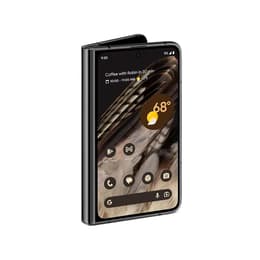
Google Pixel Fold • Unlocked
Starting at

Refurbished price:$589.00

Versus $1,799.00 new

See options
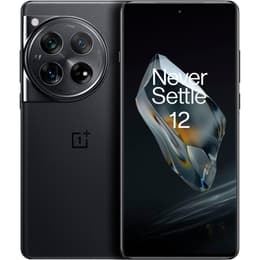
OnePlus 12 • Unlocked
Starting at

Refurbished price:$750.99

Versus $1,200.00 new

See options

Ratings

The Google Pixel Fold, released in June 2023, marks Google's entry into the foldable smartphone market, offering a unique dual-screen experience. In contrast, the OnePlus 12, launched globally in January 2024, presents a traditional high-performance smartphone design. The primary differentiators lie in their form factors, with the Pixel Fold emphasizing versatility through its folding display and the OnePlus 12 focusing on raw power and a conventional flagship experience. Both devices operate on the Android platform, providing users with a wide ecosystem of applications and services.

Scores

Durability

When considering the long-term usability of these devices, several factors contribute to their expected practical lifespan.

  • Release Timeline and Software Support: The Google Pixel Fold, being a Google device, typically receives at least five years of security updates from its release date, extending its software longevity. The OnePlus 12, while newer, offers four years of Android updates and five years of security patches, ensuring a robust support period. [4, 8]
  • Repairability and Build: The Pixel Fold features an IPX8 water resistance rating, indicating protection against submersion, and Google has marketed its hinge as durable. [3, 10, 21] The OnePlus 12 comes with an IP65 rating for dust and water resistance, offering protection against splashes and dust ingress. [1, 4, 12] The foldable nature of the Pixel Fold introduces additional mechanical components, while the OnePlus 12's traditional design may offer a more straightforward repair process for common issues.
  • Expected Practical Lifespan: Both devices are built with high-quality materials and are designed for sustained use. The Pixel Fold's unique form factor might appeal to users looking for a device that adapts to different usage scenarios over time, while the OnePlus 12's robust internal components are designed to handle demanding tasks for several years.

Release Year

2023

2023

Last OS Compatibility

Yes

Yes

OS

Android

Android

Foldable

Yes

No

Performance

The performance capabilities of the Google Pixel Fold and the OnePlus 12 cater to different user priorities, driven by their respective internal hardware.

  • Processor Capabilities: The Google Pixel Fold is equipped with a processor designed by Google, which excels in artificial intelligence tasks and provides a smooth experience for everyday applications and multitasking. [8] The OnePlus 12 features a current-generation processor known for its high-end performance, making it well-suited for intensive gaming and demanding applications. [1, 2]
  • Memory and Storage: The Pixel Fold comes with 12GB of RAM and offers storage options of 256GB or 512GB, providing ample space and memory for most users. [8] The OnePlus 12 offers more varied configurations, including 12GB, 16GB, and even 24GB of RAM, alongside storage options up to 1TB, which can benefit users who frequently run many applications simultaneously or store large files. [2, 6]
  • Battery Behavior: The Pixel Fold houses a 4821 mAh battery, which is substantial for a foldable device and is designed to provide over a full day of use. [8] The OnePlus 12 features a larger 5400 mAh battery, contributing to its excellent battery life, with users often reporting it lasts through a full day of heavy use. [1, 2, 7, 17]

Memory (GB)

12 GB

16 GB

Screen quality

The display experience on the Google Pixel Fold and the OnePlus 12 differs significantly due to their distinct form factors and display technologies.

  • Display Technology and Size: The Pixel Fold offers a dual-screen setup: a 5.8-inch OLED cover display and a 7.6-inch foldable OLED inner display. [3, 10] This allows for a compact smartphone experience when folded and an expansive tablet-like view when unfolded. The OnePlus 12 features a single 6.82-inch LTPO AMOLED display, providing a large, immersive viewing area in a traditional smartphone form. [1, 2, 12]
  • Resolution and Brightness: Both devices offer high-resolution displays for clear and sharp visuals. The Pixel Fold's inner display has a resolution of 2208 x 1840 pixels, while its cover display is 2092 x 1080 pixels, with peak brightness levels up to 1550 nits. [9, 10] The OnePlus 12 boasts a 3168 x 1440 pixel resolution and an impressive peak brightness of up to 4500 nits, which enhances visibility in bright outdoor conditions. [1, 2, 12]
  • Refresh Rate and Smoothness: Both displays on the Pixel Fold and the single display on the OnePlus 12 feature a 120Hz refresh rate, contributing to smooth scrolling and responsive interactions. [3, 10, 12] The OnePlus 12's LTPO technology allows for an adaptive refresh rate, ranging from 1Hz to 120Hz, which can optimize power consumption. [1, 12]

Resolution

1840 x 2208

1440 x 3168

Screen type

Foldable OLED

LTPO AMOLED

Audiovisual

Both the Google Pixel Fold and the OnePlus 12 offer advanced camera systems, though they approach photography with different strengths and features.

  • Rear Camera Systems: The Pixel Fold features a triple rear camera setup, including a 48MP main sensor with optical image stabilization (OIS), a 10.8MP ultrawide lens, and a 10.8MP telephoto lens capable of 5x optical zoom. [3, 15, 21] It leverages Google's computational photography for image processing. The OnePlus 12 also has a triple rear camera system, with a 50MP main sensor (Sony LYT-808) with OIS, a 48MP ultrawide, and a 64MP periscope telephoto lens offering 3x optical zoom. [1, 2, 4, 14] The OnePlus 12 benefits from Hasselblad color calibration. [4]
  • Photography Performance: The Pixel Fold is known for its consistent image quality across various lighting conditions, particularly excelling in everyday photography and portraiture due to its software processing. [21] The OnePlus 12 delivers strong performance with its main and telephoto cameras, capturing detailed images with natural colors, though its ultrawide and selfie cameras may show some limitations in low-light scenarios. [1, 7]
  • Video Recording and Selfie Cameras: Both devices support 4K video recording. The Pixel Fold includes an 8MP inner selfie camera and a 9.5MP outer selfie camera. [3, 15] The OnePlus 12 features a 32MP front camera, capable of capturing detailed selfies. [1, 4]

Main camera

48 megapixels

50 megapixels

Front camera

8 megapixels

32 megapixels

Miscellaneous

Beyond core specifications, several practical elements differentiate the user experience of the Google Pixel Fold and the OnePlus 12.

  • Connectivity and Ports: The Pixel Fold supports Wi-Fi 6E and Bluetooth 5.2, along with 5G connectivity, and features a USB-C 3.2 Gen 2 port. [10] The OnePlus 12 offers more advanced connectivity with Wi-Fi 7 and Bluetooth 5.4, also supporting 5G, and includes a USB 3.2 Gen 1 Type-C port. [2, 25] Neither device includes a traditional headphone jack.
  • Biometric Security: The Pixel Fold incorporates a side-mounted fingerprint sensor and face recognition for unlocking. [11] The OnePlus 12 utilizes an in-display fingerprint sensor for convenient and secure access. [2]
  • Design and Handling: The Pixel Fold, with its foldable design, weighs 283 grams and has dimensions that change significantly between its folded (139.7 x 79.5 x 12.1 mm) and unfolded (139.7 x 158.7 x 5.8 mm) states. [3, 10, 23, 24] This allows for a compact form factor that expands into a larger screen. The OnePlus 12 is a lighter device at 220 grams, with dimensions of 164.3 x 75.8 x 9.2 mm, offering a more conventional smartphone feel. [2, 4, 25]

Weight

7 oz

8 oz

Screen size (inches)

7.6

6.82

Network

5G

5G

SIM card

Physical SIM + eSIM

Physical SIM

Carrier compatibility

Unlocked

Unlocked

Connector

USB-C

USB-C

The Google Pixel Fold and the OnePlus 12 cater to distinct user preferences within the Android smartphone market. Users frequently praise the Pixel Fold for its innovative foldable design, offering the versatility of a compact phone and a larger tablet-like display. Its camera system, powered by Google's computational photography, is often highlighted for its consistent and pleasing results. Some common criticisms of the Pixel Fold include its tendency to warm up during demanding tasks and the fact that its inner screen does not lie completely flat when unfolded. [10, 21]

On the other hand, the OnePlus 12 receives commendation for its powerful performance, vibrant display with high brightness, and exceptional battery life, often noted for lasting a full day even with heavy usage. Its fast charging capabilities are also a significant advantage. User feedback sometimes points to the ultrawide and selfie cameras not performing as strongly in low-light conditions compared to the main sensor. [1, 7]

Users prioritizing a flexible form factor that can adapt from a traditional smartphone to a larger screen for media consumption or multitasking may find the Google Pixel Fold well-suited to their needs. Its unique design and Google's software integration offer a distinct experience. Conversely, users who value raw processing power for gaming and demanding applications, coupled with a long-lasting battery and a bright, high-refresh-rate display in a conventional smartphone design, may lean toward the OnePlus 12. Both devices represent strong options in their respective categories, and considering a quality-assured refurbished option for either model can be a sustainable choice for consumers.
See all articles

Our recent comparisons