
Galaxy S10 • Unlocked vs Galaxy Z Fold4 • Unlocked

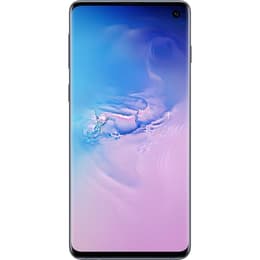
Galaxy S10 • Unlocked
Starting at

Refurbished price:$148.00

Versus $669.00 new

See options
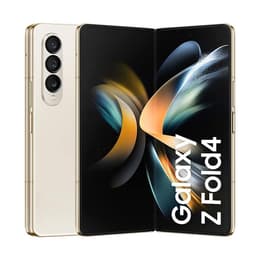
Galaxy Z Fold4 • Unlocked
Starting at

Refurbished price:$431.00

Versus $1,100.00 new

See options

Ratings

The Samsung Galaxy S10, released in March 2019, is a traditional slab-style smartphone that represented a peak in conventional smartphone design for its era. In contrast, the Samsung Galaxy Z Fold4, launched in August 2022, is a foldable device that transforms from a compact smartphone into a larger tablet-like experience. These devices offer distinct form factors and user experiences, with the Z Fold4 introducing a flexible display and enhanced multitasking capabilities, while the S10 provides a classic, streamlined design.

Scores

Durability

The expected practical lifespan and software support differ significantly between these two devices due to their respective release timelines and Samsung's update policies.

  • Release Timeline: The Galaxy S10, launched in 2019, is an older device compared to the Galaxy Z Fold4, which was released in 2022. This age difference directly impacts their remaining support windows.
  • OS Support: The Galaxy S10 received three major Android OS updates, concluding with Android 12 and One UI 4.1, and its security updates ended in March 2023 for most models. The Galaxy Z Fold4, however, was promised four major Android OS updates (up to Android 16) and five years of security updates, extending its support until 2027.
  • Repairability: The Galaxy S10 received a low iFixit repairability score of 3 out of 10, largely due to extensive adhesive, a soldered charging port, and a glued battery, making common repairs challenging. The Galaxy Z Fold4, while still complex due to its folding design, has seen efforts to make repairs more accessible, particularly for screen damage, though hinge issues and inner screen delamination have been reported by users.

Release Year

2019

2022

Last OS Compatibility

No

Yes

OS

Android

Android

Foldable

No

Yes

Performance

Performance capabilities reflect the generational gap between these two devices, impacting how smoothly they handle demanding applications and multitasking.

  • Processor Capabilities: The Galaxy S10 is equipped with a processor that capably handles everyday tasks and moderate gaming. The Galaxy Z Fold4 features a more recent and powerful processor, providing a noticeable boost in speed and efficiency for intensive applications, advanced gaming, and seamless multitasking across its larger display.
  • Multitasking and Responsiveness: With 8GB of RAM, the Galaxy S10 offers solid multitasking performance for typical smartphone use. The Galaxy Z Fold4, with 12GB of RAM, is designed for more demanding multitasking scenarios, allowing users to run multiple applications simultaneously on its expansive inner screen with greater fluidity.
  • Storage: The Galaxy S10 offers 128GB or 512GB of internal storage, utilizing UFS 2.1 technology. The Galaxy Z Fold4 provides larger and faster storage options, including 256GB, 512GB, and 1TB, using UFS 3.1, which contributes to quicker app loading and data transfer speeds. Neither device offers expandable storage via microSD card.

Memory (GB)

8 GB

12 GB

Screen quality

The display experience is a primary differentiator, with the Galaxy Z Fold4 offering a unique foldable design compared to the traditional screen of the Galaxy S10.

  • Display Technology and Size: The Galaxy S10 features a single 6.1-inch Dynamic AMOLED display with a curved design, offering vibrant colors and deep blacks. The Galaxy Z Fold4 boasts two displays: a 6.2-inch Dynamic AMOLED cover screen and a large 7.6-inch Dynamic AMOLED 2X foldable inner display, providing a tablet-like viewing area when unfolded.
  • Resolution and Refresh Rate: The S10's display has a QHD+ resolution (1440x3040 pixels) and a standard 60 Hz refresh rate. The Z Fold4's inner display offers a higher resolution (1812x2176 pixels) and a smoother 120 Hz adaptive refresh rate, which also extends to the cover screen, resulting in more fluid scrolling and responsiveness.
  • Brightness and Durability: Both devices offer excellent brightness for outdoor visibility. The S10 uses Gorilla Glass 6 for protection. The Z Fold4's inner screen, while offering a unique experience, has been noted by some users to be more susceptible to issues like delamination or micro-cracks over time, requiring careful handling.

Resolution

1440 x 3040

1812 x 2176

Screen type

Dynamic AMOLED

Foldable Dynamic AMOLED 2X

Audiovisual

Both devices offer versatile camera systems, but the Galaxy Z Fold4 benefits from newer sensor technology and enhanced computational photography.

  • Rear Camera System: The Galaxy S10 features a triple-camera setup with a 12 MP wide-angle lens, a 12 MP telephoto lens with 2x optical zoom, and a 16 MP ultrawide lens. The Galaxy Z Fold4 also has a triple-camera system, but with a higher-resolution 50 MP wide-angle sensor, a 12 MP ultrawide, and a 10 MP telephoto lens offering 3x optical zoom and up to 30x digital zoom.
  • Photography Performance: The S10 delivers strong image quality in good lighting conditions, with decent low-light performance for its generation. The Z Fold4 provides improved detail, better low-light capabilities, and more consistent performance across its lenses, benefiting from advancements in image processing.
  • Video Recording and Front Cameras: The S10 supports 4K video recording at 60 frames per second. The Z Fold4 elevates video capabilities with support for 8K recording at 24 frames per second. For selfies and video calls, the S10 has a 10 MP front camera. The Z Fold4 features a 10 MP camera on its cover screen and a 4 MP under-display camera on the inner screen, designed to be less intrusive during full-screen use.

Main camera

12 megapixels

50 megapixels

Front camera

10 megapixels

4 megapixels

Miscellaneous

Beyond core specifications, several practical elements contribute to the overall user experience and daily usability of these smartphones.

  • Connectivity and Ports: The Galaxy S10 supports 4G LTE networks and was notable for retaining a 3.5mm headphone jack, alongside its USB-C port. The Galaxy Z Fold4 is equipped with 5G connectivity, Wi-Fi 6E, and Bluetooth 5.2, offering faster wireless speeds and future-proofing. It exclusively uses a USB-C port, omitting the headphone jack.
  • Biometric Security: The S10 introduced an ultrasonic in-screen fingerprint reader for secure unlocking. The Z Fold4 features a side-mounted fingerprint sensor integrated into the power button.
  • Design and Handling: The S10 has a traditional smartphone form factor, measuring 149.9 x 70.4 x 7.8 mm and weighing 157g, making it comfortable for one-handed use. The Z Fold4, due to its foldable nature, is thicker and heavier when folded (155.1 x 67.1 x 14.2-15.8 mm, 263g) but offers a much larger screen when unfolded (155.1 x 130.1 x 6.3 mm), providing a versatile experience that can feel substantial in the hand.

Weight

6 oz

9 oz

Screen size (inches)

6.1

7.6

Network

LTE

5G

SIM card

Physical SIM

Physical SIM + eSIM

Carrier compatibility

Unlocked

Unlocked

The Samsung Galaxy S10 and Galaxy Z Fold4 cater to different user preferences, reflecting the evolution of smartphone technology over several years. Users often praised the Galaxy S10 for its balanced design, vibrant display, and the inclusion of features like the headphone jack and expandable storage, which were becoming less common. However, some common criticisms included its battery life for heavy users and occasional issues with the in-screen fingerprint reader.

The Galaxy Z Fold4, on the other hand, is frequently lauded for its innovative foldable display, offering a unique blend of smartphone portability and tablet-like productivity. Its powerful performance and advanced camera system are also strong points. User concerns for the Z Fold4 often revolve around its durability, particularly the inner screen and hinge, with reports of delamination and hinge failures. Battery life can also be a point of contention for power users, given the need to power two displays.

Users prioritizing a compact, traditional smartphone experience with a proven design and a 3.5mm headphone jack may find the Galaxy S10 well-suited to their needs. It remains a capable device for everyday tasks and media consumption. Conversely, individuals seeking cutting-edge technology, a large, immersive display for multitasking and media, and a device that pushes the boundaries of smartphone form factors will likely lean towards the Galaxy Z Fold4. For those considering either device, exploring quality-assured refurbished options can provide a sustainable choice.


See all articles

Our recent comparisons