
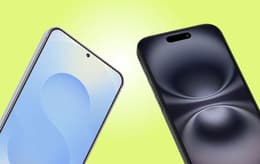
Galaxy S10 • Unlocked vs iPhone XS • Unlocked

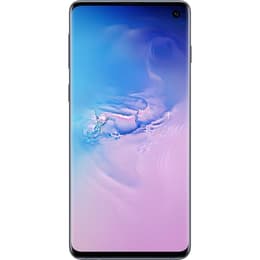
Galaxy S10 • Unlocked
Starting at

Refurbished price:$148.00

Versus $669.00 new

See options
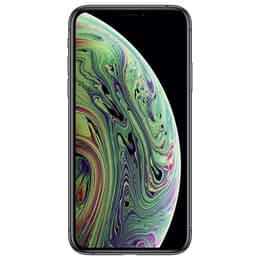
iPhone XS • Unlocked
Starting at

Refurbished price:$161.00

Versus $459.00 new

See options

Ratings

The Samsung Galaxy S10, released in March 2019, and the Apple iPhone Xs, launched in September 2018, represent flagship smartphones from their respective manufacturers. While both devices offer premium experiences, they differ in their operating systems, design philosophies, and specific feature sets. The Galaxy S10 introduced an Infinity-O display and a versatile triple-camera system, whereas the iPhone Xs focused on refining the notch design and enhancing its dual-camera capabilities.

Scores

Durability

When considering the longevity of these devices, several factors come into play, including their release dates, software support, and physical construction.

  • Release Timeline: The iPhone Xs was released in September 2018, making it slightly older than the Galaxy S10, which launched in March 2019. This difference in release dates can impact the remaining period of official software support.
  • Software Longevity: Apple typically provides iOS updates for its devices for about 5-6 years from their release. The iPhone Xs, having been released in 2018, has received updates up to iOS 17 and potentially iOS 18, extending its software lifespan. Samsung generally offers 3-4 years of major Android OS updates and longer for security patches for its Galaxy S series. The Galaxy S10, initially running Android 9, received updates up to Android 12.
  • Repairability: Both devices feature glass backs and fronts, making them susceptible to damage from drops. The Galaxy S10 received a repairability score of 3 out of 10 from iFixit, indicating it is challenging to repair due to extensive use of adhesive and a soldered charging port. The iPhone Xs also presents repair challenges, though specific scores vary. Both are rated IP68 for dust and water resistance, meaning they can withstand submersion in up to 2 meters of water for 30 minutes.

Release Year

2019

2018

Last OS Compatibility

No

Yes

OS

Android

iOS

Foldable

No

No

Performance

The performance of a smartphone is crucial for daily use, influencing everything from app responsiveness to multitasking capabilities and battery endurance.

  • Storage Options: The iPhone Xs was available with 64GB, 256GB, or 512GB of internal storage. The Galaxy S10 offered more flexible storage, starting at 128GB and going up to 512GB or 1TB, with the added benefit of expandable storage via a microSD card.
  • Battery Behavior: The Galaxy S10 is equipped with a 3400 mAh battery, while the iPhone Xs has a 2658 mAh battery. In real-world usage, the Galaxy S10 generally offers a full day of moderate use, while the iPhone Xs provides solid battery performance, often lasting a full day for many users.
  • System Responsiveness: Both devices feature powerful processors for their time, enabling smooth navigation, quick app loading, and efficient multitasking. The iPhone Xs's processor was noted for its speed and efficiency, contributing to fast app launches and fluid performance. The Galaxy S10's processor also handles demanding applications and gaming smoothly, providing a responsive user experience.

Memory (GB)

8 GB

4 GB

Screen quality

The display is a primary interface for users, and both the Galaxy S10 and iPhone Xs offer high-quality viewing experiences with distinct characteristics.

  • Display Technology: Both smartphones feature OLED displays, known for their deep blacks and vibrant colors. The Galaxy S10 uses a Dynamic AMOLED panel, while the iPhone Xs features a Super Retina OLED display.
  • Resolution and Clarity: The Galaxy S10 has a 6.1-inch display with a resolution of 3040 x 1440 pixels, resulting in a pixel density of approximately 550 ppi. The iPhone Xs has a slightly smaller 5.8-inch display with a resolution of 2436 x 1125 pixels, offering a pixel density of about 458 ppi. This means the Galaxy S10 offers a slightly sharper image.
  • Brightness and Refresh Rate: The Galaxy S10's Dynamic AMOLED display can reach a peak brightness of 1200 nits, providing excellent visibility even in bright outdoor conditions. The iPhone Xs has a typical maximum brightness of 625 nits. Both devices feature a standard 60Hz refresh rate.

Resolution

1440 x 3040

1125 x 2436

Screen type

Dynamic AMOLED

Super Retina OLED

Audiovisual

Photography capabilities are a significant consideration for many users, and both phones deliver strong performance with different approaches to their camera systems.

  • Camera System Capabilities: The Galaxy S10 features a versatile triple-camera setup on the rear, including a 12MP wide-angle lens, a 12MP telephoto lens with 2x optical zoom, and a 16MP ultra-wide-angle lens. The iPhone Xs has a dual-camera system with two 12MP lenses: a wide-angle and a telephoto lens, also offering 2x optical zoom.
  • Photography Performance: The Galaxy S10's ultra-wide lens provides more flexibility for capturing expansive scenes. Both phones offer optical image stabilization for clearer photos and videos. The iPhone Xs introduced Smart HDR for improved dynamic range in photos.
  • Video Recording Quality: Both devices are capable of recording 4K video at up to 60 frames per second. The iPhone Xs also supports stereo audio recording for videos.
  • Front Camera: The Galaxy S10 has a 10MP front-facing camera, while the iPhone Xs features a 7MP TrueDepth front camera, which also enables Face ID.

Main camera

12 megapixels

12 megapixels

Front camera

10 megapixels

7 megapixels

Miscellaneous

Beyond the core features, several other elements contribute to the overall user experience and practical utility of these smartphones.

  • Connectivity Options: Both phones support 4G LTE, Wi-Fi (802.11ac for iPhone Xs, 802.11ax/Wi-Fi 6 for Galaxy S10), and Bluetooth 5.0. The iPhone Xs was notable for introducing Gigabit-class LTE with 4x4 MIMO and dual-SIM functionality (physical SIM + eSIM).
  • Port Types: The Galaxy S10 features a USB-C port for charging and data transfer, and notably retains a 3.5mm headphone jack. The iPhone Xs uses Apple's proprietary Lightning port and does not include a 3.5mm headphone jack.
  • Biometric Security: The Galaxy S10 introduced an ultrasonic in-display fingerprint sensor. The iPhone Xs relies solely on Face ID for biometric authentication.
  • Dimensions and Weight: The Galaxy S10 measures 149.9 x 70.4 x 7.8 mm and weighs 157 grams. The iPhone Xs is slightly more compact at 143.6 x 70.9 x 7.7 mm and weighs 177 grams.

Weight

6 oz

6 oz

Screen size (inches)

6.1

5.8

Network

LTE

LTE

SIM card

Physical SIM

Physical SIM + eSIM

Carrier compatibility

Unlocked

Unlocked

Users often praise the Samsung Galaxy S10 for its vibrant, high-resolution display, the versatility of its triple-camera system, and the inclusion of a headphone jack and expandable storage. Some common criticisms have revolved around its repairability and the initial software experience for some users. The iPhone Xs is frequently lauded for its robust performance, consistent camera quality, and the seamless integration within the Apple ecosystem. User concerns sometimes focus on the absence of a headphone jack and the reliance on the Lightning port.

For users who prioritize a larger, more pixel-dense display, the flexibility of an ultra-wide camera lens, and the convenience of a traditional headphone jack and expandable storage, the Galaxy S10 may be a more suitable choice. Its Android operating system also offers greater customization options. Conversely, individuals who value a compact design, strong long-term software support, and a streamlined user experience within the Apple ecosystem might find the iPhone Xs to be a better fit. Its Face ID system and consistent performance are key attractions.

Both devices, despite being older models, continue to offer capable smartphone experiences. Opting for a quality-assured refurbished option for either the Galaxy S10 or iPhone Xs can provide an eco-friendly alternative for those seeking premium features without purchasing a brand-new device.
See all articles

Our recent comparisons