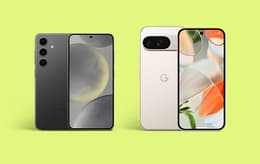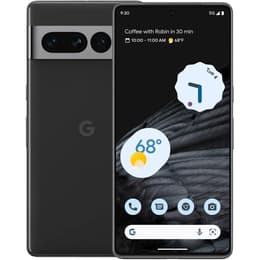
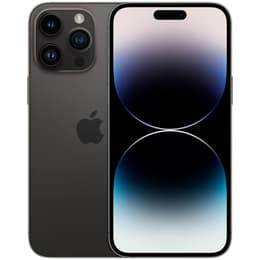

Google Pixel 7 Pro • Unlocked vs iPhone 14 Pro Max • Locked AT&T

Google Pixel 7 Pro • Unlocked
Starting at

Refurbished price:$221.00

Versus $899.99 new

See options
iPhone 14 Pro Max • Locked AT&T
Starting at

Refurbished price:$409.00

Versus $1,399.00 new

See options

Ratings

The Google Pixel 7 Pro, released in October 2022, and the iPhone 14 Pro Max, launched in September 2022, represent flagship smartphones from their respective manufacturers. While both devices offer high-end mobile experiences, they diverge in their operating systems and core philosophies, with the Pixel emphasizing advanced computational photography and AI-driven features on Android, and the iPhone focusing on a cohesive ecosystem and robust performance within iOS.

Scores

Durability

Evaluating the practical lifespan of these devices involves considering their release timelines, software support, and ease of repair.

  • Release Timeline: The iPhone 14 Pro Max was released in September 2022, while the Google Pixel 7 Pro followed in October 2022. This means the iPhone has a slightly earlier market presence.
  • Software Longevity: Google initially promised OS updates for the Pixel 7 Pro until at least October 2025 and security updates until October 2027. However, Google has since extended support for the Pixel 7 series to five years of Android updates and five years of monthly security patches. Apple typically provides iOS updates for its devices for five to six years from their release, suggesting the iPhone 14 Pro Max will receive software support for an extended period.
  • Repairability: The Google Pixel 7 Pro received a repairability score of 5.5 out of 10 from one assessment, noting that while screen replacements are relatively easy, battery replacements can be complex due to strong adhesive, and the charging port is soldered to the motherboard. The iPhone 14 Pro Max, despite some internal redesigns, maintained a repairability score of 6 out of 10, similar to its predecessor, with the rear glass panel remaining challenging to replace. It's worth noting that while the standard iPhone 14 initially received a higher repairability score, this was later downgraded due to Apple's parts pairing policies.

Release Year

2022

2022

Last OS Compatibility

Yes

Yes

OS

Android

iOS

Foldable

No

No

Performance

Both devices are engineered to deliver smooth performance for demanding applications and multitasking, though they achieve this through different hardware and software optimizations.

  • Storage Options: The Google Pixel 7 Pro is available with 128GB, 256GB, or 512GB of internal storage, paired with 12GB of RAM. The iPhone 14 Pro Max offers a wider range of storage configurations, including 128GB, 256GB, 512GB, and 1TB, and comes with 6GB of RAM.
  • Battery Behavior: The Google Pixel 7 Pro features a 5000 mAh battery. In real-world testing, it generally provides about 1.5 days of usage, though some users have reported that its display can consume more power at higher brightness levels, potentially impacting outdoor battery life. The iPhone 14 Pro Max is equipped with a 4323 mAh battery. Despite a slightly smaller capacity than its predecessor, it demonstrated strong endurance, often lasting over 13 hours in continuous web browsing tests, making it a reliable device for extended use.
  • System Responsiveness: Both smartphones handle demanding applications and extensive multitasking with fluidity. The Pixel 7 Pro's processor is designed to excel in AI and machine learning tasks, contributing to features like advanced photography and voice processing. The iPhone 14 Pro Max's processor delivers high-end performance, ensuring smooth operation across a wide array of applications, including graphically intensive games.

Memory (GB)

8 GB

6 GB

Screen quality

The visual experience on both devices is characterized by high-quality displays, each with distinct characteristics.

  • Display Technology: The Google Pixel 7 Pro features a 6.7-inch LTPO AMOLED display. The iPhone 14 Pro Max comes with a 6.7-inch Super Retina XDR OLED display. Both technologies offer deep blacks and vibrant colors.
  • Resolution and Clarity: The Pixel 7 Pro has a resolution of 1440 x 3120 pixels, resulting in a pixel density of approximately 512 ppi. The iPhone 14 Pro Max offers a resolution of 2796 x 1290 pixels at 460 ppi. Both provide sharp and clear visuals for text and images.
  • Brightness Levels: The Pixel 7 Pro can reach a peak brightness of 1500 nits, with typical HDR content capped around 1000 nits. The iPhone 14 Pro Max boasts a typical maximum brightness of 1000 nits, with peak HDR brightness reaching 1600 nits and an impressive 2000 nits for outdoor peak brightness, enhancing visibility in bright sunlight.
  • Refresh Rate: Both devices feature an adaptive refresh rate of up to 120Hz, ensuring smooth scrolling and responsive interactions. The Pixel 7 Pro's display can dynamically adjust between 10Hz and 120Hz. The iPhone 14 Pro Max's ProMotion technology also offers an adaptive refresh rate, ranging from 1Hz to 120Hz, which contributes to power efficiency, especially for its Always-On display feature.

Resolution

1440 x 3120

1290 x 2796

Screen type

LTPO AMOLED

LTPO Super Retina XDR OLED

Audiovisual

Both smartphones are recognized for their advanced camera systems, offering versatile photography and videography capabilities.

  • Camera System Capabilities: The Google Pixel 7 Pro features a triple rear camera setup, including a 50MP wide-angle primary camera, a 12MP ultra-wide-angle camera, and a 48MP telephoto lens with up to 5x optical zoom and 20x digital zoom. The iPhone 14 Pro Max also has a triple camera system, comprising a 48MP wide-angle main camera, a 12MP ultra-wide camera, and a 12MP telephoto lens with 3x optical zoom and up to 15x digital zoom.
  • Low-Light Photography: The Pixel 7 Pro is highly regarded for its Night Sight mode, which uses computational photography to produce bright, clear, and sharp images in very dark conditions by rapidly taking and stacking multiple photos. The iPhone 14 Pro Max also offers strong low-light performance, with its larger sensor and advanced image processing contributing to detailed and well-exposed night shots.
  • Video Recording Quality: Both devices are capable of recording 4K video at 60 frames per second. The Pixel 7 Pro has shown improvements in video quality, maintaining color tones well in low light, though some users have noted noise in very dark video recordings. The iPhone 14 Pro Max is known for its consistent video quality and strong stabilization, often considered a benchmark for smartphone video recording.
  • Audio for Media: Both phones feature stereo speakers, providing an immersive audio experience for media consumption. The Pixel 7 Pro also includes a noise-cancellation microphone for clear audio during calls and recordings.

Main camera

50 megapixels

48 megapixels

Front camera

10.8 megapixels

12 megapixels

Miscellaneous

Beyond core performance and display, several practical elements differentiate these devices in daily use.

  • Connectivity Options: Both the Google Pixel 7 Pro and the iPhone 14 Pro Max support 5G connectivity, along with modern Wi-Fi standards and Bluetooth for wireless connections.
  • Port Types: The Google Pixel 7 Pro utilizes a USB-C port for charging and data transfer. The iPhone 14 Pro Max continues to use Apple's proprietary Lightning port.
  • Useful Sensors: The Pixel 7 Pro incorporates an under-display optical fingerprint scanner for biometric authentication. The iPhone 14 Pro Max relies on Face ID for secure facial recognition.
  • Weight and Dimensions: The Google Pixel 7 Pro weighs 212 grams and measures 162.9 x 76.6 x 8.9 mm. The iPhone 14 Pro Max is slightly heavier at 240 grams and has dimensions of 160.7 x 77.6 x 7.85 mm. The difference in weight and thickness can impact one-handed use and pocketability.
  • Build Materials and Durability: Both phones feature durable glass on the front and back, with the Pixel 7 Pro using Corning Gorilla Glass Victus for screen protection. The iPhone 14 Pro Max incorporates Ceramic Shield for enhanced display durability and features a stainless steel frame. Both devices carry an IP68 rating for dust and water resistance.

Weight

7 oz

8 oz

Screen size (inches)

6.7

6.7

Network

5G

5G

SIM card

Physical SIM + eSIM

eSIM

Carrier compatibility

Unlocked

AT&T

User feedback for the Google Pixel 7 Pro often highlights its exceptional camera capabilities, particularly in computational photography and Night Sight, as a major strength. Users also appreciate its clean Android experience and AI-driven features. Some common criticisms have revolved around inconsistent battery performance, especially with high screen brightness, and repairability challenges for certain components.

The iPhone 14 Pro Max is frequently praised for its robust overall performance, extended battery life, and the seamless integration within the Apple ecosystem. Its display, with high peak brightness and adaptive refresh rate, also receives positive remarks. While its camera system is highly capable, some users note that its video recording, while excellent, can still exhibit noise in very low light conditions compared to some competitors.

Users prioritizing an advanced camera system with strong AI integration and a pure Android experience may find the Google Pixel 7 Pro well-suited to their needs. Those who value long battery life, a powerful and consistent performance across applications, and deep integration within the Apple ecosystem might lean towards the iPhone 14 Pro Max. Both devices offer a premium smartphone experience, and choosing between them often comes down to individual preference for operating system and specific feature priorities. For those considering a more sustainable choice, both models are available as quality-assured refurbished options, providing an eco-friendly alternative to purchasing new.

See all articles

Our recent comparisons