
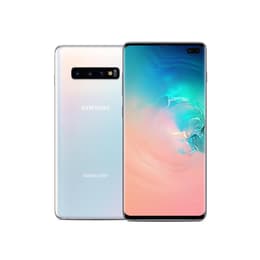
Galaxy S10 • Unlocked vs Galaxy S10+ • Unlocked

Galaxy S10 • Unlocked
Starting at

Refurbished price:$148.00

Versus $669.00 new

See options
Galaxy S10+ • Unlocked
Starting at

Refurbished price:$165.00

Versus $719.00 new

See options

Ratings

The Samsung Galaxy S10 and Galaxy S10 Plus, both released in March 2019, represent Samsung's flagship smartphone offerings from that year. While they share a common foundation in design and core features, the primary distinctions lie in their physical dimensions, battery capacities, and front-facing camera configurations. Both devices launched with Android 9.0 Pie and were eligible for major operating system updates up to Android 12, running Samsung's One UI.

Scores

Durability

These devices, launched in early 2019, have reached the end of their official software update cycle, which is a key factor in their long-term usability. However, their robust build quality contributes to their practical lifespan.

  • Software Support: Both the Galaxy S10 and S10 Plus received three major Android operating system updates, concluding with Android 12. Regular security updates for these models largely ceased around March 2023, fulfilling Samsung's initial commitment of approximately four years of security patches.
  • Physical Durability: Both phones feature a glass and aluminum construction, with Corning Gorilla Glass 6 protecting the front display and Gorilla Glass 5 on the rear. They also carry an IP68 rating for dust and water resistance, indicating protection against immersion in water up to 1.5 meters for 30 minutes.
  • Expected Lifespan: Despite the cessation of official software updates, many users in 2024 and 2025 still report satisfactory performance for daily tasks. The practical lifespan can be extended through battery replacements, which users frequently mention as a viable option to refresh the device's endurance.

Release Year

2019

2019

Last OS Compatibility

No

No

OS

Android

Android

Foldable

No

No

Performance

The performance of the Galaxy S10 and S10 Plus is largely similar for most tasks, stemming from their shared internal components, though the S10 Plus offers configurations with more memory.

  • Processing Power: Both models are equipped with the same generation of processor, which allows them to handle demanding applications, multitasking, and graphic-intensive games smoothly. Users generally report a fluid experience for everyday operations, even several years after release.
  • Memory and Storage: Both devices typically come with 8GB of RAM, providing ample capacity for running multiple applications simultaneously without significant slowdowns. The Galaxy S10 Plus, however, was also available in a configuration with 12GB of RAM, paired with a higher internal storage option, which could offer a slight edge in extreme multitasking scenarios. Both phones offer expandable storage via a microSD card slot, supporting up to 512GB.
  • Battery Endurance: The Galaxy S10 features a 3400mAh battery, while the S10 Plus houses a larger 4100mAh battery. This difference translates to a noticeable advantage for the S10 Plus in terms of battery life, with tests showing it lasting significantly longer on a single charge. Users prioritizing extended usage without frequent recharging will find the S10 Plus more suitable.

Memory (GB)

8 GB

8 GB

Screen quality

Both the Galaxy S10 and S10 Plus feature high-quality displays that deliver a vibrant visual experience, with the main difference being the overall screen size.

  • Display Technology and Clarity: Both smartphones utilize Samsung's Dynamic AMOLED+ display technology, known for producing deep blacks, vibrant colors, and excellent contrast. They share the same Wide Quad HD+ resolution (1440 x 3040 pixels), ensuring sharp and detailed visuals for all types of content.
  • Screen Size and Viewing Experience: The Galaxy S10 comes with a 6.1-inch display, offering a balanced viewing area that remains comfortable for one-handed use. The Galaxy S10 Plus, with its larger 6.4-inch display, provides a more expansive canvas, which can enhance the experience for media consumption, gaming, and productivity tasks.
  • Brightness and Features: Both displays offer high brightness levels, reaching up to 1200 nits in peak conditions and around 800 nits in auto mode, ensuring good visibility even in bright outdoor environments. They also support HDR10+, which optimizes dynamic range for compatible video content. The screens feature curved edges and a punch-hole cutout for the front camera(s), maximizing the screen-to-body ratio.

Resolution

1440 x 3040

1440 x 3040

Screen type

Dynamic AMOLED

Dynamic AMOLED

Audiovisual

The camera systems on the Galaxy S10 and S10 Plus are largely identical for rear photography, with a key distinction in their front-facing camera capabilities.

  • Rear Camera System: Both devices are equipped with a versatile triple-lens rear camera setup. This includes a 12-megapixel main sensor with a dual aperture (f/1.5 and f/2.4) for adapting to various lighting conditions, a 16-megapixel ultra-wide-angle lens offering a 123-degree field of view, and a 12-megapixel telephoto lens capable of 2x optical zoom. This configuration allows for a range of photographic styles, from expansive landscapes to detailed close-ups.
  • Front Camera Configuration: The Galaxy S10 features a single 10-megapixel front-facing camera. In contrast, the Galaxy S10 Plus includes a dual front camera system, adding an 8-megapixel depth sensor alongside the 10-megapixel main sensor. This secondary sensor on the S10 Plus enhances depth perception, leading to more refined portrait mode selfies with improved background blur.
  • Video and Audio: Both phones are capable of recording video at up to 4K resolution at 60 frames per second and support HDR video capture. They also feature Samsung's Super Steady video stabilization for smoother footage. The microphone quality is suitable for calls and video recording, and both devices offer a good media consumption experience through their stereo speakers.

Main camera

12 megapixels

12 megapixels

Front camera

10 megapixels

10 megapixels

Miscellaneous

Beyond their core functionalities, both Galaxy S10 models offer a range of practical features and design elements that influence daily use, with differences primarily in size and weight.

  • Physical Design and Handling: The Galaxy S10 measures 149.9 x 70.4 x 7.8 mm and weighs 157g, making it a more compact and lighter device that is generally easier for one-handed operation. The Galaxy S10 Plus is larger at 157.6 x 74.1 x 7.8 mm and weighs 175g (or 198g for ceramic variants), offering a more substantial feel and a larger screen, though it might be less comfortable for users with smaller hands.
  • Connectivity and Ports: Both devices support modern connectivity standards, including Wi-Fi 6 for faster wireless internet and Bluetooth 5.0 for efficient accessory pairing. Notably, they were among the last in the Galaxy S series to retain a 3.5mm headphone jack, a feature valued by many users. Both charge via a USB-C port.
  • Biometric Security and Other Features: For secure unlocking, both phones incorporate an in-display ultrasonic fingerprint sensor and support face recognition. They also include useful sensors such as a heart rate monitor and SpO2 sensor. Both models support Wireless PowerShare, allowing them to wirelessly charge other compatible devices, and offer fast wireless charging 2.0.

Weight

6 oz

6 oz

Screen size (inches)

6.1

6.4

Network

LTE

LTE

SIM card

Physical SIM

Physical SIM

Carrier compatibility

Unlocked

Unlocked

User sentiment for both the Galaxy S10 and S10 Plus generally highlights their enduring quality and feature set. Many users praise the S10 for its comfortable, compact form factor and excellent display, noting that it still performs admirably for everyday tasks. However, a common criticism for the standard S10 revolves around its battery life, which some users find to be average or requiring replacement after several years of use.

The Galaxy S10 Plus, on the other hand, is frequently lauded for its significantly better battery endurance and larger display, making it a preferred choice for media consumption and power users. Its larger size, while beneficial for screen real estate, can be a minor drawback for those who prefer a more compact device. Both devices are appreciated for their inclusion of a headphone jack and expandable storage, features that have become less common in newer smartphones.

For users prioritizing a more compact and easily manageable device for one-handed use, the Galaxy S10 presents a compelling option. Conversely, those who value extended battery life, a larger screen for immersive viewing, and potentially higher RAM and storage configurations will find the Galaxy S10 Plus better suited to their needs. Both models continue to offer a solid smartphone experience, and considering a quality-assured refurbished option for either device can be a sustainable choice for consumers.


See all articles

Our recent comparisons