Google Pixel Fold • Unlocked vs iPhone 15 • Unlocked

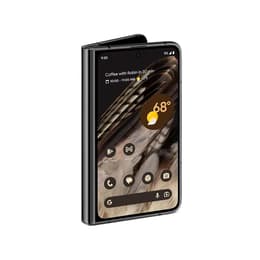
Google Pixel Fold • Unlocked
Starting at

Refurbished price:$591.00

Versus $1,799.00 new

See options
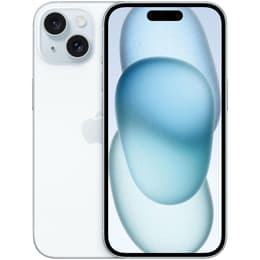
iPhone 15 • Unlocked
Starting at

Refurbished price:$359.99

Versus $729.00 new

See options

Ratings

The Google Pixel Fold, released in June 2023, and the iPhone 15, launched in September 2023, represent distinct approaches to modern smartphone design and functionality. While the Pixel Fold offers a unique foldable form factor running on Android, the iPhone 15 provides a traditional smartphone experience powered by iOS. The primary differentiators lie in their display configurations and operating system ecosystems.

Scores

Durability

When considering the long-term usability of these devices, their release timelines and software support policies are key factors.

  • Software Longevity: The Google Pixel Fold is set to receive five years of OS and security updates from its release, extending its support until at least June 2028 for security updates. The iPhone 15, while not having a publicly stated end-of-life for software support, typically receives major iOS updates for approximately five to six years from its launch.
  • Repairability: The iPhone 15 has seen improvements in repairability, with some assessments giving it a score of 7 out of 10, partly due to enhanced repair assistance features. The Google Pixel Fold received a repairability score of 6.5 out of 10 from one review, noting that while self-repairs can be difficult, they are manageable. Google also provides service manuals and spare parts through partners, making many components independently replaceable.
  • Physical Durability: The iPhone 15 features a Ceramic Shield front cover and an IP68 rating for dust and water resistance. The Pixel Fold also carries an IPX8 water resistance rating and uses Gorilla Glass Victus for its cover screen. The foldable nature of the Pixel Fold introduces a hinge mechanism and a flexible internal display, which inherently presents a different set of durability considerations compared to a rigid smartphone.

Release Year

2023

2023

Last OS Compatibility

Yes

Yes

OS

Android

iOS

Foldable

Yes

No

Performance

Both devices offer robust performance for daily tasks, though their underlying architectures and multitasking approaches differ.

  • Processing Power: The iPhone 15 is equipped with a powerful processor that delivers fast, fluid, and reliable performance for everyday use. It handles demanding applications and multitasking smoothly, representing a significant performance upgrade for users coming from older iPhone models. The Google Pixel Fold features a processor designed to offer impressive AI-backed processing capabilities, performing comparably to other high-end Pixel devices for general usage and benchmarking.
  • Multitasking and Responsiveness: With 12GB of RAM, the Pixel Fold is well-suited for extensive multitasking, especially when utilizing its large internal display for multiple applications simultaneously. The iPhone 15, with 6GB of RAM, provides a responsive experience for switching between apps and managing various tasks within the iOS environment.
  • Storage Options: The iPhone 15 is available with storage capacities of 128GB, 256GB, and 512GB. The Google Pixel Fold offers 256GB and 512GB storage options.
  • Battery Behavior: The iPhone 15's battery is designed to last a full day for most users under typical usage conditions, including messaging, calls, browsing, and light gaming. Some heavy users, however, have reported needing to charge more frequently. The Pixel Fold is also designed for all-day battery life, supporting its dual-screen functionality.

Memory (GB)

12 GB

6 GB

Screen quality

The display experience is a primary distinguishing factor between these two smartphones, with the Pixel Fold offering a unique dual-screen setup.

  • Display Technology and Size: The Google Pixel Fold features two OLED displays: a 7.6-inch internal folding display and a 5.8-inch external cover display. The internal display has a resolution of 2208x1840 pixels (380 ppi), while the external display has a resolution of 2092x1080 pixels (408 ppi). The iPhone 15 comes with a single 6.1-inch Super Retina XDR OLED display with a resolution of 2556x1179 pixels (460 ppi).
  • Brightness and Clarity: Both of the Pixel Fold's displays support a 120Hz refresh rate, with the internal display reaching 1450 nits peak brightness and the external display reaching 1550 nits peak brightness. The iPhone 15's display features a 60Hz refresh rate, with a typical brightness of 1000 nits, peak HDR brightness of 1600 nits, and an impressive peak outdoor brightness of 2000 nits.
  • User Experience: The Pixel Fold's wider external display aspect ratio aims to provide a more comfortable experience when used unfolded compared to some other foldable devices. The iPhone 15 incorporates the Dynamic Island, an interactive area around the front camera and sensors that displays alerts and background activities.

Resolution

1840 x 2208

1179 x 2556

Screen type

Foldable OLED

Super Retina XDR OLED

Audiovisual

Both devices offer advanced camera systems, each with distinct strengths in photography and videography.

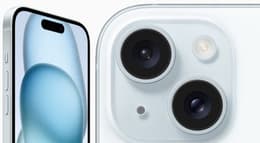
  • Rear Camera Systems: The Google Pixel Fold features a triple rear camera setup, including a 48MP main sensor, a 10.8MP ultrawide lens, and a 10.8MP telephoto lens capable of 5x optical zoom and 20x Super Res Zoom. The iPhone 15 is equipped with a dual rear camera system, comprising a 48MP main camera and a 12MP ultrawide camera, offering 2x telephoto zoom capabilities through its main sensor.
  • Photography Features: The Pixel Fold leverages Google's computational photography, including features like Real Tone for accurate skin tones and Night Sight for low-light conditions. The iPhone 15 also provides an advanced camera system known for its photo and video quality, with users often praising its capabilities for everyday shots.
  • Front-Facing Cameras: For selfies and video calls, the Pixel Fold has a 9.5MP camera on its outer display and an 8MP camera on its inner folding display. The iPhone 15 features a 12MP front camera.
  • Audio Experience: Both devices offer quality speaker output for media consumption and clear microphone performance for calls and recordings, aligning with expectations for modern smartphones.

Main camera

48 megapixels

48 megapixels

Front camera

8 megapixels

12 megapixels

Miscellaneous

Beyond core features, several practical elements contribute to the overall user experience of these smartphones.

  • Connectivity and Ports: Both the Pixel Fold and iPhone 15 support 5G connectivity and modern Wi-Fi standards (802.11 ax for Pixel Fold, 802.11 b/g/n/ac/ax for iPhone 15). A notable difference is the port type: the Pixel Fold uses USB Type-C, as does the iPhone 15, marking a transition for Apple's standard models.
  • Biometric Security: The iPhone 15 relies on Face ID for secure facial recognition. The Pixel Fold incorporates a fingerprint sensor, likely side-mounted, for biometric authentication.
  • Physical Design and Handling: The Pixel Fold, when folded, measures 139.7 x 79.5 x 12.1mm and weighs 283 grams. Unfolded, it is 139.7 x 158.7 x 5.8mm. Its design was noted as being among the thinnest foldables at its launch. The iPhone 15 measures 147.60 x 71.60 x 7.80mm and weighs 171 grams, offering a more traditional, lighter smartphone form factor. Both devices feature aluminum frames, with the iPhone 15 having a color-infused glass back and Ceramic Shield front.
  • Additional Sensors: Both phones include a standard array of sensors such as accelerometers, gyroscopes, and ambient light sensors.

Weight

7 oz

171 oz

Screen size (inches)

7.6

6.1

Network

5G

5G

SIM card

Physical SIM + eSIM

eSIM

Carrier compatibility

Unlocked

Unlocked

Connector

USB-C

USB-C (USB 2)

User feedback for the Google Pixel Fold often highlights its innovative foldable design and the versatility of having both a traditional smartphone screen and a larger tablet-like display. Users appreciate its camera capabilities, which benefit from Google's computational photography. Some initial concerns revolved around the aspect ratio of the internal display taking some getting used to.

For the iPhone 15, common praise includes its smooth and responsive performance, the quality of its camera system, and the convenience of the new USB-C port. The Dynamic Island feature is also frequently mentioned as a useful evolution of the display notch. However, some users have reported instances of overheating and, for heavy usage, battery life has been a point of concern for a segment of the user base.

Users prioritizing a large, adaptable screen for multitasking, content consumption, and a distinct form factor may find the Google Pixel Fold aligns well with their needs. Its Android operating system also offers a high degree of customization. Conversely, individuals seeking a consistently refined and powerful traditional smartphone experience, with a strong ecosystem and robust software support, might lean towards the iPhone 15. Its compact size and advanced camera system make it suitable for everyday use and photography enthusiasts.

For those considering either device, exploring quality-assured refurbished options can provide an eco-friendly alternative to access these technologies.

See all articles

Our recent comparisons