
Compare models
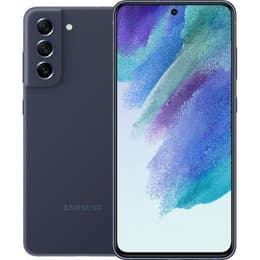
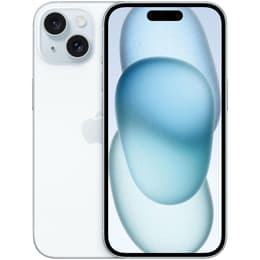
Galaxy S21 FE 5G • Locked AT&T vs iPhone 15 • Unlocked
- 1-year warranty
- Free standard shipping
- Free 30-day returns
Differences at a glance
The Samsung Galaxy S21 FE 5G, released in January 2022, and the Apple iPhone 15, launched in September 2023, represent distinct approaches to the modern smartphone experience. While both devices offer robust performance and advanced camera systems, they differ significantly in their operating systems, display technologies, and overall design philosophies. The Galaxy S21 FE 5G runs on the Android platform, offering a customizable interface, whereas the iPhone 15 operates on Apple's iOS, known for its integrated ecosystem and streamlined user experience.
Available Models
Color
Storage (GB)
Scores
Durability
The longevity of a smartphone is influenced by its release timeline, software support, and physical durability. These two devices offer different expectations in terms of their practical lifespan.
- Release Timeline & Software Support: The Galaxy S21 FE 5G, introduced in early 2022, typically receives four years of Android operating system updates and five years of security updates from its release. The iPhone 15, launched in late 2023, is guaranteed a minimum of five years of software updates from its initial supply date, with Apple historically providing major iOS updates for five to seven years and security support for even longer.
- Physical Durability: Both devices feature IP68 ratings for dust and water resistance, indicating protection against submersion in up to 6 meters of water for 30 minutes. The Galaxy S21 FE 5G uses Gorilla Glass Victus for its display protection and has a plastic back with an aluminum frame. The iPhone 15 incorporates a Ceramic Shield front cover and a color-infused glass back, framed by aerospace-grade aluminum.
- Repairability: The Galaxy S21 FE 5G has been noted for a decent repairability score, with some sources giving it a 7.5/10 or 8.2/10, suggesting that repairs might be less challenging. The iPhone 15 initially received a lower repairability score, but subsequent assessments have seen it improve to 7/10, indicating Apple's efforts to make the device more repair-friendly.
Release Year
2022
2023
Last OS Compatibility
Yes
Yes
OS
Android
iOS
Foldable
No
No
Performance
Performance in daily use, from app handling to gaming, is a key consideration for smartphone users. Both the Galaxy S21 FE 5G and the iPhone 15 deliver capable experiences, though with different underlying architectures.
- Everyday Responsiveness: The iPhone 15 provides a fast, fluid, and reliable experience for daily tasks, with smooth app opening, multitasking, and browsing. The Galaxy S21 FE 5G also offers strong performance for heavy tasks and games, though some users have noted potential heating with excessive use, which can affect battery and refresh rate stability.
- Multitasking and App Handling: The iPhone 15 is equipped with 6GB of RAM, contributing to its ability to manage multiple applications smoothly. The Galaxy S21 FE 5G offers configurations with either 6GB or 8GB of RAM, providing ample capacity for multitasking on the Android platform.
- Storage Options: The iPhone 15 is available with 128GB, 256GB, or 512GB of internal storage. The Galaxy S21 FE 5G comes with 128GB or 256GB storage options. Neither device offers expandable storage via a microSD card.
- Battery Behavior: The iPhone 15's battery is designed to comfortably last a full day for most users, showing improved efficiency. The Galaxy S21 FE 5G, with its 4500 mAh battery, also aims for all-day power, supporting 25W wired and 15W wireless charging.
Screen quality
The visual experience is a primary interaction point for smartphones, and both devices offer high-quality displays with distinct characteristics.
- Display Technology and Clarity: The iPhone 15 features a 6.1-inch Super Retina XDR OLED display, delivering sharp visuals with a resolution of 2556x1179 pixels and a pixel density of approximately 460 ppi. The Galaxy S21 FE 5G sports a larger 6.4-inch Dynamic AMOLED 2X display with a Full HD+ resolution of 1080 x 2400 pixels, resulting in about 401 ppi. Both OLED panels offer vibrant colors and deep blacks.
- Brightness Levels: For outdoor visibility, the iPhone 15 can reach a peak outdoor brightness of up to 2000 nits, with typical brightness at 1000 nits and HDR peak brightness at 1600 nits. The Galaxy S21 FE 5G offers a peak brightness of up to 1200 nits.
- Refresh Rate and Smoothness: A notable difference lies in the refresh rate. The Galaxy S21 FE 5G features an adaptive 120Hz refresh rate, providing smoother scrolling and more fluid animations. The iPhone 15 maintains a standard 60Hz refresh rate.
- Screen Features: The iPhone 15 introduces the Dynamic Island, a pill-shaped area at the top of the display that dynamically adapts to show alerts and background activities.
Resolution
1080 x 2340
1179 x 2556
Screen type
Dynamic AMOLED 2X
Super Retina XDR OLED
Audiovisual
Both smartphones are equipped with capable camera systems designed for various photography and videography needs, though they approach imaging with different hardware configurations.
- Rear Camera Systems: The iPhone 15 features a dual-camera setup with a 48MP main sensor (f/1.6) that uses sensor-shift optical image stabilization and can achieve 2x telephoto zoom through a sensor crop. It also includes a 12MP ultrawide camera (f/2.4). The Galaxy S21 FE 5G offers a triple-camera system, comprising a 12MP wide-angle lens (f/1.8, OIS), an 8MP telephoto lens with 3x optical zoom (f/2.4, OIS), and a 12MP ultrawide lens (f/2.2).
- Photography Performance: The iPhone 15's 48MP main camera is designed to capture detailed photos, including super-high-resolution options, and features an Auto Portrait Mode. The Galaxy S21 FE 5G's dedicated telephoto lens provides optical zoom capabilities, which can be beneficial for capturing distant subjects.
- Video Recording: Both devices support 4K video recording at 30 or 60 frames per second from their main and front cameras.
- Front Camera: For selfies and video calls, the iPhone 15 has a 12MP front camera (f/1.9). The Galaxy S21 FE 5G is equipped with a higher-resolution 32MP front camera (f/2.2).
Main camera
12 megapixels
48 megapixels
Front camera
32 megapixels
12 megapixels
Miscellaneous
Beyond core performance and display, several practical elements contribute to the overall user experience and device utility.
- Connectivity: Both the Galaxy S21 FE 5G and the iPhone 15 support 5G cellular networks and Wi-Fi 6 for fast wireless connectivity. The iPhone 15 uses Bluetooth 5.3, while the Galaxy S21 FE 5G uses Bluetooth 5.0.
- Ports and Biometrics: The iPhone 15 marks a significant change by adopting a USB-C port for charging and data transfer, aligning with industry standards. The Galaxy S21 FE 5G also features a USB-C port. For security, the iPhone 15 relies on Face ID for facial recognition. The Galaxy S21 FE 5G incorporates an optical under-display fingerprint sensor.
- Design and Handling: The iPhone 15 measures 147.6 x 71.6 x 7.8 mm and weighs 171 grams. The Galaxy S21 FE 5G is slightly larger and heavier at 155.7 x 74.5 x 7.9 mm and 177 grams. Both devices feature aluminum frames. The iPhone 15 has a color-infused glass back, while the Galaxy S21 FE 5G has a plastic back.
Weight
7 oz
171 oz
Screen size (inches)
6.4
6.1
Network
5G
5G
SIM card
Physical SIM
eSIM
Carrier compatibility
AT&T
Unlocked
What the community thinks
User sentiment for the iPhone 15 often highlights its consistent performance, reliable battery life, and excellent cameras as key strengths. The introduction of the Dynamic Island to the base model and the switch to USB-C have also been well-received. Some common criticisms have included the 60Hz display refresh rate, which is lower than many Android counterparts, and initial reports of overheating, though Apple addressed these concerns with software updates.
The Galaxy S21 FE 5G is praised for its vibrant 120Hz AMOLED display and capable camera system, particularly its dedicated telephoto lens. Users appreciate its overall performance for demanding tasks. However, some feedback points to potential heating issues during intensive use and a less premium feel due to its plastic back compared to other flagship devices.
Users prioritizing a highly integrated ecosystem, consistent software updates over a longer period, and a compact design with advanced facial recognition may find the iPhone 15 well-suited to their needs. Its strong performance for demanding applications and robust video capabilities also make it a compelling choice for content creators or those who value a streamlined user experience. On the other hand, users who prefer a larger, high-refresh-rate display for smoother scrolling, a dedicated optical zoom lens, and the flexibility of the Android operating system might lean toward the Galaxy S21 FE 5G. Its optical fingerprint sensor offers an alternative biometric security method.
Both devices are available as quality-assured refurbished options, providing an eco-friendly alternative for consumers looking to make informed purchasing decisions.