Compare models
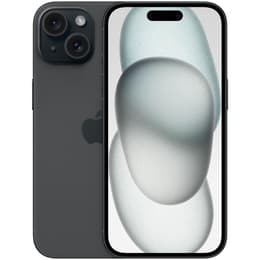
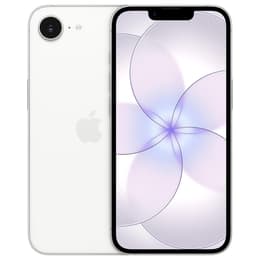
iPhone 15 • Unlocked vs iPhone 17e • Unlocked
- 1-year warranty
- Free standard shipping
- Free 30-day returns
Differences at a glance
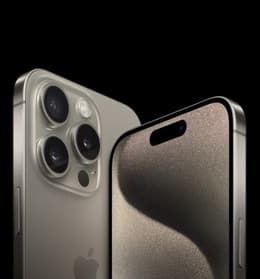
The iPhone 15 (2023) and the iPhone 17e (2026) are contemporary smartphone options designed for users seeking reliable daily communication, efficient software integration, and practical modern features. While both models share a familiar 6.1-inch form factor, the newer iPhone 17e introduces hardware refinements and internal updates that distinguish it from the earlier iPhone 15. Both devices operate on Apple's iOS ecosystem, providing a consistent user interface while incorporating different generations of internal processing hardware.
Available Models
Color
Storage (GB)
Scores
Durability
When evaluating hardware longevity and software support, both devices offer robust build qualities designed to withstand years of routine daily use, though their release timelines differ by nearly three years.
- Software support timeline: The iPhone 17e benefits from a later release year, positioning it to receive official operating system updates and security patches for a longer duration compared to the iPhone 15.
- Repairability and build: Both models utilize durable aluminum framing and glass construction with high-level water and dust resistance, maintaining standard repair pathways through authorized service centers.
- Expected lifespan: Daily users can expect both smartphones to maintain stable performance over several years, with the newer hardware inside the iPhone 17e offering extended headroom for future software demands.
Release Year
2023
2026
OS
iOS
iOS
Foldable
No
No
Performance
Handling everyday apps, multitasking, and media playback differs across these models due to variations in internal component generations and memory capacity.
- Storage configurations: The iPhone 15 starts with 128 GB of base storage, whereas the iPhone 17e begins at a larger 256 GB capacity to accommodate larger media libraries.
- Multitasking and responsiveness: The iPhone 17e incorporates increased random access memory and a more recent processor generation, resulting in smoother switching between demanding applications and resource-heavy tasks.
- Battery endurance: Both models manage power efficiently for a full day of standard mixed usage, though physical battery capacities reflect different internal layouts and component power draws.
Screen quality
Viewing experiences on both devices center around bright, sharp OLED panels that deliver clear text and vivid color representation for daily media consumption.
- Display specifications: Both models feature a 6.1-inch Super Retina XDR screen with high pixel density, ensuring sharp details whether reading articles or viewing personal photographs.
- Outdoor visibility: High peak brightness levels on both displays allow for clear legibility when viewing content under direct sunlight outdoors.
- Visual interaction: Both screens support wide color gamuts and responsive touch inputs, providing smooth navigation across menus and web browsers.
Resolution
1179 x 2556
2532 x 1170
Audiovisual
Capturing photos and recording video on these devices relies on advanced computational photography tools designed to simplify everyday shooting scenarios.
- Main camera capabilities: Both models feature high-resolution primary sensors capable of capturing detailed shots in varied lighting conditions, alongside optical image stabilization for steady videos.
- Video recording: Users can record high-definition video with robust stabilization and stereo audio capture, making both phones suitable for casual content creation.
- Audio and media output: Built-in stereo speakers deliver clear sound for hands-free calls, podcasts, and video playback without requiring external accessories.
Main camera
48 megapixels
48 megapixels
Front camera
12 megapixels
12 megapixels
Miscellaneous
Practical physical attributes and connectivity standards define how each device integrates into accessories and daily travel routines.
- Connectivity standards: Both smartphones support fast 5G cellular networks, modern Wi-Fi protocols, and Bluetooth for reliable wireless accessory pairing.
- Physical dimensions: Weighing very similarly around 170 grams with identical 6.1-inch display footprints, both models offer comfortable one-handed handling and pocket-friendly proportions.
- Biometrics and charging: Both devices rely on secure facial recognition for unlocking and authorizations, while utilizing universal USB-C connectivity for wired charging and data transfer.
Weight
171 oz
169 oz
Screen size (inches)
6.1
6.1
Network
5G
5G
SIM card
eSIM
eSIM
Carrier compatibility
Unlocked
Unlocked
Connector
USB-C (USB 2)
USB-C (USB 2)
What the community thinks
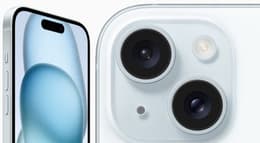
User discussions and community feedback indicate that both smartphones satisfy everyday communication and productivity needs effectively, though user preferences diverge based on specific feature priorities. Users prioritizing expanded baseline storage capacity and longer software support horizons often lean toward the iPhone 17e. Conversely, users seeking a proven, streamlined everyday device with a dual-camera layout find the iPhone 15 well-suited to their daily routines. For consumers exploring sustainable technology paths, choosing a quality-assured refurbished option from Back Market provides a reliable, eco-friendly alternative that extends device life cycles without compromising on performance. Selecting between the two models ultimately depends on which generation of internal features and storage tiers best aligns with personal usage habits.