
iPhone 11 Pro • Unlocked vs iPhone SE (2022) • Locked Verizon

iPhone 11 Pro • Unlocked
Starting at

Refurbished price:$200.00

Versus $749.00 new

See options
iPhone SE (2022) • Locked Verizon
Starting at

Refurbished price:$124.00

Versus $429.00 new

See options

Ratings

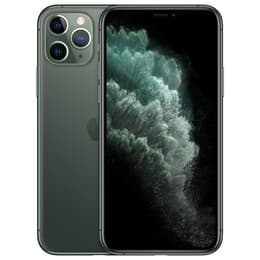
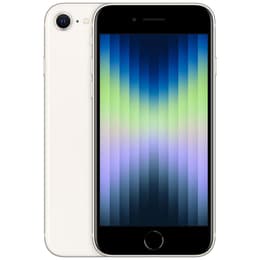
The iPhone 11 Pro, released in September 2019, and the iPhone SE (2022), launched in March 2022, represent different approaches within Apple's smartphone lineup. While both devices operate on Apple's iOS, they cater to distinct user preferences through their design, display technology, and camera systems. The iPhone 11 Pro offers a more expansive, high-quality display and a versatile multi-camera setup, whereas the iPhone SE (2022) provides a compact form factor with a more recent processor and 5G connectivity.

Scores

Durability

When considering the practical lifespan of these devices, several factors come into play, including their release timelines, software support, and repairability.

  • Release Timeline: The iPhone 11 Pro was introduced in September 2019, making it an older model compared to the iPhone SE (2022), which launched in March 2022. This difference in release date directly impacts their expected software support.
  • Software Longevity: The iPhone SE (2022) is expected to receive iOS updates for a longer period, potentially until around 2033, due to its newer processor and later release. The iPhone 11 Pro is anticipated to receive updates until approximately 2026-2028. Both devices are currently compatible with iOS 26.
  • Repairability: Both models generally offer average repairability. Common components like the battery and screen are often replaceable, though specialized tools may be required. The iPhone SE (2022) shares a design with older models, which can sometimes mean parts are readily available.

Release Year

2019

2022

Last OS Compatibility

Yes

Yes

OS

iOS

iOS

Foldable

No

No

Performance

The performance of a smartphone is largely determined by its internal components, influencing how smoothly apps run and how efficiently tasks are handled.

  • Processor Capabilities: The iPhone SE (2022) features a more recent processor, which allows it to handle demanding applications and multitasking with greater efficiency. This translates to quicker app loading times and a more responsive overall user experience. The iPhone 11 Pro, while still capable, uses an older generation processor.
  • System Responsiveness: Users of the iPhone SE (2022) will experience a snappier interface and smoother transitions, particularly when navigating between multiple applications or engaging in graphics-intensive activities. The iPhone 11 Pro provides a solid performance for everyday tasks, but the newer model offers a noticeable improvement in speed and future-readiness.
  • Storage Options: Both devices offer various storage configurations. The iPhone 11 Pro was available in 64GB, 256GB, and 512GB options, while the iPhone SE (2022) comes in 64GB, 128GB, and 256GB.

Memory (GB)

4 GB

4 GB

Screen quality

The display is a primary interface for smartphone interaction, and these two models offer distinct viewing experiences.

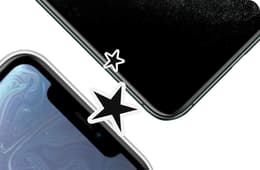
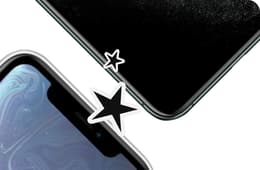
  • Display Technology: The iPhone 11 Pro features a 5.8-inch Super Retina XDR OLED display, which provides deep blacks, high contrast, and vibrant colors. In contrast, the iPhone SE (2022) utilizes a 4.7-inch Retina HD IPS LCD display. OLED technology generally offers a more immersive visual experience compared to LCD.
  • Resolution and Clarity: The iPhone 11 Pro has a resolution of 2436x1125 pixels at 458 pixels per inch (ppi), resulting in a very sharp and detailed image. The iPhone SE (2022) has a resolution of 1334x750 pixels at 326 ppi. While both offer clear visuals, the iPhone 11 Pro's higher pixel density provides finer detail.
  • Brightness and Features: The iPhone 11 Pro offers a typical brightness of 800 nits and a peak HDR brightness of 1200 nits, making it highly visible in various lighting conditions and excellent for HDR content. The iPhone SE (2022) has a typical brightness of 625 nits. Both displays include True Tone and Wide Color (P3) for accurate color representation.

Resolution

1125 x 2436

750 x 1334

Screen type

Super Retina XDR OLED

Retina IPS LCD

Audiovisual

Camera capabilities are a significant consideration for many users, and these iPhones offer different photographic strengths.

  • Camera System: The iPhone 11 Pro features a versatile triple 12MP camera system, including Ultra Wide, Wide, and Telephoto lenses, providing more photographic flexibility. The iPhone SE (2022) has a single 12MP main camera.
  • Photography Performance: The iPhone 11 Pro excels in various scenarios with features like Night mode, Deep Fusion, and Smart HDR, allowing for detailed photos in challenging lighting. Its telephoto lens enables optical zoom. The iPhone SE (2022) benefits from the newer processor's computational photography, offering Smart HDR 4 and Deep Fusion for improved detail and dynamic range in good lighting, but it lacks a dedicated Night mode and optical zoom.
  • Video Recording and Front Camera: Both devices support 4K video recording up to 60 frames per second with optical image stabilization. The iPhone 11 Pro has a 12MP TrueDepth front camera capable of 4K video, while the iPhone SE (2022) has a 7MP front camera that records in 1080p HD.

Main camera

12 megapixels

12 megapixels

Front camera

12 megapixels

7 megapixels

Miscellaneous

Beyond core features, several practical elements contribute to the overall user experience and daily functionality of these smartphones.

  • Connectivity: A key difference is 5G support; the iPhone SE (2022) includes sub-6 GHz 5G connectivity, offering faster cellular data speeds where available, which the iPhone 11 Pro does not. Both support Wi-Fi 6 (802.11ax) and Bluetooth 5.0.
  • Ports and Sensors: Both devices use a Lightning connector for charging and data transfer and lack a traditional headphone jack. The iPhone 11 Pro features Face ID for secure authentication, while the iPhone SE (2022) retains the classic Home button with Touch ID fingerprint recognition.
  • Design and Build: The iPhone 11 Pro has a more premium feel with a stainless steel frame and a matte glass back, offering IP68 water and dust resistance (up to 4 meters for 30 minutes). The iPhone SE (2022) features an aluminum frame and glass back, with IP67 water and dust resistance (up to 1 meter for 30 minutes). The iPhone 11 Pro is slightly larger and heavier at 144 x 71.4 x 8.1mm and 188g, compared to the iPhone SE (2022)'s 138.4 x 67.3 x 7.3mm and 144g.

Weight

7 oz

3 oz

Screen size (inches)

5.8

4.7

Network

LTE

5G

SIM card

Physical SIM + eSIM

Physical SIM + eSIM

Carrier compatibility

Unlocked

Verizon

Connector

Lightning

Lightning

User sentiment often highlights the iPhone 11 Pro's strengths in its display and camera system. Many users praise its OLED screen for vibrant visuals and its triple-lens camera for versatility, especially the inclusion of a telephoto lens and Night mode. Criticisms sometimes point to its older processor compared to newer models and the eventual end of software support.

For the iPhone SE (2022), common praise centers on its compact size, the convenience of Touch ID, and the powerful performance delivered by its modern processor. However, frequent concerns include its smaller, LCD display, the absence of Night mode in its camera, and its design, which some perceive as dated.

Users prioritizing a larger, high-quality OLED display and a comprehensive camera system with optical zoom and Night mode may find the iPhone 11 Pro better suited to their needs. Conversely, those who value a compact device, the familiarity of Touch ID, a more recent processor for long-term performance, and 5G connectivity will likely lean towards the iPhone SE (2022). Both devices offer a reliable Apple experience, and choosing between them often comes down to these specific preferences. For those seeking a quality-assured refurbished option, both models are available, providing an eco-friendly alternative for extending their lifecycle.
See all articles

Our recent comparisons