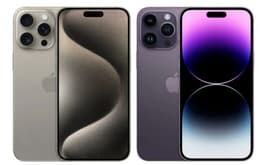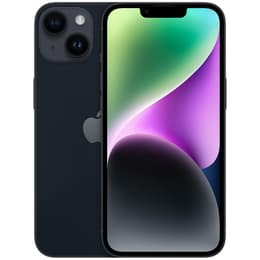
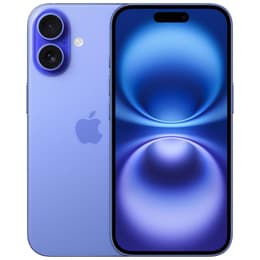
iPhone 14 • Locked AT&T vs iPhone 16 • Unlocked

iPhone 14 • Locked AT&T
Starting at

Refurbished price:$225.72

Versus $629.00 new

See options
iPhone 16 • Unlocked
Starting at

Refurbished price:$516.00

Versus $729.00 new

See options

Ratings

The iPhone 14, released in September 2022, and the iPhone 16, launched in September 2024, represent different generations within Apple's standard smartphone lineup. While both devices offer a familiar user experience powered by iOS, the iPhone 16 introduces advancements in processing power, camera capabilities, and overall efficiency. These differences cater to varying user needs, from those seeking a reliable everyday device to users desiring the latest technological enhancements.

Scores

Durability

When considering the longevity of these devices, several factors come into play, including software support and physical resilience.

  • Release Timeline: The iPhone 14 was introduced in September 2022, while the iPhone 16 followed two years later in September 2024. This two-year gap typically translates to a longer period of official software updates for the newer model.
  • Software Longevity: The iPhone 14 launched with iOS 16, and the iPhone 16 with iOS 18. Apple generally provides 5-6 years of major iOS updates for its devices. Consequently, the iPhone 16 is expected to receive software support for a longer duration, offering extended access to new features and security updates.
  • Physical Durability: Both models feature a Ceramic Shield front cover and an aluminum design, contributing to their resistance against drops and scratches. They also share an IP68 rating for dust and water resistance, allowing submersion up to 6 meters for 30 minutes.

Release Year

2022

2024

Last OS Compatibility

Yes

Yes

Foldable

No

No

Performance

The internal components of a smartphone significantly influence its responsiveness and ability to handle demanding applications. The iPhone 14 and iPhone 16 offer distinct performance profiles.

  • Processing Power: The iPhone 14 is equipped with a capable processor that handles everyday tasks, app loading, and general multitasking smoothly. The iPhone 16, featuring a newer generation processor, delivers enhanced performance, resulting in faster app launches, more fluid navigation, and improved handling of graphically intensive games and complex applications.
  • Multitasking and Responsiveness: The iPhone 14 includes 6GB of RAM, which supports efficient multitasking for most users. The iPhone 16 steps up to 8GB of RAM, providing additional headroom for keeping more applications active in the background and ensuring a more seamless transition between them, particularly for users who frequently switch between multiple demanding apps.
  • Battery Behavior: The iPhone 14 generally provides a full day of use for most users, with up to 20 hours of video playback. The iPhone 16 offers slightly improved battery life, rated for up to 22 hours of video playback, partly due to a larger battery capacity and a more power-efficient processor.

Memory (GB)

6 GB

8 GB

Screen quality

The visual experience on a smartphone is largely defined by its display technology, resolution, and brightness capabilities.

  • Display Technology: Both the iPhone 14 and iPhone 16 feature a 6.1-inch Super Retina XDR OLED display. This technology provides deep blacks, high contrast ratios, and vibrant colors, contributing to an immersive viewing experience for photos, videos, and general content.
  • Resolution and Clarity: The iPhone 14 offers a resolution of 2532 x 1170 pixels, while the iPhone 16 has a slightly higher resolution of 2556 x 1179 pixels. Both maintain a pixel density of approximately 460 pixels per inch, ensuring sharp text and detailed images.
  • Brightness and Refresh Rate: The iPhone 14 provides a typical brightness of 800 nits and a peak HDR brightness of 1200 nits. The iPhone 16 enhances this with a typical brightness of 1000 nits and a peak HDR brightness of 2000 nits, offering better visibility in bright outdoor conditions. Both models feature a standard 60Hz refresh rate.

Resolution

1170 x 2532

1179 x 2556

Screen type

Super Retina XDR OLED

Super Retina XDR OLED

Audiovisual

The camera systems on both iPhones are designed to capture high-quality images and videos, though the newer model introduces significant upgrades.

  • Rear Camera System: The iPhone 14 features a dual 12MP camera system, including a main wide lens and an ultra-wide lens. It utilizes a Photonic Engine for improved low-light performance. The iPhone 16 upgrades to a dual 48MP Fusion main camera, capable of capturing super-high-resolution photos (24MP and 48MP), alongside a 12MP ultra-wide lens with macro capabilities.
  • Photography Features: The iPhone 16 introduces a new Camera Control button for quick access to camera functions and supports 3D Spatial Capture for immersive photos and videos. Both models offer features like Portrait mode, Night mode, and Photographic Styles, with the iPhone 16 benefiting from newer computational photography enhancements.
  • Video Recording and Front Camera: Both devices support 4K video recording with features like Cinematic mode and Action mode (on iPhone 14). The front-facing TrueDepth camera on both is 12MP, with the iPhone 14 introducing autofocus for selfies, a feature also present on the iPhone 16.

Main camera

12 megapixels

48 megapixels

Front camera

12 megapixels

12 megapixels

Miscellaneous

Beyond core specifications, several practical elements differentiate the user experience between these two iPhone models.

  • Connectivity and Ports: Both iPhones support 5G cellular connectivity and Bluetooth 5.3. The iPhone 14 uses Wi-Fi 6, while the iPhone 16 supports newer Wi-Fi standards, potentially including Wi-Fi 7, offering faster and more reliable wireless connections. A notable change is the iPhone 14's Lightning port compared to the iPhone 16's USB-C port, which offers broader compatibility with accessories.
  • Dimensions and Handling: The iPhone 14 measures 146.7 x 71.5 x 7.80 mm and weighs 172 grams. The iPhone 16 has very similar dimensions at 147.6 x 71.6 x 7.8 mm and weighs 170 grams, meaning both devices offer a comparable in-hand feel and portability.
  • Security and Features: Both models rely on Face ID for secure authentication. The iPhone 16 introduces Apple Intelligence, a suite of AI features, and a redesigned Siri, enhancing user interaction and smart capabilities.

Weight

6 oz

6000 oz

Screen size (inches)

6.1

6.1

Network

5G

5G

SIM card

eSIM

eSIM

Carrier compatibility

AT&T

Unlocked

Connector

Lightning

USB-C (USB 2)

User feedback for the iPhone 14 often praises its reliable performance, consistent camera quality for everyday use, and robust build. However, some users have noted concerns regarding battery degradation over time and occasional software glitches. The iPhone 16, being a newer model, has received acclaim for its significant camera upgrades, improved processing power, and the introduction of Apple Intelligence. Early user reports for the iPhone 16 have mentioned some initial software bugs, such as issues with the Camera Control button, occasional overheating, and display refresh rate inconsistencies, though many of these are often addressed through software updates.

Users prioritizing a device with the latest advancements in camera technology, a more powerful processor for demanding tasks, and a longer window for software updates will find the iPhone 16 well-suited to their needs. Its USB-C port also offers modern connectivity. Conversely, users seeking a proven, dependable smartphone for general use, who may not require the absolute latest features or the highest processing power, could consider the iPhone 14. Both devices offer a quality experience, and choosing a quality-assured refurbished option for either model can be an eco-friendly alternative for making an informed, sustainable choice.
See all articles

Our recent comparisons