iPhone 14 • Locked AT&T vs iPhone SE (2022) • Locked T-Mobile

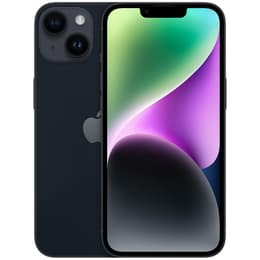
iPhone 14 • Locked AT&T
Starting at

Refurbished price:$225.72

Versus $629.00 new

See options
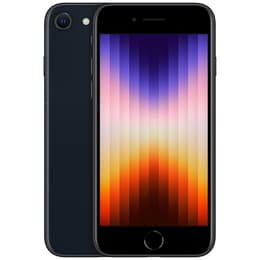
iPhone SE (2022) • Locked T-Mobile
Starting at

Refurbished price:$124.00

Versus $429.00 new

See options

Ratings

The iPhone 14, released in September 2022, and the iPhone SE (2022), launched in March 2022, represent different approaches within Apple's smartphone lineup. While both devices operate on the iOS ecosystem, the iPhone 14 offers a more contemporary design with an advanced display and camera system, whereas the iPhone SE (2022) maintains a classic form factor with updated internal components. This comparison will explore the practical differences between these two models to help users determine which device best suits their needs.

Scores

Durability

When considering the longevity of a smartphone, several factors come into play, including software support, physical durability, and ease of repair. The iPhone 14 and iPhone SE (2022) offer distinct profiles in these areas.

  • Release Timeline and Software Support: The iPhone 14, being released in September 2022, benefits from a slightly longer expected software support window compared to the iPhone SE (2022), which launched in March 2022. Both devices are known for receiving several years of iOS updates, ensuring access to new features and security patches for an extended period. The iPhone SE (2022) was originally supplied with iOS 15.4 and was eligible to update to iOS 16 in September 2022, with support extending to iOS 26 as of September 2025.
  • Physical Durability: The iPhone 14 features a Ceramic Shield front cover, which Apple states offers enhanced drop performance. It also boasts an IP68 rating for water and dust resistance, allowing submersion up to 6 meters for 30 minutes. The iPhone SE (2022) has an IP67 rating, protecting against submersion up to 1 meter for 30 minutes, and uses ion-strengthened glass for its display.
  • Repairability: The iPhone 14 initially received a high repairability score from iFixit due to its internal redesign making back glass repair more accessible. However, this score was later downgraded due to software restrictions and parts pairing requirements that complicate unauthorized repairs. The iPhone SE (2022) has an average repairability score, with components like the screen and battery being relatively straightforward to replace, though adhesive use and part differences between models can add complexity.

Release Year

2022

2022

Last OS Compatibility

Yes

Yes

OS

iOS

iOS

Foldable

No

No

Performance

Both the iPhone 14 and iPhone SE (2022) are equipped with powerful internal components, but there are differences in their configurations that impact overall performance and user experience.

  • Processing Power: The iPhone 14 utilizes a version of the A15 Bionic chip that includes a 5-core GPU and 6GB of RAM, similar to the iPhone 13 Pro. The iPhone SE (2022) also features the A15 Bionic chip, but with a 4-core GPU and 4GB of RAM, aligning with the standard iPhone 13. This means the iPhone 14 offers slightly more graphical processing power and multitasking headroom.
  • Everyday Responsiveness: For typical daily tasks such as browsing, social media, and light gaming, both devices provide a fluid and responsive experience. The A15 Bionic chip in both models ensures smooth app loading and efficient multitasking. Users of the iPhone SE (2022) will find it handles demanding applications and games effectively, though the iPhone 14 may exhibit a marginal advantage in graphically intensive scenarios due to its enhanced GPU.
  • Storage Options: The iPhone 14 is available with storage capacities of 128GB, 256GB, and 512GB. The iPhone SE (2022) offers 64GB, 128GB, and 256GB options. Users who store a large number of photos, videos, or applications may find the higher base storage and maximum capacity of the iPhone 14 more accommodating.
  • Battery Behavior: The iPhone 14 is designed to offer up to 20 hours of video playback. User reports indicate that the iPhone SE (2022)'s battery life, while sufficient for many, might require more frequent charging for heavy users.

Memory (GB)

6 GB

4 GB

Screen quality

The visual experience is a significant differentiator between these two iPhone models, primarily due to their display technologies and physical dimensions.

  • Display Technology and Clarity: The iPhone 14 features a 6.1-inch Super Retina XDR OLED display, offering deep blacks, vibrant colors, and a high contrast ratio. It has a resolution of 2532x1170 pixels at 460 ppi, resulting in sharp and detailed visuals. In contrast, the iPhone SE (2022) uses a 4.7-inch Retina HD IPS LCD display with a resolution of 1334x750 pixels at 326 ppi. While the LCD panel provides good color accuracy and viewing angles, it does not match the contrast and vibrancy of the OLED technology.
  • Brightness and Outdoor Visibility: The iPhone 14's display can reach a typical brightness of 800 nits and a peak HDR brightness of 1200 nits, ensuring good visibility even in bright outdoor conditions. The iPhone SE (2022) has a maximum brightness of 625 nits, which is adequate for most indoor and outdoor use but may struggle more in direct sunlight.
  • Refresh Rate and Smoothness: Both devices feature a standard 60Hz refresh rate. This provides a smooth experience for everyday interactions, but it does not offer the enhanced fluidity seen on devices with higher refresh rates.
  • Screen Size and Form Factor: The iPhone 14's larger 6.1-inch edge-to-edge display offers a more immersive viewing experience for media consumption and multitasking. The iPhone SE (2022)'s compact 4.7-inch screen and traditional design with bezels and a home button appeal to users who prefer a smaller device for one-handed use and a familiar interface.

Resolution

1170 x 2532

750 x 1334

Screen type

Super Retina XDR OLED

Retina IPS LCD

Audiovisual

The camera systems on the iPhone 14 and iPhone SE (2022) offer different capabilities, catering to varying photography needs and expectations.

  • Rear Camera System: The iPhone 14 features an advanced dual-camera system with a 12MP Main camera (f/1.5 aperture, sensor-shift optical image stabilization) and a 12MP Ultra Wide camera (f/2.4 aperture, 120° field of view). It benefits from the Photonic Engine, which significantly improves low-light performance across all cameras. The iPhone SE (2022) has a single 12MP Wide camera (f/1.8 aperture, optical image stabilization). While it performs well in good lighting conditions, it lacks an Ultra Wide lens and does not include Night mode, which can result in darker and grainier images in low-light environments.
  • Front Camera: The iPhone 14 is equipped with a 12MP TrueDepth front camera with an f/1.9 aperture and autofocus, enhancing clarity for selfies and video calls. The iPhone SE (2022) features a 7MP front camera with an f/2.2 aperture.
  • Video Recording: Both devices support 4K video recording up to 60 frames per second. The iPhone 14 further enhances video capabilities with Cinematic mode, allowing for shallow depth of field in videos up to 4K HDR at 30fps, and Action mode for smoother handheld footage.
  • Audio Experience: Both models offer stereo speakers for media consumption. The iPhone SE (2022) is noted for its rich and balanced audio quality.

Main camera

12 megapixels

12 megapixels

Front camera

12 megapixels

7 megapixels

Miscellaneous

Beyond the core performance and display, several practical features and design elements differentiate the iPhone 14 and iPhone SE (2022).

  • Connectivity: Both devices support 5G connectivity (sub-6 GHz), Wi-Fi 6, and Bluetooth. The iPhone 14 features Bluetooth 5.3, while the iPhone SE (2022) uses Bluetooth 5.0. The iPhone 14 also supports mmWave 5G in some regions, offering potentially faster speeds where available.
  • Biometric Authentication: The iPhone 14 relies on Face ID for secure facial recognition. The iPhone SE (2022) retains the traditional Touch ID fingerprint sensor integrated into its home button, which some users prefer for its familiarity and convenience, especially when wearing masks.
  • Physical Design and Handling: The iPhone 14 has a modern, all-screen design with flat edges and an aluminum frame, measuring 146.7 x 71.5 x 7.80 mm and weighing 172g. The iPhone SE (2022) features a more compact design with a home button, measuring 138.4 x 67.3 x 7.3 mm and weighing 144g, making it lighter and easier for one-handed operation.
  • Ports and Charging: Both models utilize the Lightning port for charging and data transfer. They also support wireless charging.

Weight

6 oz

3 oz

Screen size (inches)

6.1

4.7

Network

5G

5G

SIM card

eSIM

Physical SIM + eSIM

Carrier compatibility

AT&T

T-Mobile

Connector

Lightning

Lightning

The iPhone 14 and iPhone SE (2022) cater to different user preferences, each excelling in specific areas. User sentiment often highlights the iPhone 14's modern display, improved camera capabilities, and enhanced battery life as significant advantages. Many appreciate its immersive screen for media and its ability to capture high-quality photos and videos, particularly in challenging lighting conditions. Criticisms sometimes point to its incremental upgrades over its direct predecessor, with some users desiring a higher refresh rate display.

Conversely, the iPhone SE (2022) is frequently praised for its compact size, the familiarity of the Touch ID home button, and its robust performance for its form factor. Users who prefer a smaller device that is easy to handle with one hand often find it appealing. However, common criticisms include its dated design with thick bezels, the smaller LCD display, and the absence of Night mode for its camera, which can limit its photographic versatility in low light.

Users prioritizing a contemporary full-screen experience, advanced photographic features, and slightly longer battery life may find the iPhone 14 well-suited to their needs. Its OLED display and dual-camera system offer a more premium multimedia and imaging experience. On the other hand, users who value a compact form factor, the traditional home button with Touch ID, and a device that performs reliably for everyday tasks without needing the latest display or camera innovations may lean toward the iPhone SE (2022). Both devices offer the robust iOS experience and long-term software support characteristic of Apple products. For those seeking an eco-friendly alternative, both models are available as quality-assured refurbished options, providing a sustainable choice for consumers.

See all articles

Our recent comparisons